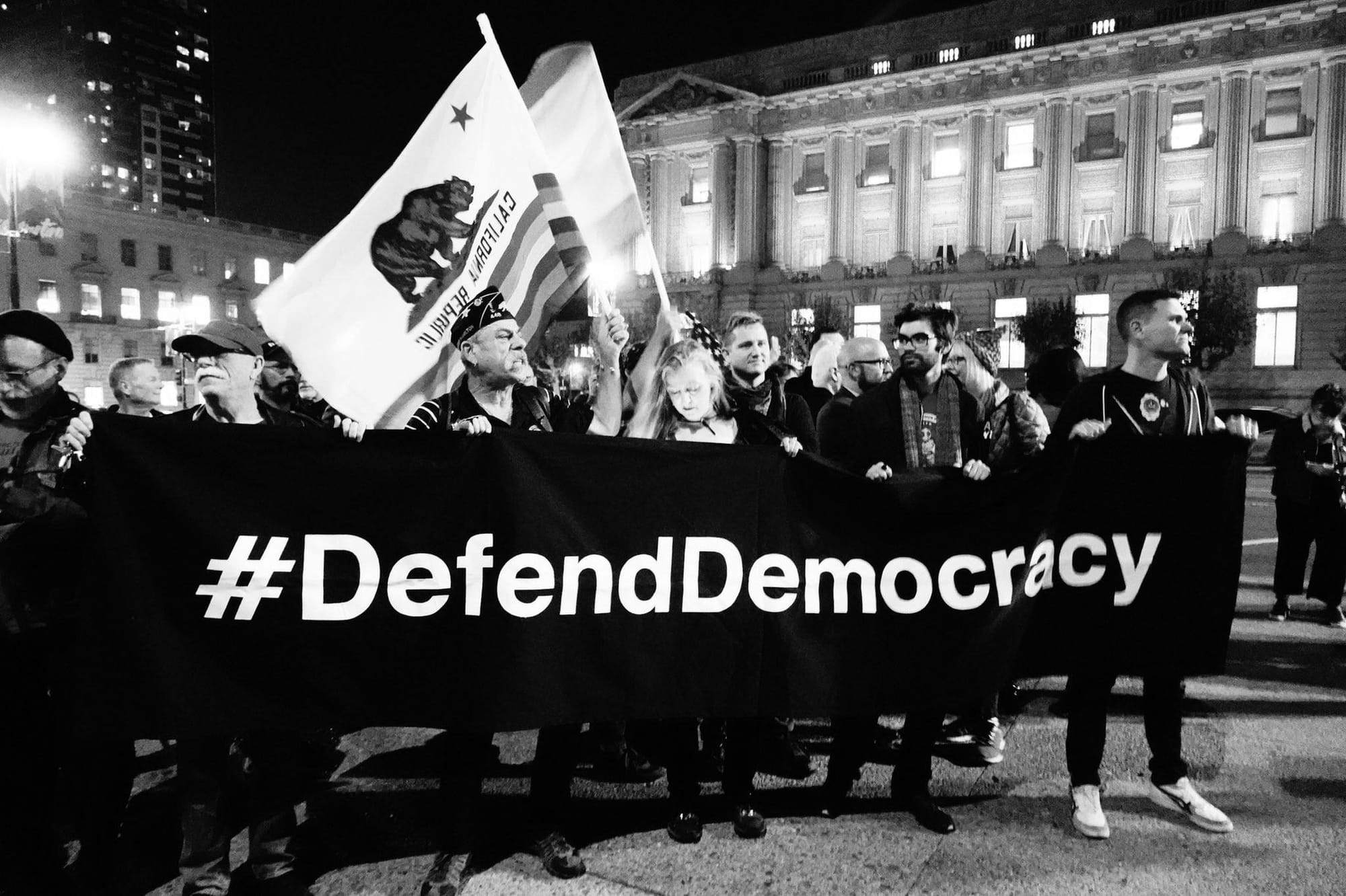
Between the Impossible and the Inevitable: The Case for Defiance (aka Never F**king Surrender)
I have been hesitating to hit send on this one, because across the world we are all under the shadow of Trump's threat to commit war crimes that will "eradicate a whole civilization" in Iran while Iranians bravely surround threatened infrastructure with human chains. But I've decided, in this essay's spirit of defiance, to send it out, and it may be only too topical if the worst happens, still relevant if nothing does.
To know that you don't know is the beginning of wisdom, and to pretend, including to yourself, that you do when you don't is a form of foolishness often mistaken for worldliness. So much of my writing about hope has been nothing more or less than an invitation to recognize that we don't know what's going to happen, not least because the future does not exist in the same sense that a cake does not exist even if the flour, butter, sugar, etc. are on hand; whether the cake will be made at all and what kind of cake is yet to be determined, and if it is in fact mixed up and baked, we do not know whether it will be poisoned or accidentally dropped or served up nicely. (As a baker, I could add there are a lot of possibilities from angel food to devil's food to fruitcake and upside-down cake, to cite a few more symbolic names; even to say cake will happen leaves a lot of room as to what kind of cake. As a tech critic I could add that there are now reportedly a lot of AI accounts putting out slop recipes that don't work, including "recipes for deadly chlorine gas, 'poison bread sandwiches' and mosquito-repellent roast potatoes" as well as for human flesh.)
The cake, the future is being made in the present, including by how we show up or fail to. If we know what's going to happen, we cannot participate in deciding what happens, and vice-versa. To pretend to have the power of being in charge of the former is to surrender the motivation to impact the latter in an active and intentional way. It's to give up the very real power we have for a pretense at a power that is really merely a posture. And yet claims we have no power to impact what happens are nevertheless an intervention in what will happen, by discouraging participation, by encouraging passivity, surrender, acquiescence. If you insist that a given outcome is inevitable, you are lobbying against resistance. At best, you've surrendered; at worst you're complicit in the outcome.
I hesitate to call the pretense that we know what will happen a lie, though it is a claim that exceeds the bounds of what can be true. Sometimes I think it's just habitual, a contagious corruption of how we use language, or a lot of us do. Thus, for example, instead of saying "this could lead to the dreaded thing happening" or "I feel dread that it could happen" people say "it will happen" like they had a hotline to the gods (or alternatively, with equal authority, "that could never happen"). Somehow a reality that diverges from the prophecy never seems to dismay these prophets from prophesizing again. I think that often when someone makes a that kind of pronouncement, they're avoiding their own inner life and thereby avoiding acknowledging that they're talking about their feelings. "I fear that this will happen" or "the idea that this could make me happen fills me with anxiety and dread" are both technically subjective statements but they're actually also true, honest, factual ones if that's what's really driving the pronouncements. "This will happen/we are doomed" hides the subjective truth of the feelings driving the statement to pretend to have an objective and universal handle on what will happen. It's a journey from vulnerability to authority that's also a journey from truth to bullshit. That journey has become a well-trodden path, a mental rut.
Perhaps a contributing factor to this is that in the rearview mirror, history seems pretty coherent and predictable, if you don't look closely. We're adjusted to a world in which the Berlin Wall fell; the Soviet Union disintegrated; Canada after telling its Indigenous arctic peoples they were doomed and trying to speed that doom into least the 1970s reversed course and in 1999 created an indigenous-governed province, Nunavut, three times the size of Texas; Mexico elected a Jewish woman climate scientist president; Ireland ended the Troubles and legalised abortion. To a world in which the feeble and expensive solar and wind technologies of the year 2000 became the superb (and still evolving) technologies of 2026 that are also cheaper than any other form of power generation throughout most of the world. None of these current realities were readily seen through, so to speak, the front windshield rather than the rearview mirror.
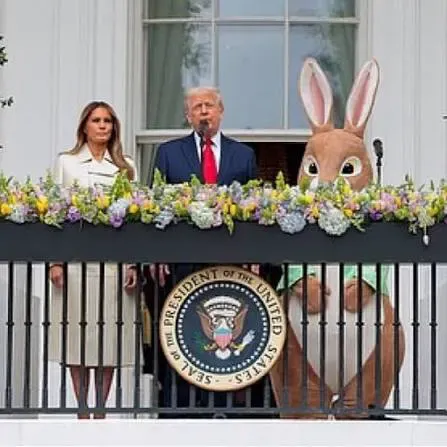
False certainty is dangerous; it rules out all possibilities but one and in essence surrenders to that imagined future. I remember people dismissively telling me that the 2016 joke candidate Donald Trump could never be elected, while they took Hillary Clinton's 85% chance of winning as pretty much the same as 100%, as if the likely was the inevitable, the unlikely the impossible. We've been living in the unlikely ever since (that a sundowning clown who is also the most powerful man in the world threatened the people of Iran with war crimes while standing next to a fretful life-size Easter Bunny would once have been unbelievable, but here we are). There is a lot of space between inevitable and impossible, and that is the space of the possible, good and bad.
In Congressman Jamie Raskin's magnificent memoir, he writes about one of his early races for office, a race in which one "expert" pronounced his victory impossible and then when he won by a landslide another called it inevitable. Raskin notes, "So we went from impossible to inevitable in nine months because the pundits are never wrong, but as I told Tommy, we showed that nothing in politics is impossible, and nothing in politics is inevitable. It is all just possible, through the democratic arts of education, organizing, and mobilizing for change."
But the word hope, which I've been using a lot since 2003, is one a lot of people balk at, sometimes because they conflate it with optimism, or feeling good, or confidence. I often note that optimism, like pessimism, cynicism, despair and doomerism, are predicated on knowing what will happen; hope brings us back to where this essay started: the knowledge that we don't know, because there are at least to some extent possibilities, not inevitabilities, ahead. My friend Renato Redentor Constantino, a climate leader based in the Philippines, writes "The Franciscan priest Richard Rohr reminded his listeners once about a tenet so basic it's ignored if not contested: the opposite of faith is not doubt; it's certainty. The belief in certain doom or the belief in certain victory both do not require action. The truth? Faith is not just tested by doubt; it is reinforced when we act without any guarantee of outcomes."
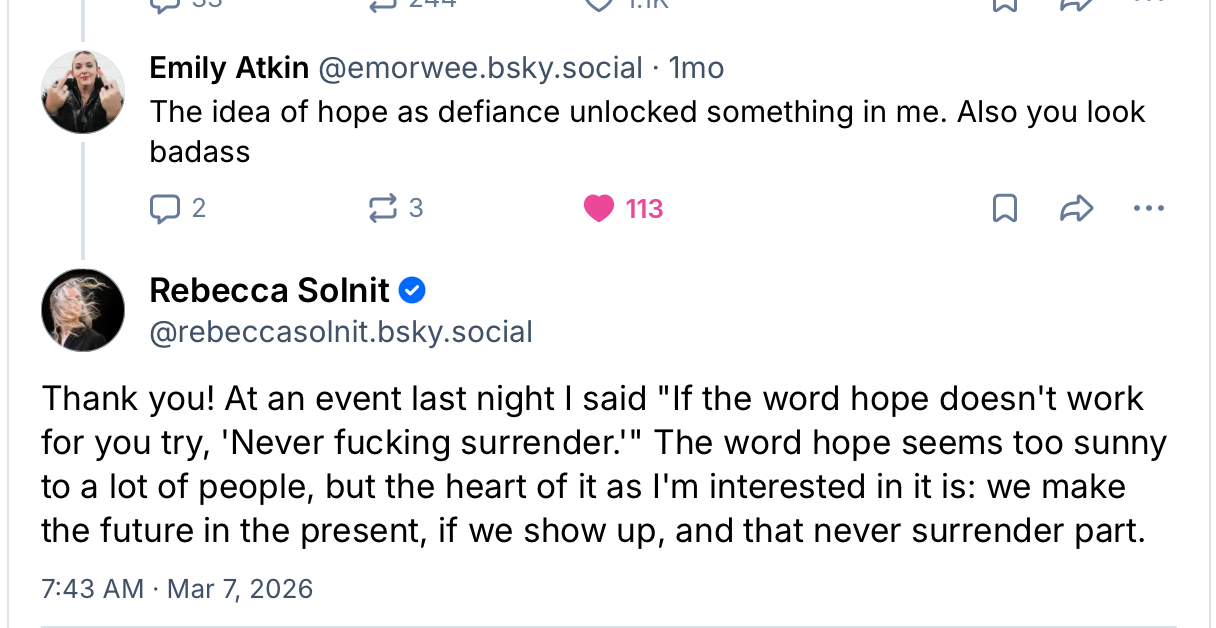
Lately I've tried to go light on the word hope, and all through last year the word resolute stayed with me, as in standing firm, resolved, determined, unwavering; that's what you can be even if you don't feel hopeful. I had the following exchange with climate journalist Emily Atkin on BlueSky last month (she was responding to the New York Times interview with me that appeared then):
We surrender as if to the inevitable when we turn our backs on the possible. I've been thinking about all this again because of a thoughtful, fierce essay by scholar John Plotz I came across this week. It's both a look back to reflect on Hannah Arendt's 1971 essay on lying and the Pentagon Papers and a look around at where we are now. The Pentagon Papers, released by whistleblower Daniel Ellsberg, made it clear that high US government officials had through many administrations built lie upon lie rather than admit the US was losing the Vietnam War. Arendt's essay has only too many echoes of the current situation with the pointless, unwinnable war on Iran Trump launched and doesn't know how to get out of, partly because he doesn't want to admit it was a catastrophic bad idea and nothing can change that. She wrote, "From 1965 on, the notion of a clear-cut victory receded into the background and the objective became 'to convince the enemy that he could not win.' Since the enemy remained unconvinced, the next goal appeared, 'to avoid a humiliating defeat,' as though the meaning of defeat in war were mere humiliation." The experts' concern was not what the impact of defeat meant for "the welfare of the nation," let alone what it meant to kill hundreds of thousand of Vietnamese people and tens of thousands of US soldiers just for the prestige of the USA and its president. Which sounds too familiar as a US president kills Iranians in a war he cannot justify, with no clear goals, exit strategies, strategies at all, or ideas of how to end the thing.
Stohr's essay looks back at Arendt's ideas about the crises of truth and reality in her time and forward at them in our time. He writes: "I am grateful that Timothy Snyder ... has provided one phrase to warn us about what is happening now in response to Trump’s bs: “anticipatory obedience.” Bad as such anticipatory obedience is, though, it is not the only problem. Arendt’s insistence on seeing the facts as they are now (not as we fear they will become if this goes on) helps us see a corollary phenomenon, potentially just as damaging, which we might call anticipatory despair. Anticipatory despair preaches to the choir on the left, assuming we have already fallen into a far deeper pit than has yet been dug (maybe it is the left’s equivalent of the right’s “brokenism).” The dean of Columbia’s journalism school recently told students “Nobody can protect you … these are dangerous times.” When your dean tells you that, it’s not just an empty flourish, it is a definite speech act, an abdication of responsibility by those who can in fact take meaningful actions to protect their students.... Those who have been afflicted with anticipatory despair write as if we too were already in an American version: “Nobody can protect you” is a haunting refrain and a self-fulfilling prophecy."
Anticipatory means looking ahead, assuming that you can look ahead and see what will happen, and adapting to what you've decided will happen. This is exactly what Snyder meant by obeying in advance. It is a clear alternative to committing to try to participate in what will happen. History offers countless examples of those who not only did not obey in advance of whatever threat hovered over them but did not obey after threat became reality. At the heart of this country's own history are the enslaved people who refused to give up believing in their right to be free and the quest for freedom and the Indigenous people who refused over centuries to abandon their land, their rights, and their culture in the face of immense pressure to do so. The rest of us can take instruction from their tenacity.
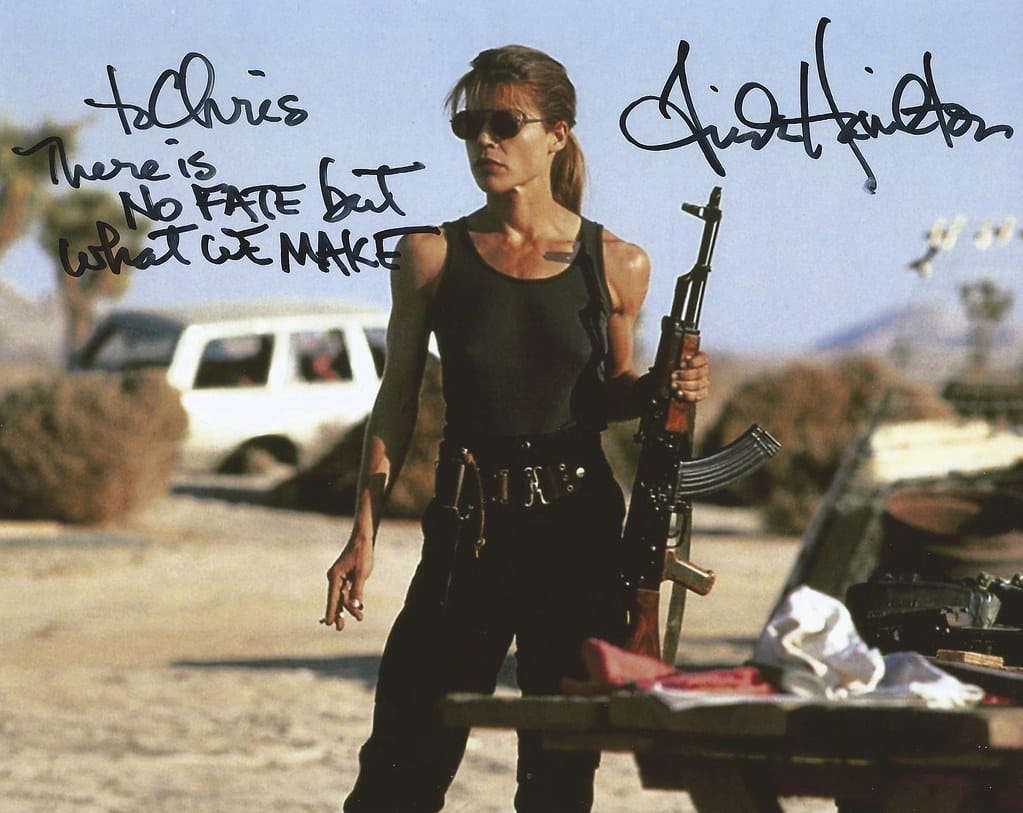
I often go back to the 1991 film Terminator 2, in which the fate described in the first Terminator movie is revised – the SkyNet mega-computer that will launch the Age of the Machines is destroyed, and other acts in the present shift what the future can and will be. Of course Terminator 2 is a science-fiction movie in which because time-travel exists people can know the future, but you don't have to know it to know you can participate in making it. "No fate but what we make" declares protagonist Linda Hamilton who has morphed from a maiden to be rescued in the first film to a ferocious warrior mom in the second. When I saw the movie in a theater a few years ago, it also struck me that co-star Arnold Schwarzenegger had no idea that he would himself enter politics, become California's governor from 2003 to 2011, and turn into to everyone's surprise (possibly including his own) a strong advocate for climate action. That is, he would try to change the future for real.
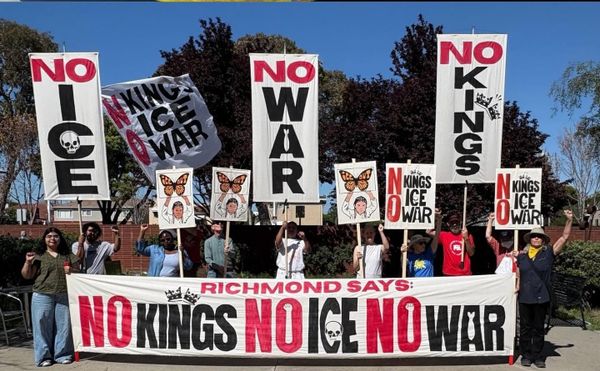
You can see a version of Terminator 2 in the battles against both AI data centers and ICE warehouse-prisons across this country. While a lot of elite leaders and people invested in Silicon Valley's AI products talk as though its invasion of our lives, minds, economy, and society is inevitable, ordinary citizens are refusing to accept this wildly unpopular bundle of technologies and threats. (One striking aspect of the last few years, especially since Trump returned to office, is that elites are often more timid and willing to surrender, despite all their power and protection, than a lot of the rest of us.) Tech critic Brian Merchant writes in his newsletter that there's been "years of increasingly energized, widespread and bipartisan opposition to data center development on the municipal and state level. Several of those efforts have successfully shut down or delayed planned data centers. The movement has grown so broad, and so concerning to the AI industry, that a group was launched just to track it. Eleven states, from deep red to dark blue, are currently considering data center moratoriums; Georgia, Vermont, Michigan, Virginia, North Dakota, and South Carolina are among them. The mayor of Denver, Colorado just passed one. The Seminole Nation of Oklahoma became the first tribal council to enact a moratorium on data center development. It’s not just data centers, either. It’s a trend I’ve noticed over the last few weeks: Across the AI economy, workers and consumers have taken to refusing the technology in direct and robust ways." (He also reports on ways that the publishing and gaming industries are rejecting AI, as has Wikipedia, thanks to the abundant errors that come with it.)
Meanwhile, ICE has paused buying up warehouses around the country and activists as well as local and state authorities have challenged their efforts to both purchase the facilities and convert them into prisons. The Associated Press reported last week, "The warehouse plan ran into challenges from the start. Eight deals were scuttled in places like Kansas City, Missouri, when owners decided not to sell. The plan was hatched during [now-fired Homeland Security head Kristi] Noem's tenure but immediately ran into intense opposition around the country by residents and communities opposed to such large Immigration and Customs Enforcement facilities in their neighborhoods. Many objected on moral grounds to ICE’s presence in their neighborhoods, while others questioned whether the facilities would be a drain on local resources, such as sewer and water systems." Like the Seminole Nation, the Choctaw Nation stepped in, buying a vast 1.24-million square-foot warehouse ICE was attempting to acquire, "settling in a single transaction a dispute that had drawn protesters, tribal resolutions, and an emergency city ordinance," according to the International Business Times.
We make the future in the present, when we show up. Don't surrender it to those who would destroy it.