Breaking the Silencing Machine
In many ways this society has moved toward a democracy of voices, as people who for their race or gender were shut out of systems of power and possibility – out of jury duty, professions, institutions educational and otherwise – fought to be included. But we still have so far to go, and the right is seeking to roll back these successes. The news these days is filled with two stories on those fronts: the attacks on Brown and Black people and those white people who stand with them, and the Epstein files, which implicate a lot of other men (and some women).
In an earlier era, people often seemed to think that winning the legal battles was enough, but equality is also a cultural phenomenon, and cultural inequality can be imposed by corrupting the legal system, no matter what the law says, or just preventing some from accessing it. What's most striking about the Epstein case is how hundreds of victims remained unheard for decades while his and his associates' crime spree continued. The same is true in the cases of Bill Cosby, Harvey Weinstein, and countless others less known than these figures. They got away with violent felonies, sometimes with crime sprees spanning decades, because we live in an unequal society where they counted on their victims having little or no access to power, including the power of being heard, believed, having voices that had consequence in the legal system and elsewhere. Often they used tools – including lawyers, threats, and intimidation – that money can buy to keep victims from being heard or from daring to speak, but often others aided them because of their status, power, and gender.
I wrote about this question of voice in my 2020 memoir Recollections of My Nonexistence, and with kind permission from Viking, the publisher, am running this excerpt that seems only too topical as the Epstein files ooze out and show us the complicity of so many, too many, prominent and powerful men, men who are still in many cases being protected.
It took me ten years and dozens of feminist essays from that morning [in March 2008] I wrote “Men Explain Things to Me” to realize that I was not talking and writing, after all, about violence against women, though I was reading about it incessantly. I was writing about what it means not to have a voice and making the case for a redistribution of that vital power. The crucial sentence in“Men Explain Things to Me” is “credibility is a basic survival tool.” But I was wrong that it’s a tool. You hold a tool in your own hands, and you use it yourself. What it does is up to you.
Your credibility arises in part from how your society perceives people like you, and we have seen over and over again that no matter how credible some women are by supposedly objective standards reinforced by evidence and witnesses and well-documented patterns, they will not be believed by people committed to protecting men and their privileges. The very definition of women under patriarchy is designed to justify inequality, including inequality of credibility.
Though patriarchy often claims a monopoly on rationality and reason, those committed to it will discount the most verifiable, coherent, ordinary story told by a woman and accept any fantastical account by a man, will pretend sexual violence is rare and false accusations common, and so forth. Why tell stories if they will only bring forth a new round of punishment or disparagement? Or if they will be ignored as if they meant nothing? This is how preemptive silencing works.
Violence against bodies had been made possible on an epic epidemic scale by violence against voices. The existing order rested on the right and capacity of men to be in charge—of meaning and of truth, of which stories mattered and whose got told, as well as of more tangible phenomena that maintained the arrangement. And it rested on the silence or silencing of those whose experiences demonstrated the illegitimacies of the status quo and those atop it. But something essential had changed. The change was often seen as a beginning but I saw it as a culmination of the long, slow business of making feminist perspectives more widespread and putting more women in positions of power as editors, producers, directors, journalists, judges, heads of organizations, senators (and men who regarded women as equal and credible)...
To have a voice means not just the animal capacity to utter sounds but the ability to participate fully in the conversations that shape your society, your relations to others, and your own life. There are three key things that matter in having a voice: audibility, credibility, and consequence.
Audibility means that you can be heard, that you have not been pressed into silence or kept out of the arenas in which you can speak or write (or denied the education to do so—or, in the age of social media, harassed and threatened and driven off the platform, as so many have).
Credibility means that when you get into those arenas, people are willing to believe you, by which I don’t mean that women never lie, but that stories should be measured on their own terms and context, rather than patriarchy’s insistence that women are categorically unqualified to speak, emotional rather than rational, vindictive, incoherent, delusional, manipulative, unfit to be heeded—those things often shouted over a woman in the process of saying something challenging (though now death threats are used as a shortcut, and some of those threats are carried out, notably with women who leave their abusers, because silencing can be conversational or it can be premeditated murder).
To be a person of consequence is to matter. If you matter, you have rights, and your words serve those rights and give you the power to bear witness, make agreements, set boundaries. If you have consequence, your words possess the authority to determine what does and does not happen to you, the power that underlies the concept of consent as part of equality and self-determination
Even legally women’s words have lacked consequence: in only a few scattered places on earth could women vote before the twentieth century, and not so many decades ago, women rarely became lawyers and judges; I met a Texas woman whose mother was among the first in their region to serve on a jury, and I was an adult when the first woman was appointed to the U.S. Supreme Court. Until a few decades ago, wives throughout much of the world, including the United States, lacked the right to make contracts and financial decisions or even to exercise jurisdiction over their own bodies that overrode their husbands’ ability to do so; in some parts of the world, a wife is still property under the law, and others choose her husband. To be a person of no consequence, to speak without power, is a bewilderingly awful condition, as though you were a ghost, a beast, as though words died in your mouth, as though sound no longer traveled. It is almost worse to say something and have it not matter than to be silent.
Women have been injured on all three fronts—as have men of color and nonwhite women doubly so: Not allowed to speak or punished for speaking or excluded from the arenas—courts, universities, legislatures, newsrooms—where decisions are made. Mocked or disbelieved or threatened if they do find a place in which to speak, and routinely categorized as inherently deceitful, spiteful, delusional, confused, or just unqualified. Or they speak up and it is no different than remaining silent; they have told their stories and nothing happens, because their rights and their capacity to bear witness don’t matter, so their voices are just sounds that blow away on the wind.
Gender violence is made possible by this lack of audibility, credibility, and consequence. We live inside an enormous contradiction: a society that by law and preening self-regard insists it is against such violence has by innumerable strategies allowed that violence to continue unchecked, better and far more frequently protected perpetrators than victims, and routinely punished, humiliated, and intimidated victims for speaking up, from workplace harassment cases to campus rape cases to domestic violence cases. The result makes crimes invisible and victims inaudible people of no consequence.
The disregard for a woman’s voices that underlies sexual violence is inseparable from the disregard afterward if a woman goes to the police, the university authorities, her family, her church, the courts, to the hospital for a rape kit, and is ignored, discredited, blamed, shamed, disbelieved. They are both assaults on the full humanity and membership of a person in her society, and the devaluation in the latter arena enables the former. Sexual assault can only thrive in situations of unequal audibility, credibility, and consequence. This, far more than any other disparity, is the precondition for epidemic gender violence.
Changing who has a voice with all its powers and attributes doesn’t fix everything, but it changes the rules, notably the rules about what stories will be told and heard and who decides. One of the measures of this change is the many cases that were ignored, disbelieved, dismissed, or found in favor of the perpetrator years ago that have had a different outcome in the present, because the women or children who testified have more audibility, credibility, and consequence now than they did before. The impact of this epochal shift that will be hardest to measure will be all the crimes that won’t happen because the rules have changed.
Behind that change are transformations in whose rights matter and whose voice will be heard and who decides. Amplifying and reinforcing those voices and furthering that change was one of the tasks to which I put the voice I’d gained as a writer, and seeing that what I and others wrote and said was helping to change the world was satisfying in many ways to me as a writer and as a survivor.
I wrote about this question of voice again when the case against Harvey Weinstein ended in a guilty verdict in 2020, three years after the crimes were first reported on, decades after his career as a rapist began. For that editorial I noted, "Imagine if Mr. Weinstein had committed his first sexual assault in a world in which his victim had the audibility, credibility, value and resources he did. There would likely not have been a second, or six women testifying in a trial, or 90 women with stories no one made space for before something changed in 2017. More likely there would not have been a first in a world where he knew he could not overpower her facts and voice, even if he could overpower her physically."
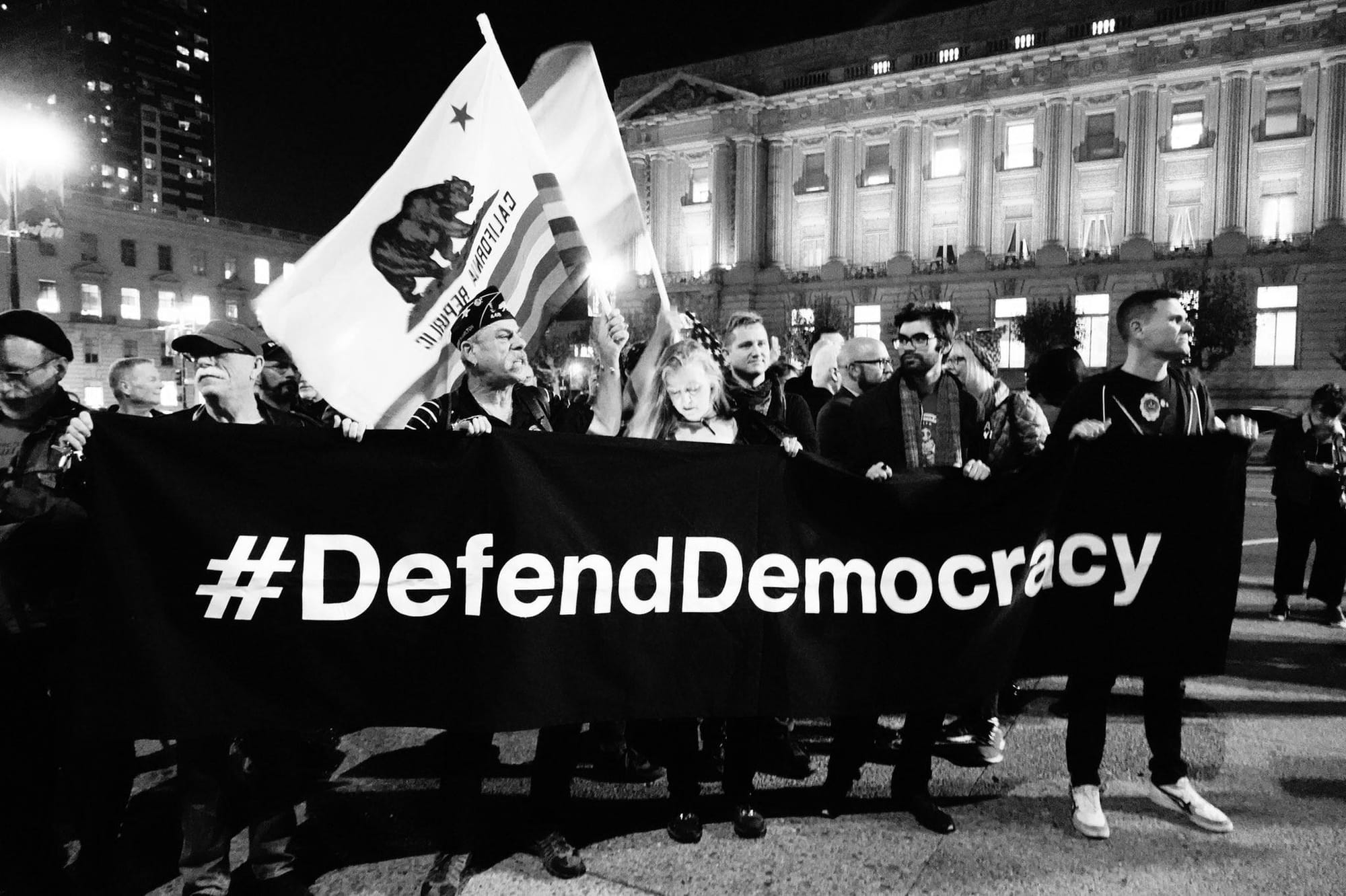
The same is true of Epstein and all the rest. There is no democracy without a democracy of voice. I have been fortunate to acquire a voice as a writer. I wrote a while back, "Having the right to show up and speak are basic to survival, to dignity, and to liberty. I’m grateful that, after an early life of being silenced, sometimes violently, I grew up to have a voice, circumstances that will always bind me to the rights of the voiceless."

p.s. Here's the book that excerpt is from, available from Bookshop.org and your independent bookstore and maybe your public library (it's also an audio book I read myself if that's your preferred mode). Speaking of voice, this is a good time to avoid Amazon, Jeff Bezos's mega-corporation, as Bezos is also gutting and corrupting the Washington Post, one of the key institutions for an informed democracy that we're losing. And yeah, that's me on the cover, age 19.