The Dam Broke, the River Roared: More on That Magnificent Election
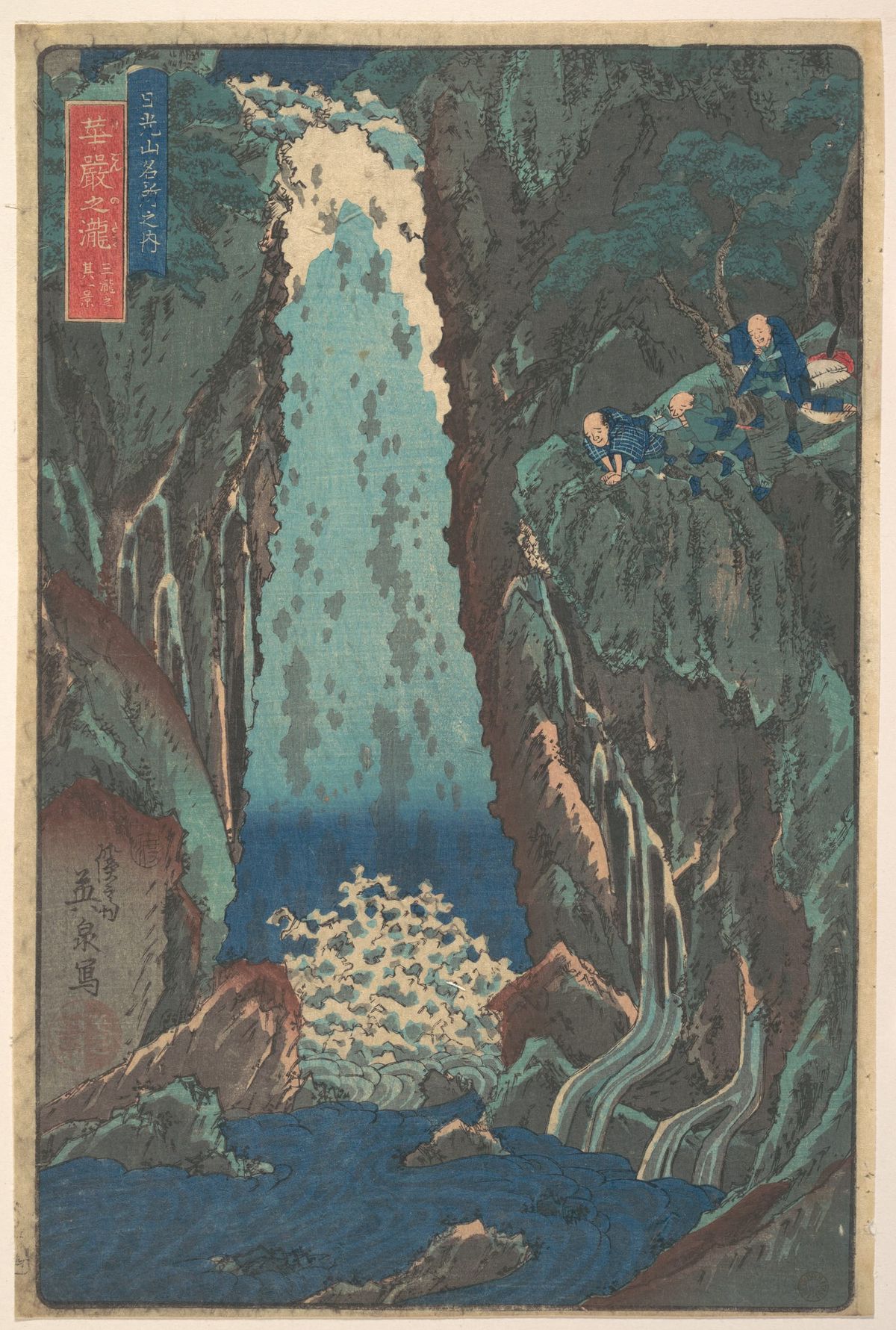
It was a landslide, an earthquake, a tsunami, a watershed, an extinction-level event, they said of the colossal shift in the nation's destiny as the result of Tuesday's epic election. They're all good metaphors drawn from nature. I want to propose one more: it was a dam breaking, the dam that held back the will of the people, the people of the world's most diverse country, the people who believed in their own rights and equality and in the rights and equality of others. In 2018, the prison abolitionist writer Michelle Alexander wrote an essay that made a huge impact on me, not least for its deft reversal of a metaphor. We are not the resistance, she said, they are. We are not the dam holding something back, they are. We are the mighty river and we will break free.
Because even as Trump got elected twice over the past decade, the majority of Americans still believed in climate action, reproductive rights, the rule of law, and had to be manipulated and deceived into turning on immigrants, trans youth, and other vulnerable populations to the extent they did. Mainstream media played a huge rule in this deception and manipulation, by pumping up distorted stories about the marginalized, by downplaying the criminality and impact of the Trump team, by the elaborate pretense that the two parties were symmetrical and should be treated the same even as one became a criminal conspiracy (the New York Times's attempt in the last days of the election to cook up a scandal out of scant and sketchy information about Alaska Senate candidate Mary Peltola is an ugly example of this). Authoritarians are authoritarians because they aspire through brutality, intimidation, corruption to override the will of the people. But you can't hold back a river forever.
In the Obama era I came to believe in demographic destiny. Every two years more young BIPOC people who tend to believe in their own rights and equality and hold other progressive views become old enough to vote, more old white people who were dedicated Republican voters have passed away. That faith was shaken a little by the events of the past ten years, both because at some turns the electorate shifted right, notably in 2024, and because the right managed to dam up the river at least for a while. It was in the aftermath of the 2016 election that I became fully aware of the impact of intentional, carefully orchestrated voter suppression by the Republican Party, and that was a significant part of how Trump eked out his electoral-college victory in 2016. Because the Republican Party made a fateful decision some decades earlier, as the electorate became more diverse and progressive, as women and Black and brown voters insisted on their right to full participation. Made a decision to become a dam holding back the river rather than a raft riding its currents, to own to a shrinking evangelical minority with anti-abortion agendas even while the majority of Americans supported reproductive rights. Incidentally, Kris Kobach, a leading force in voter suppression long before Trump, lost his race for Kansas attorney general to a Democrat.
As the electorate continued to evolve, that meant suppressing it more and more brutally, until it became clear that they would – because they had to – steal elections, including the 2020 presidential election. The Roberts Supreme Court aided this with its Citizens United and other decisions unleashing dark money in politics, its repeated decisions against the Voting Rights Act, its protection of Trump from criminal prosecution. It took a lot to dam up the will of the people (and on one of my favorite podcasts, Jon Wiener's Start Making Sense, regular commentator John Nichols noted that while it was a gorgeous election, without massive injections of right-wing money there might have been yet more Democratic victories, including Angie Nixon in the Florida senate race). Many noted that Black fury against the Callais decision helped fuel decisive Black turnout across the south (and though people heroically overcame the obstacles set up to prevent them from voting, those obstacles need to be annihilated).
The 2024 election was read by many loud pundits as some sort of permanent mandate – they insisted all those voters who had shifted for Trump represented a permanent realignment and we had entered upon a thousand-year reich; we would be pro-authoritarian, pro-cruelty, pro-inequality for the foreseeable future. They didn't foresee very far because the 2026 election was not just a repudiation of Trump but of the broader agenda of the Republican Party and of the oligarchy that backed him, the huge corporations that caved, the super-rich tech bros who more than anyone were in a position to stand on principle, but caved while ordinary people in the streets of Minneapolis, Los Angeles, and other cities and towns risked their lives to stand in solidarity. I try not to predict the future but the Republican Party sold out even its own conservative principles to ride the Trump train wherever it took them, and it seems likely that it's taking them straight into a crash.
While the will of the people was a mighty river pressing against what held it back, good organizing (which we could call dam-cracking) at the local and national level deserves enormous credit. That included Indivisible, Third Act, Black churches, and many other organizations working to turn out the vote and protect voters' rights, everyone working on specific campaigns for candidates and ballot measures, government agencies (in blue states and locales) organizing to protect the vote and the ballot, those heroic judges overturning decision after decision by the administration. (In fact, late last night a judge blocked Trump's attempt to build a victory arch that commemorates no particular victory and would have been an eyesore interfering with the larger civic landscape of the DC area, and that's a nice symbolic sting atop all the other defeats this week for Trump).
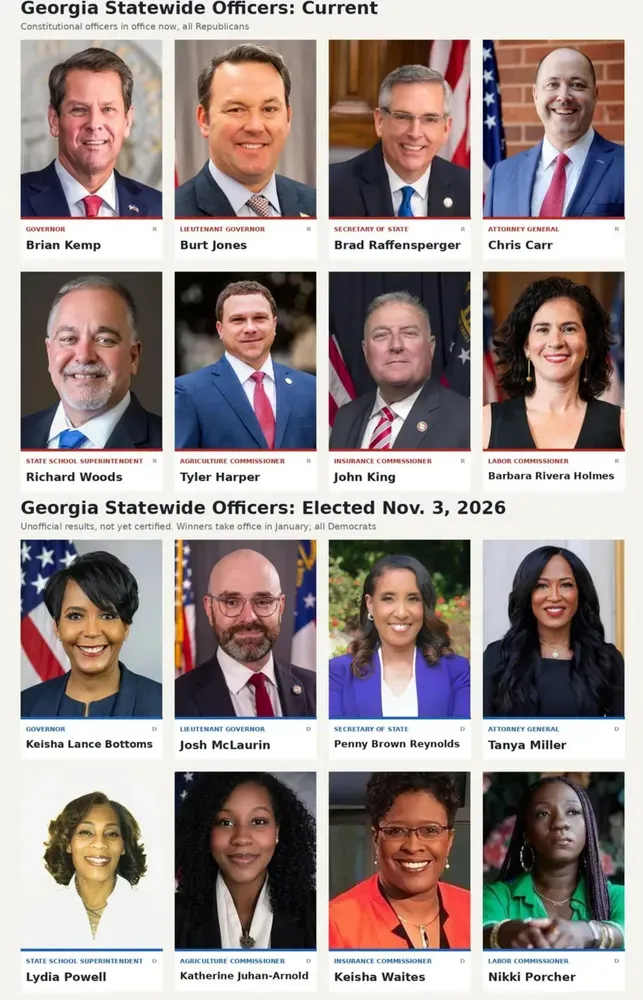
The sheer magnitude of this election is difficult to grasp. There were seats that hadn't been held by Democrats in twenty, forty, sixty years; there may be the first Black congressman from Mississippi since Reconstruction, there hasn't been a Democratic or a woman governor in Texas since Ann Richards – but there has never been a Latina or Latino governor in Texas; Hinojosa will be the very first. That is, some of what happened Tuesday had not happened in a long time. Some of it has never happened before. New Mexico's Deb Haaland will be the first Indigenous woman governor in this country, just as Peggy Flanagan will be the first Indigenous woman senator (or one of the two first if Peltola joins her, as I dearly hope she will). Georgia has its first Black woman governor and all but one of the top positions in that state that have always been held by white men will be held by Black women.
It was an election that will bring us far closer to true representation than we have ever been before, this country that has always been 50% female, has always had substantial nonwhite populations, has always had non-Christian citizens (my queer friends snicker at the idea that New Hampshire's Chris Pappas is the first gay senator; chances are he's just the first out one). While the House of Representatives is still unrepresentative demographically, it will have more than a hundred women for the first time ever. Enough state legislatures have a Democratic majority that epic reforms may become possible, including constitutional amendments – may they include ending the electoral college. The impacts are so many: in Texas, for example, the incoming governor and attorney general have made it clear that Texas's laws persecuting trans people and doctors helping women terminate pregnancies will not be enforced, while the shady contracts the state made with Elon Musk will be scrutinized for corruption. While you didn't hear a lot about abortion in this election, reproductive-rights champions defeated anti-choice candidates in many races; while you didn't hear a lot about climate, climate champions like Will Lawrence in Michigan's seventh district will be going to Congress, and almost every anti-data-center measure won.
When you look at all the voting tallies, white men remain the most conservative, pro-Republican voting bloc. Until not so long ago they were the only people who had the right to vote. The Republican Party has more and more openly crusaded for the return to an America in which only white Christian men mattered, in which they took back their dominance over the rest of us. They didn't just want to dam up the river. They wanted to make time, history, the river itself run backward to their version of the good old days that were everyone else's bad old days. Once people have tasted rights, equality, justice they do not give it up willingly. Queer people were not willing to go back in the closet, women to financial dependence and exclusion from public life, nonwhite people to second or eleventh-class status and disenfranchisement.
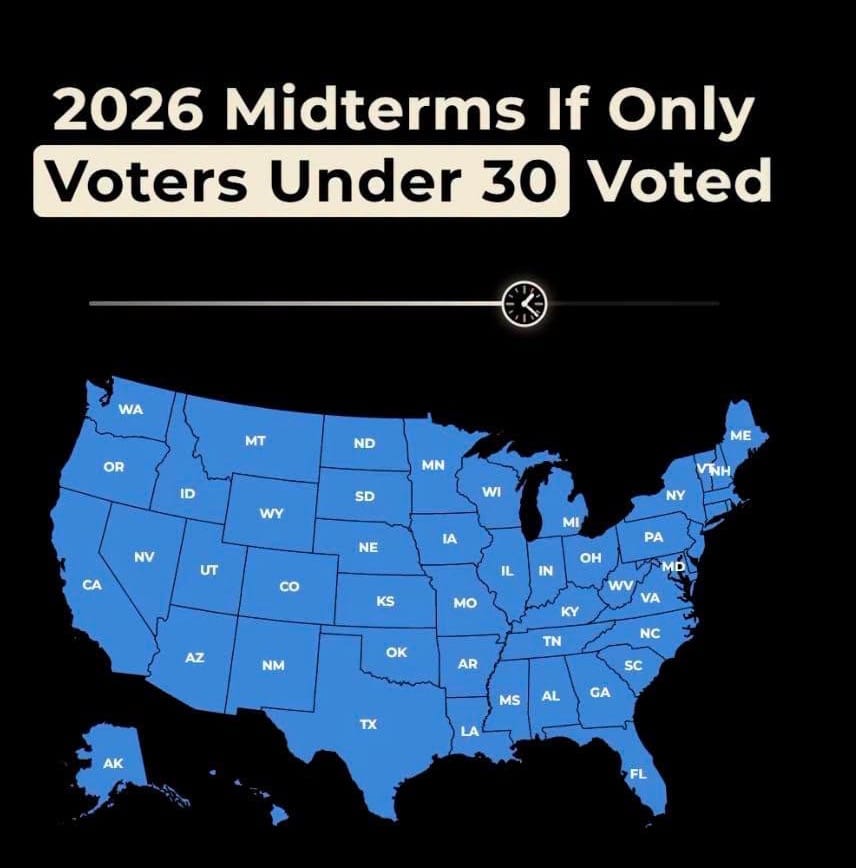
In the summer of 2024 I began writing The Beginning Comes After the End, which proposes just that: that we have at least since the 1955 Montgomery Bus Boycott living through an unfolding revolution that moves us toward more equality, more interconnection and desegregation, more recognition that we were never separate from each other or nature, toward a bigger more inclusive we when it comes to humanity and to our species among the many species and systems. In this context, the right has been waging a backlash against that equality, that interconnection (including with nature: a lot of environmental devastation is justified by pretending that things are not connected to other things, people to air and water and food, nature to the foul byproducts of industrialism). I feel vindicated in my theses and more than that exhilarated to see the revolution continue with this epic battle won.
Earlier this week, I told someone overseas curious about the election that it was like getting ten thousand presents, so many gifts it will take weeks to unwrap them all. Because there must have been ten thousand victories and they weren't just governorships or house and senate seats. They were local races, smaller seats – for example Democrats won a majority of seats on the Texas Board of Education, where Republicans had been pushing mandatory Bible instruction and massive censorship. Ten thousand gifts and a long game, so long it stretches back to the abolitionist and suffragist movements of the nineteenth century, because you can see all the movements as one movement to affirm universal human rights and equality. Sherrilyn Ifill said on BlueSky, "Black people in America have played the longest of 'long games.' The resilience and persistence it takes to believe and to keep fighting no matter the obstacles."
John Nichols, the Nation's executive editor, said on Wiener's podcast that he attended a rally for Peggy Flanagan. In the midst of her speech, she paused, so long that people wondered. “And then she took a deep breath and she said, tomorrow will be the 24th anniversary of the death of Paul Wellstone, the great progressive senator from Minnesota. Died in a plane crash not that far from Duluth. And she said, yesterday I went to the marker in Eveleth that recalls the deaths of Paul Wellstone and his wife Sheila. She actually choked up a little bit as she talked about it. And then she said, you know, when I was a very young woman, still college age or around there, I walked into a Paul Wellstone for Senate office. Because I just wanted to check it out. I didn't know too much about him or about what was going on. And she said, that day changed my life. Fundamentally, I'm here before you today because of that, because of Paul Wellstone. And I will, if things turn out right in about a week, take his seat in the United States Senate. But it was just so chilling and so powerful to hear.” That's the long game. That's a seed planted in 2002 that bloomed in 2026.
Michelle Alexander wrote in that 2018 essay, "Those of us who are committed to the radical evolution of American democracy are not merely resisting an unwanted reality. To the contrary, the struggle for human freedom and dignity extends back centuries and is likely to continue for generations to come. In the words of Vincent Harding, one of the great yet lesser-known heroes of the black freedom struggle, the long, continuous yearning and reaching toward freedom flows throughout history 'like a river, sometimes powerful, tumultuous, and roiling with life; at other times meandering and turgid, covered with the ice and snow of seemingly endless winters, all too often streaked and running with blood.' Harding was speaking about black movements for liberation in America, but the metaphor applies equally well to the global struggle for human dignity and freedom."