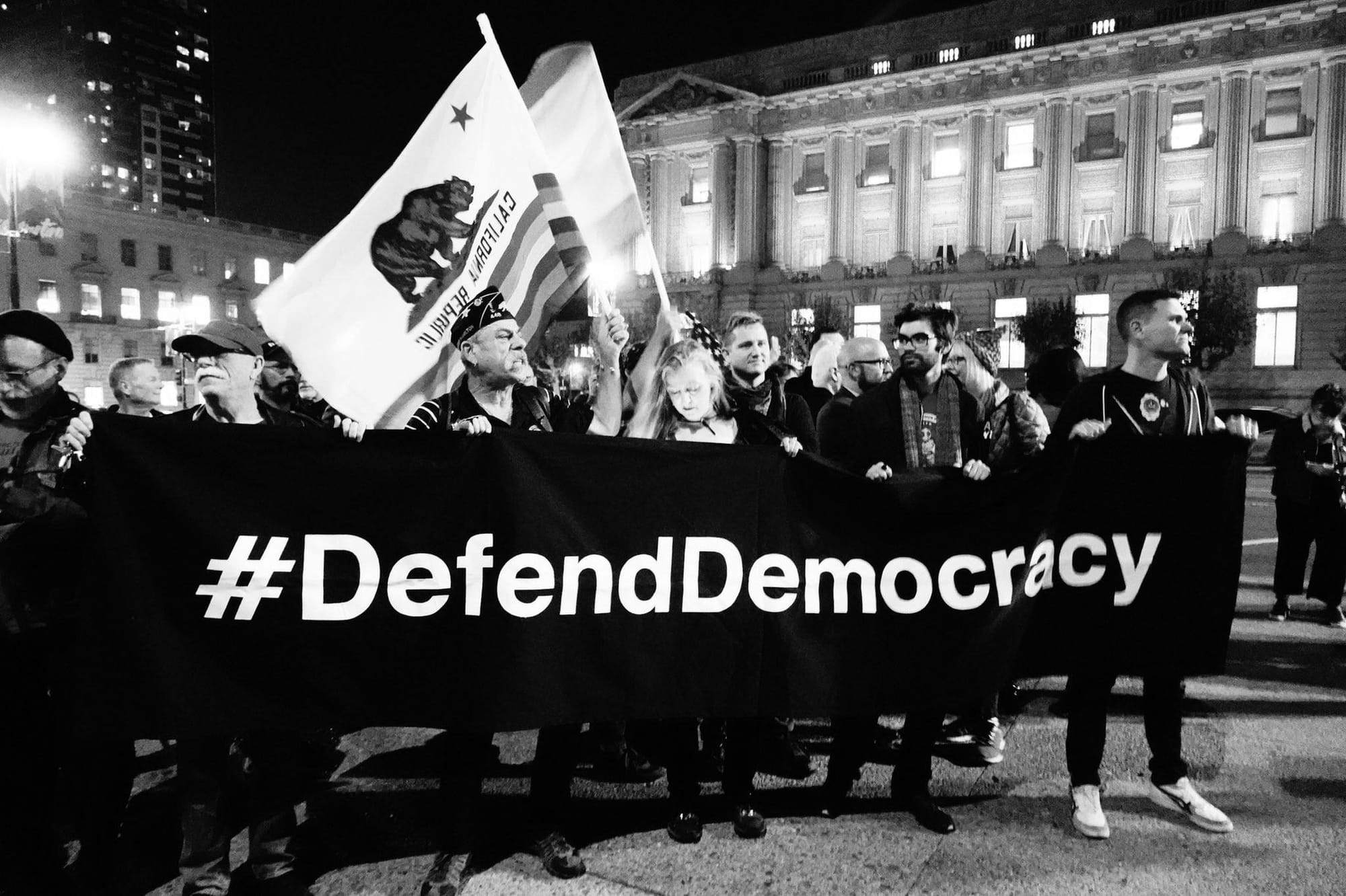
Welcoming the Stranger and Fighting the Power: A Roundup
Resistance is happening in a thousand ways from people destroying Flock cameras to judges upholding the Constitution to the pope once again spurning JD Vance's advances. Resistance in solidarity with immigrants and others under attack, resistance against surveillance, cruelty, lawlessness. Even Olympic athletes spoke up against the Administration's policies this week ("I feel heartbroken about what's happening in the United States," said freestyle skier Chris Lillis at an Olympics press conference. "I think as a country we need to focus on respecting everybody's rights." So did a lot of other people. There's just so much going on, some of it encouraging. Very encouraging, which is not to lose sight that what it is is encouraging that there is resistance against this would-be authoritarian regime and its attacks on, well, almost everything. This is a roundup of some notable news.
– Here's Chicago-based organizer Kelly Hayes at her newsletter interviewing people involved in resisting ICE and writing about what they've learned in a piece titled “We Belong to Each Other Now”: Lessons from Minneapolis (for clarity's and tidiness's sake all quoted material is in italics rather than quotes: One hurdle that local organizers had to overcome was the hesitancy of some residents who felt unqualified to take action. Some community members were reluctant to so much as blow a whistle, to alert their neighbors to the presence of ICE agents, unless they had attended a training. Responders described the need for outreach that allowed residents to embrace their own agency — a process that sometimes had messy results, but often resulted in essential, creative interventions. “You don't need to wait for nonprofit directors, leaders, or block captains, or a more organized neighborhood to give you permission,” Melvin explained. “Just get out there and do it.” To take bold action, group members argued, we must overcome our ingrained obedience to authority. Sasha noted that under a “tyrannical authoritarian regime” like the Trump administration, an allegiance to authority was utterly self-defeating, and that a posture of disobedience was essential. She noted that “authoritarian structures” already exist in the minds of people living under capitalism, because “we live in a world that robs us of connection, agency, creativity, and energy.” To participate in actions as risky and defiant as tailing ICE agents, a kind of internal liberation is necessary."
– Here's one of the best things I've read in the New York Times in a long time (gift link): an account of participating in the defense of Minneapolis against ICE as joyful, in prose that is itself a joy to read.
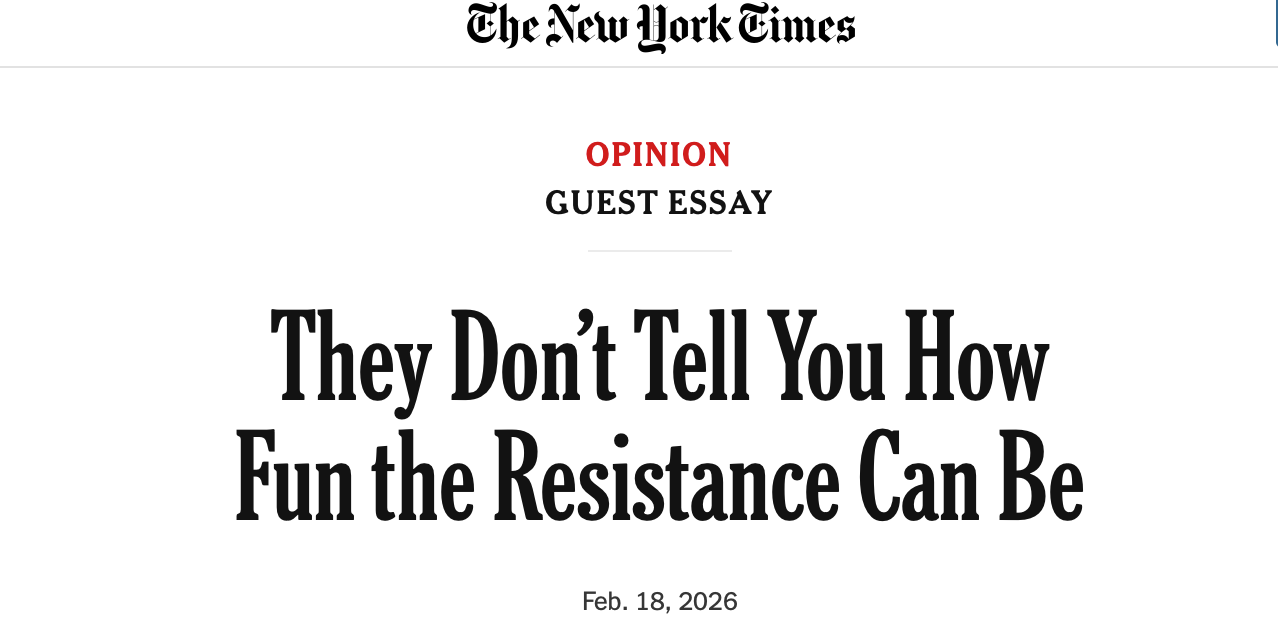
Will McGrath writes, In the resistance we drive minivans, we take ’em low and slow down Nicollet Avenue, our trunks stuffed with hockey skates and scuffed Frisbees and cardboard Costco flats. We drive Odysseys and Siennas, we drive Voyagers and Pacificas, we like it when the back end goes ka-thunk over speed bumps, shaking loose the Goldfish dust. ...In the resistance we drive the high school car pool, that holy responsibility, the ferrying of innocents among the wolves. We drive kids we’ve never met before from families afraid to leave their houses, and most mornings we’re in our pajamas, a staling doughnut grabbed with yesterday’s cold coffee, teeth unbrushed — and OK, fine, that might just be me. You wouldn’t be the first to cock an eyebrow at my personal hygiene."
Later in the piece (but read the whole thing): What they don’t often tell you is how beautiful the resistance can be. In the evening, on the day that Alex Pretti, an I.C.U. nurse, was shot to death by federal agents in front of Glam Doll Donuts, my wife and I drove through Minneapolis. There were candlelight vigils on nearly every corner we passed, some corners with four or five people cupping tiny flames, some corners with 50 neighbors milling about, communing, singing, stoking a firepit hauled to the sidewalk, lighting up the little Weber grill, just hanging out in the frozen dark.
– Across the country, in another act of resistance, reports Brian Merchant at his tech-critical newsletter Blood in the Machine people are destroying Flock surveillance cameras: Last week, in La Mesa, a small city just east of San Diego, California, observers happened upon a pair of destroyed Flock cameras. One had been smashed and left on the median, the other had key parts removed. The destruction was obviously intentional, and appears perhaps even staged to leave a message: It came just weeks after the city decided, in the face of public protest, to continue its contracts with the surveillance company. Flock cameras are typically mounted on 8 to 12 foot poles and powered by a solar panel. The smashed remains of all of the above in La Mesa are the latest examples of a widening anti-Flock backlash. In recent months, people have been smashing and dismantling the surveillance devices, in incidents reported in at least five states, from coast to coast.
– Here's Mayor Zohran Mamdani at the NYC interfaith breakfast last Sunday on welcoming the stranger. He said to a roomful of priests, ministers, rabbis, imams: Standing before you today, I think of Deuteronomy 10:17-18, which describes the Lord as one who shows no partiality and accepts no bribes. He defends the cause of the orphan and the widow, and loves the stranger residing among you,0:28giving them food and clothing. And today, my friends, I want to reflect on the third charge:0:33loving the stranger. Across this country, day after day, we bear witness to cruelty that staggers the conscience. People ripped from their cars, guns drawn against the unarmed, families torn apart, lives shattered, quietly, swiftly, brutally. If these are not attacks upon the stranger among us, what is? ...And they would succeed, were it not for the many among us1 who have not only read the Scripture, but who live the Scripture, those who refuse to abandon the stranger.
Full video at: https://www.youtube.com/watch?v=uoU9Img_B40
– Here's a beautiful passage in The Bulwark podcast by Tim Miller, in which he reflects on the present in the context of the past (very casually because he's just speaking, unscripted, into the mike) after visiting Minneapolis : “Went then to the Prettie Memorial and the Good and Prettie Memorial. And it was really tough. I had a tough time with it. And, you know, the Prettie one in particular, I think maybe just because I've seen the video so many times, it was just very easy to visualize, like standing there. Like my subconscious knew all the signposts. I haven't watched the video so much. And so I was like visualizing them, executing him in the street, walking through, and just getting very mad and emotional. And had to walk away for a little bit. But when I walked back, I took to this guy, Jeff, who was there, who's been going there most days, help protect and clean up the memorial and just be a watcher, be a helper out there. And he said to me that he was doing it in the spirit of what Lincoln said in the Gettysburg Address.
And I went back to the hotel room and pulled it [the Gettsyburg address] up. And I saw the section that he was talking about in the Gettysburg Address. I just, I do want to read it because I think that it kind of summarizes what we were trying to do here in Minnesota. It goes like this:"We cannot dedicate, we cannot consecrate, we cannot hollow this ground. The brave men living and dead who struggled here have consecrated far above our poor power to add or detract. It is for us, the living rather, to be dedicated here to the unfinished work, which they who fought here have thus far so nobly advanced.” And that unfinished work is what Jeff was talking about. You know, there's only so much you can do to memorialize and consecrate the ground where these guys assassinated our fellow citizen for doing nothing, for trying to help someone, for exercising the rights of the First and Second Amendment that are enshrined in our Constitution. You know, we can remember and honor. But what it's really our job to do is to continue the unfinished work.”The Bulwark was co-founded by Never Trumper Bill Kristol, but it sounds increasingly progressive.
– The backlash against Trump is showing up in hard data, not just polls, notes G. Elliot Morris in his newsletter Strength in Numbers: This week, new data came out showing that anti-Trump protests are roughly four times as common as they were at the same point in his first term. The backlash isn’t just in the polls, it’s everywhere.... He then gives figures from the Crowd Counting Consortium that Erica Chenoweth co-leads, showing that protest has been at four times the level it was during the first year of Trump's first term. He goes on to note, The most striking data point is that low-political-knowledge, low-news-engagement voters — roughly 27% of the electorate — have swung from supporting Trump by 11 points in 2024 to disapproving of him by 13 points. These low-information people largely don’t consume political news directly, so their changing attitudes are a sign that the consequences of Trump’s presidency are a topic of conversation among normal people.... Finally, special elections also pick up the same signals as the polls. According to The Downballot’s tracking, Democrats have performed an average of 13 points better than Kamala Harris did in elections for state legislative and congressional districts held in 2025 and 2026.
– There's a big push to criminalize resistance and protest, but the lying is not paying off, reports the Guardian: Department of Justice prosecutors across the US have suffered a string of embarrassing defeats in their aggressive pursuit of criminal cases against people accused of “assaulting” and “impeding” federal officers. In recent months, the federal government has relentlessly prosecuted protesters, government critics, immigrants and others arrested during immigration operations, often accusing them of physically attacking officers or interfering with their duties. But many of those cases have recently been dismissed or ended in not guilty verdicts. In several high-profile cases, the prosecutions fell apart because they relied on statements by Department of Homeland Security (DHS) officers that had no supporting evidence or in some instances were proven by video footage to be blatantly false.
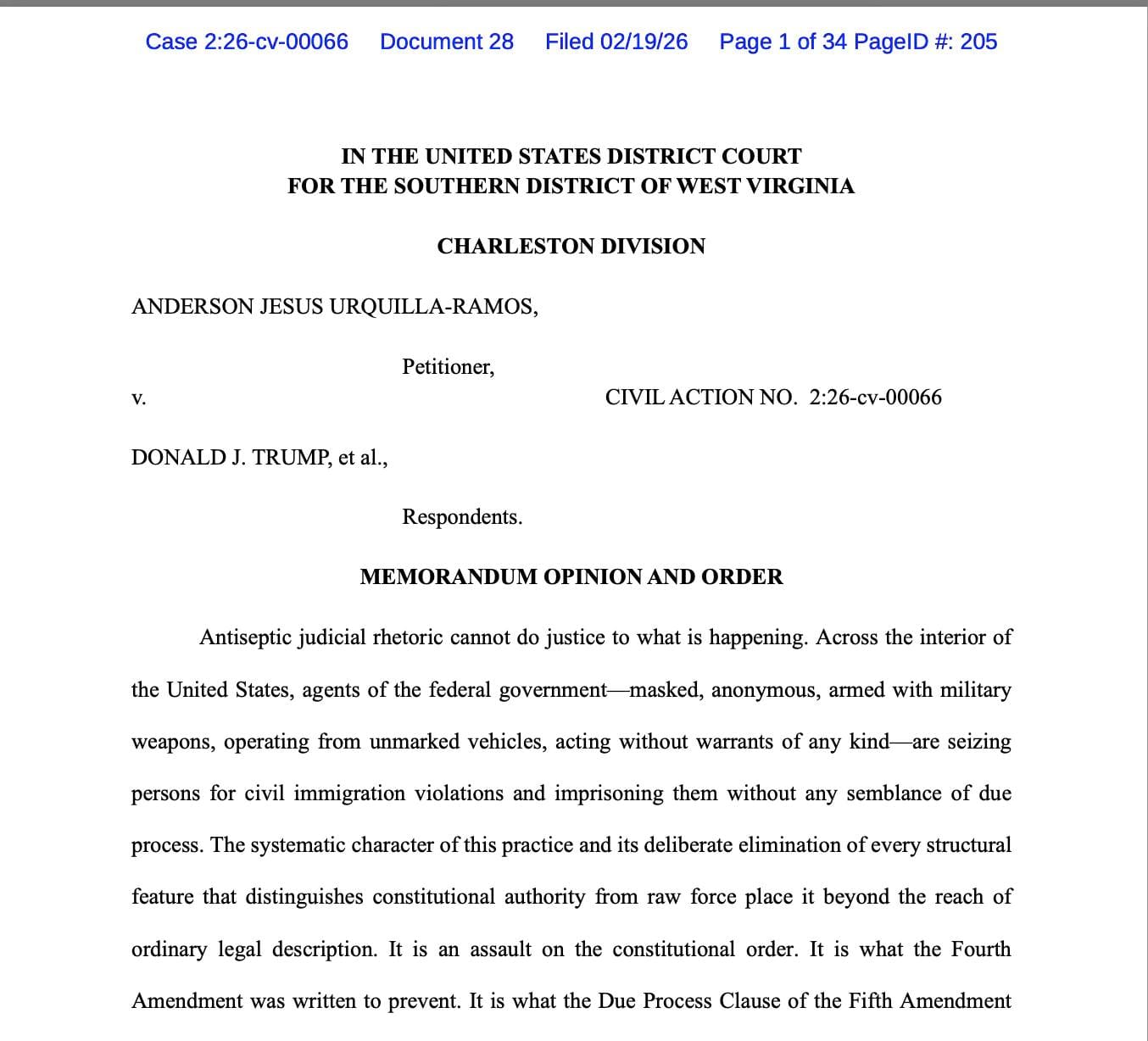
– Many judges have all along been furiously rejecting the Trump agenda when it clashes with the law and the Bill of Rights. Here's federal district judge Joseph R. Goodwin declaring that in the case of an arrested and detained 21-year-old from El Salvador that both his Fourth Amendment right to be free from unreasonable searches and seizures as well as his FifthAmendment right to due process have been violated. Immediate release is the only relief sufficient to remedy Petitioner’s unlawful detention. (full text is here). But he doesn't just free the guy. He takes on the lawlessness: Antiseptic judicial rhetoric cannot do justice to what is happening. Across the interior of the United States, agents of the federal government—masked, anonymous, armed with militaryweapons, operating from unmarked vehicles, acting without warrants of any kind—are seizing persons for civil immigration violations and imprisoning them without any semblance of dueprocess. The systematic character of this practice and its deliberate elimination of every structural feature that distinguishes constitutional authority from raw force place it beyond the reach of ordinary legal description. It is an assault on the constitutional order. It is what the Fourth Amendment was written to prevent. It is what the Due Process Clause of the Fifth Amendment forbids. The overarching issue is whether the federal government may deploy anonymous agents to seize persons on American streets and highways for civil violations, without warrants, without identification, and without any process before or after. The Constitution does not permit that. The remainder of this opinion explains why. In our constitutional republic, governmental force derives its authority from the Constitution. But that authority is not unlimited. The Government’s power is legitimate only because it is derived from the People and exercised through law by identifiable public officers answerable to the public and to the courts.
– It's a big week for the Constitution. The Supreme Court, whose right-wing majority seemed to trash the Constitution in too many decisions in favor of Trump, asserted it in a decision about tariffs and the limits of presidential power. Or rather three of them did, along with the three remaining liberals on the court. The decision should've appeared sooner to check the global economic whiplash of Trump's capricious tariff infliction. As former secretary of labor Robert Reich reads it in his newsletter, This is a big decision. It goes far beyond merely interpreting the 1977 International Emergency Economic Powers Act not to give Trump the power over tariffs that he claims to have. It reaffirms a basic constitutional principle about the division and separation of powers between Congress and the president. On its face, this decision clarifies that Trump cannot decide on his own not to spend money Congress has authorized and appropriated — such as the funds for USAID he refused to spend. And he cannot on his own decide to go to war..... Trump has no authority on his own to impose tariffs, because the Constitution gives that authority to Congress. But by the same Supreme Court logic, Trump has no authority to impound money Congress has appropriated because the Constitution has given Congress the “core congressional power of the purse,” as the court stated yesterday. Hence, the $410 to $425 billion in funding that Trump has blocked or delayed violates the Impoundment Control Act, which requires congressional approval for spending pauses. This includes funding withheld for foreign aid, FEMA, Head Start, Harvard and Columbia universities, and public health.
Of course this has been true all along, and had the legislative branch of the federal government not been held hostage/surrendered/been shackled by Speaker of the House Mike Johnson and Senate Majority Leader John Thune, it could have asserted this itself. Now the question will be how to force the administration to follow the law.
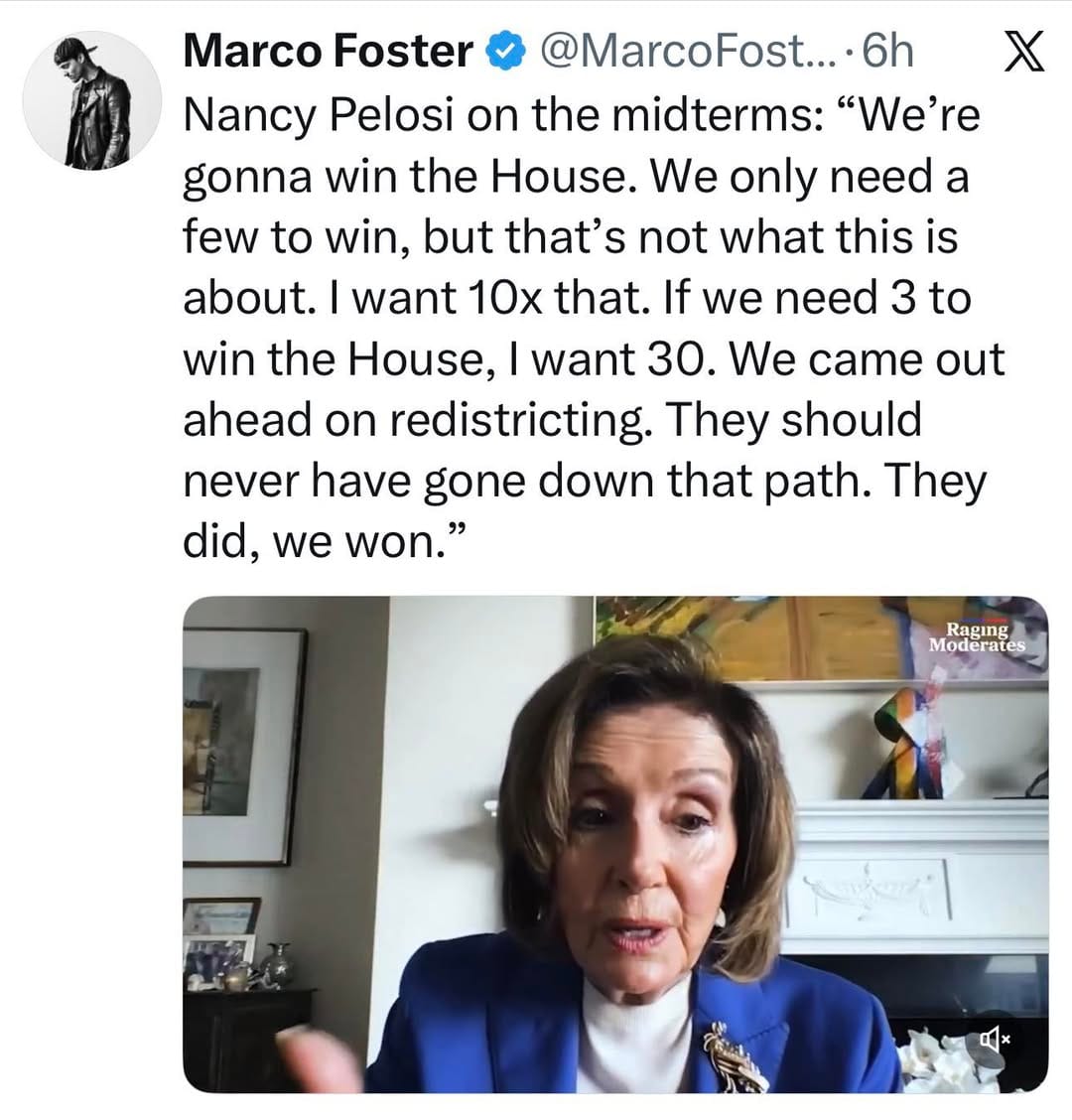
—Speaking of the powers of Congress, Congresswoman Nancy Pelosi, who I've taken to calling the Napoleon of the House for her (under-recognized by casual observers of US politics) strategic brilliance, boldness, and leadership when she was speaker, goes big on the possibilities this fall:
– The pope continues to oppose and reject JD Vance and his anti-immigrant agenda. Vance, a Catholic convert who thinks he can disregard all the church's teachings (see Mamdani above on welcoming the stranger), seems to be unable to hear the message clearly, like a creep who keeps pestering a girl who won't go out with him. Vance flew to Rome to ask the US-born pope to come celebrate the fourth of July in this country. Pope Leo XIV probably felt obliged to give the vice president a hearing, but the video shows Vance trying to be chummy and obsequious while the head of the Catholic Church is politely icy. JD Vance Humiliated as Pope Snubs Fourth of July 250 to Stand with Immigrants says one headline.
Christopher Hale, who writes a newsletter that follows what this pope is up to notes, Pope Leo XIV will celebrate this coming July 4 not in the United States for its 250th festivities, but on the tiny Italian island of Lampedusa — a migrant gateway in the Mediterranean. The Vatican announced that on Independence Day the pope will travel to Lampedusa, ground zero of Europe’s migration crisis, instead of attending any U.S. 250th birthday events. Coming just days after Pope Leo publicly rebuffed President Donald Trump’s invitation to join his “Board of Peace” initiative for Gaza, the decision reads as pointed counter-programming.
There is so much going on. Administration attacks on an independent news media, on the rights of immigrants and refugees, on science and public health, on the rule of law continue. But not without resistance, sometimes pushing back or stopping it altogether. It matters. We have not surrendered.
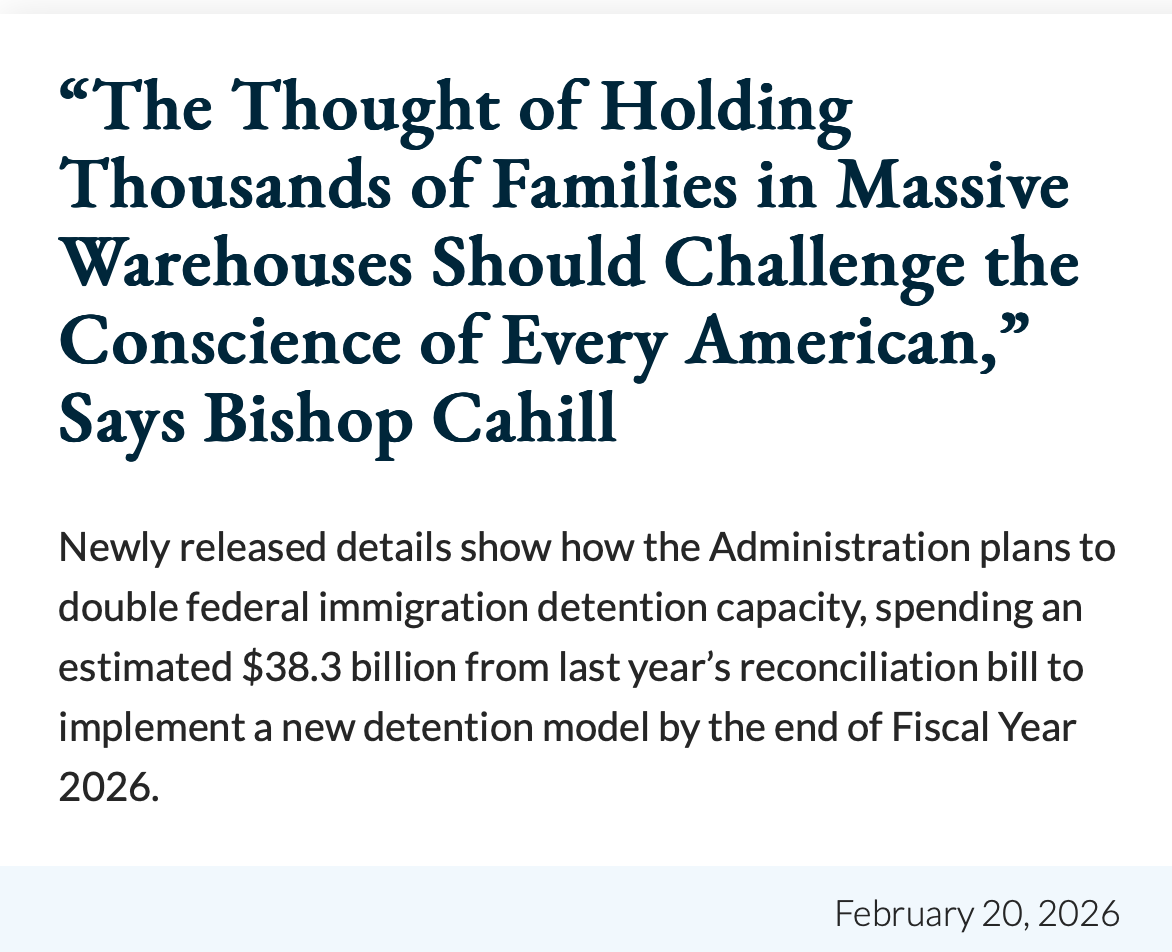
p.s. More news since I posted this edition: "US bishops warn ICE mega-detention plan is 'moral inflection point' for America."