Gloria Steinem Helped Transform the World for Everyone
To become old is to be an immigrant from a country that no longer exists, and to live among peers who sometimes remember that country and among younger people who mostly don't know how different the past was. Much dismissiveness about feminism comes from ignorance about how profoundly feminism changed things that were so deeply entrenched, so normalized into invisibility, so ancient and customary that they first had to be denormalized, named, unpacked, and explained as to why they were incompatible with women's status as people entitled to life, liberty, and the pursuit of happiness. As news of Gloria Steinem's death at 92 came in this morning, I saw a lot of this incomprehension.
Steinem became a highly visible part of the women's movement after 1969, then a founder of Ms. Magazine, which began publication in 1972, and a force in NOW, the National Organization for Women. She was not everyone's cup of tea, and the women's movement was never one movement controlled by one group with one set of ideas. It can be imagined as a laboratory (or many laboratories) of possibilities in which various theses, formulas, and solutions were tried, refined, rejected, improved, replaced and so on, which is to say it is ahistorical, among other things, to complain that, say, the feminists of 1972 were not the feminists of 2026. They were not but they opened doors for the feminists of 2026 and made the lives of countless women more safe, free, dignified, and possible.
One peculiar thing about the misremembering of the past is that when it comes to women's inequality a whole lot of people almost automatically mention credit cards and that women couldn't get them in their own name, over and over and over. (I don't believe credit cards were as central to economic life then as they are now; checks were widely used for larger transactions). It is true that financial inequality on many fronts greatly impaired women's freedom and equality: "Before 1974, in fact, if you were a single woman, you almost always needed your father, brother, or other male relative to co-sign loans for you, even if you made more money than they did. If you were a married woman, you could not obtain credit cards in your own name—you could only get a card as Mrs. Your Husband’s Name. And then, no matter how carefully you paid the bills and managed the account, the credit history accrued only to him. As a result, if your husband died or you divorced, it was nearly impossible for you to obtain a loan."
But that was far from the worst thing about the status of women before feminism changed everything: women were not just restricted from owning credit cards, they were restricted from owning themselves. Steinem, who married for the first time in her sixties, was asked by a reporter from Pakistan why she had changed her mind about marriage. “I didn’t change,” she told him. “Marriage changed. We spent thirty years in the United States changing the marriage laws. If I had married when I was supposed to get married, I would have lost my name, my legal residence, my credit rating, many of my civil rights. That’s not true anymore. It’s possible to make an equal marriage."
I wrote in The Mother of All Questions, "In 2015, Justice Ruth Bader Ginsberg brought up a 1982 Supreme Court case while hearing the case for same-sex marriage rights. “Marriage today is not what it was under the common law tradition, under the civil law tradition,” said Ginsburg when Justices Roberts and Kennedy began to fret about whether the court had a right to challenge centuries of tradition. “Marriage was a relationship of a dominant male to a subordinate female,” she explained. “That ended as a result of this court’s decision in 1982 when Louisiana’s Head and Master Rule was struck down …” Ginsberg, the second woman ever to serve on the Supreme Court, was referencing Louisiana’s “head and master” law, which gave a husband unfettered right to dispose of jointly owned property without his wife’s knowledge or consent. The test case involved a husband who mortgaged the house his wife had purchased with her earnings, to defend himself against charges of molesting their daughter. She had no voice in the disposal of her home, her earnings, the course of her life; what should have been hers or theirs was his alone."
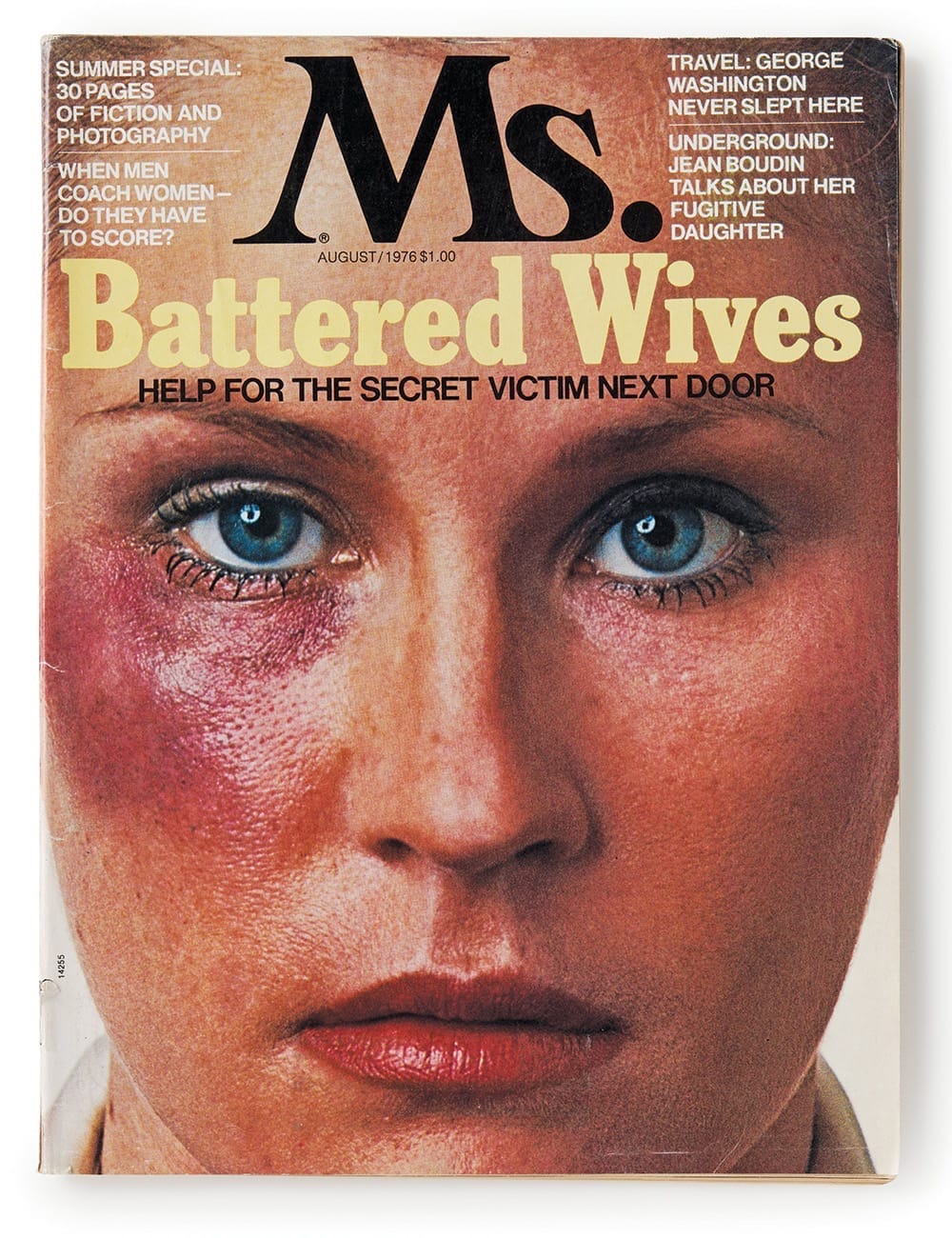
Feminists did enormous work to bring attention to and delegitimize what was then called wifebeating and is now called domestic violence or intimate partner violence and created the first domestic violence shelters. The lesbian feminist Del Martin in San Francisco published a book called Battered Wives in 1976. I own a copy: it's a historical artifact that documents the process of breaking the silence and addressing the impact of spousal violence. Marital rape (which Martin also discusses) was another issue feminists called attention to and got outlawed in state after state, with the last state getting onboard with the notion that even married women owned their own bodies in the early 1990s.
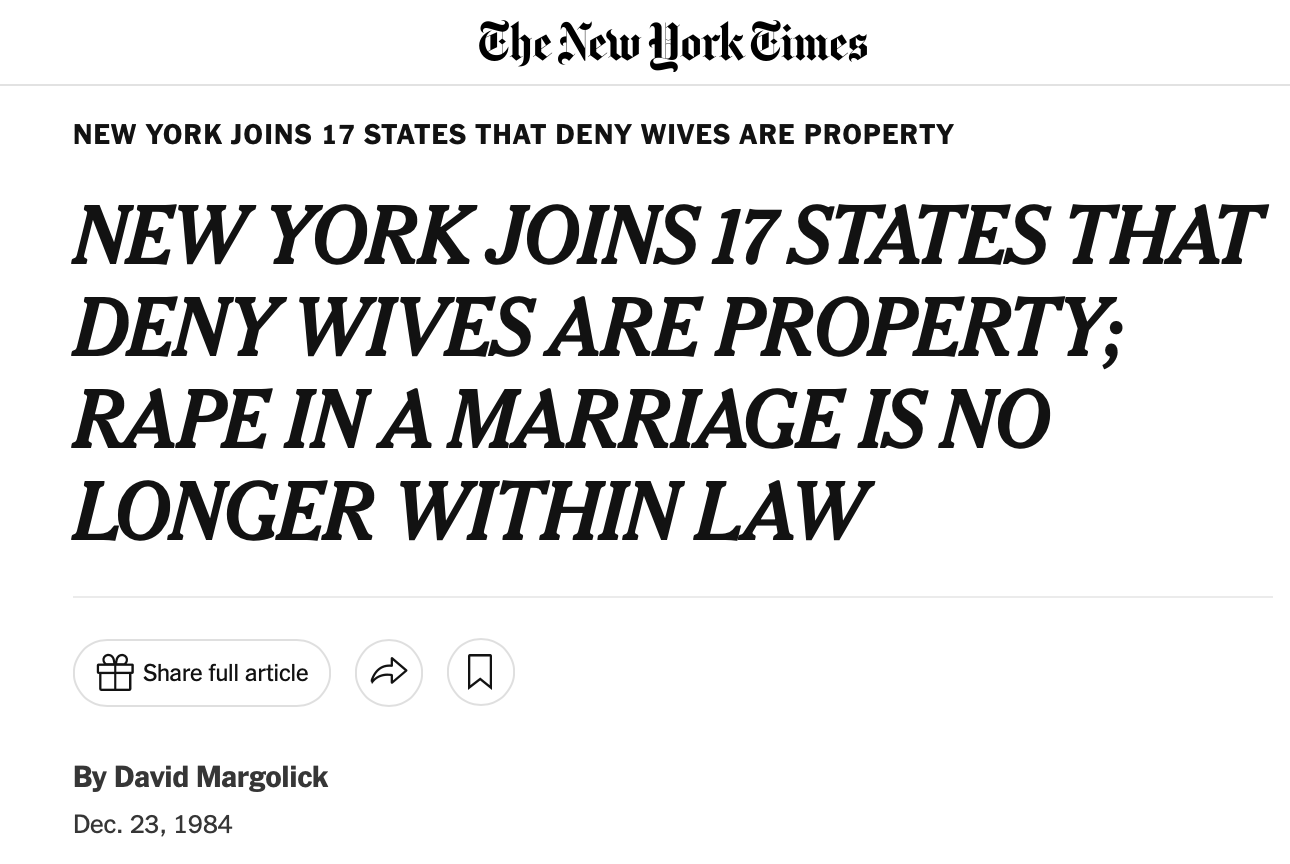
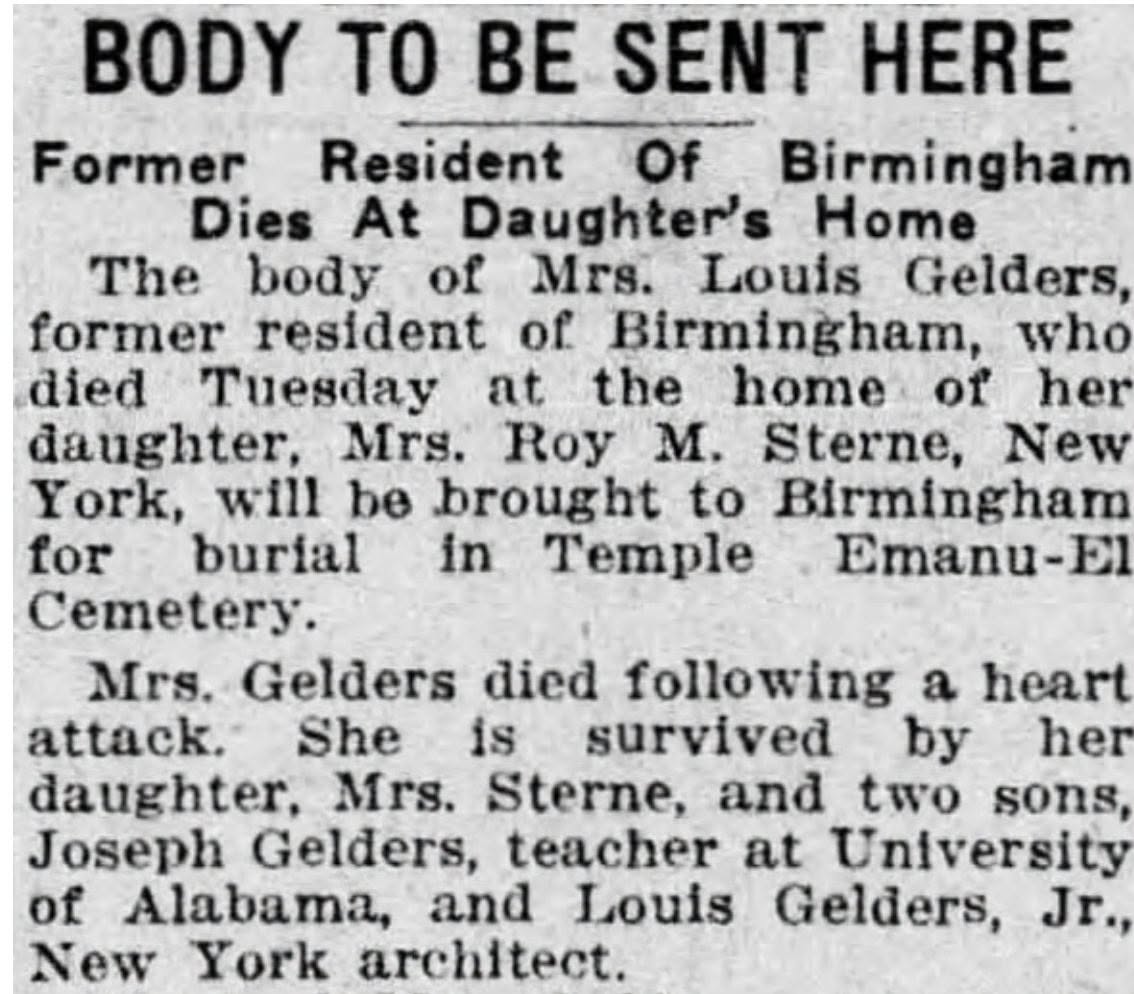
In 1765 the British judge Blackstone had declared, in an oft-referenced passage: “By marriage, the husband and wife are one person in law: that is, the very being or legal existence of the woman is suspended during the marriage, or at least is incorporated and consolidated into that of the husband…” She ceased to exist in many senses. I had a reminder of what this meant recently when I looked up the zen teacher Blanche Hartman and found a clipping about her grandmother's death. Blanche's grandmother, whose name was Blanche Loeb Gelders, was described only as Mrs. Louis Gelders, even though her husband had pre-deceased her; her daughter, at whose home she died, was the writer Emma Gelders Sterne, but only described as Mrs. Roy E. Sterne.
In other words, in a brief account of two women, only men were named. People found it appalling that in Margaret Atwood's The Handmaid's Tale, the handmaids were known by the name of the man who they were bound to – Offred for the one Fred more or less owned, and the names changed as the owners did. But it's just a different linguistic form of the same obliteration of identity. Ms. Magazine, which Steinem cofounded, was radical in its very name, since the word Ms. proposed that women should, like men, have a prefix that did not address their marital status as Miss or Mrs. did.
Marriage erased women; reasserting themselves as people was not easy. Before California began no-fault divorce, divorce was harder to get, more stigmatizing, and could leave the woman with no financial resources: a marriage, no matter how miserable or abusive, was hard to escape (and abused women, including my mother, were often advised to be more submissive, placating, charming, whatever, with the sense that her husband's violence was her fault). According to one history, "Even if your spouse was cruel or unfaithful, you had to prove it in court with witnesses, documents, or medical records. Your own testimony didn’t count." Until no-fault divorce. Country stars Buck Owens, who married four times, and Rose Maddox wrote a hit song in 1961 that suggested women who got divorced were frivolous and untrustworthy and should maybe just suck it up.
Mental cruelty, that's what I heard her say
Mental cruelty to the judge that day
I sat there in silence so she could be free
And listened to her lying words mental cruelty...
A 2006 study notes, "In states that introduced unilateral divorce we find a 8–16 percent decline in female suicide, roughly a 30 percent decline in domestic violence for both men and women, and a 10 percent decline in females murdered by their partners." Another source says, "Looking longer term, they found close to a 20 percent decline in female suicides 20 years after the change to no-fault divorce." No fault divorce wasn't the only thing that changed for women in those years, but it was a big one. Some far-right figures, including Vice President JD Vance, are increasingly loud in their opposition to no-fault divorce.
Everything they want to roll back is a reminder that we rolled it forward. In response to news of Steinem's death, I saw people suggest that women had fewer rights now. It is true that Roe vs. Wade's overturning in 2022 was terrible news. In its wake, some states have established reigns of reproductive terror and some states have preserved or expanded reproductive rights, including ten that have amended their state constitutions to add abortion rights. Almost two thirds of abortions in the USA are now medication-induced, which has allowed some women in anti-choice states to access (sometimes legally risky) reproductive care. The number of abortions in the USA has gone up post-Roe.
Of course before the Roe vs. Wade decision in 1973, and women had no federal right to abortion before that. Griswold vs. Connecticut, which gave married couples the right to birth control, was decided in 1965, and a foll0w-up decision granted the right to unmarried women in 1972, overturning a Massachusetts law to prevent "crimes against chastity." The full array of rights that women won, thanks to the feminist work that Steinem was central to, would fill far more than an essay.
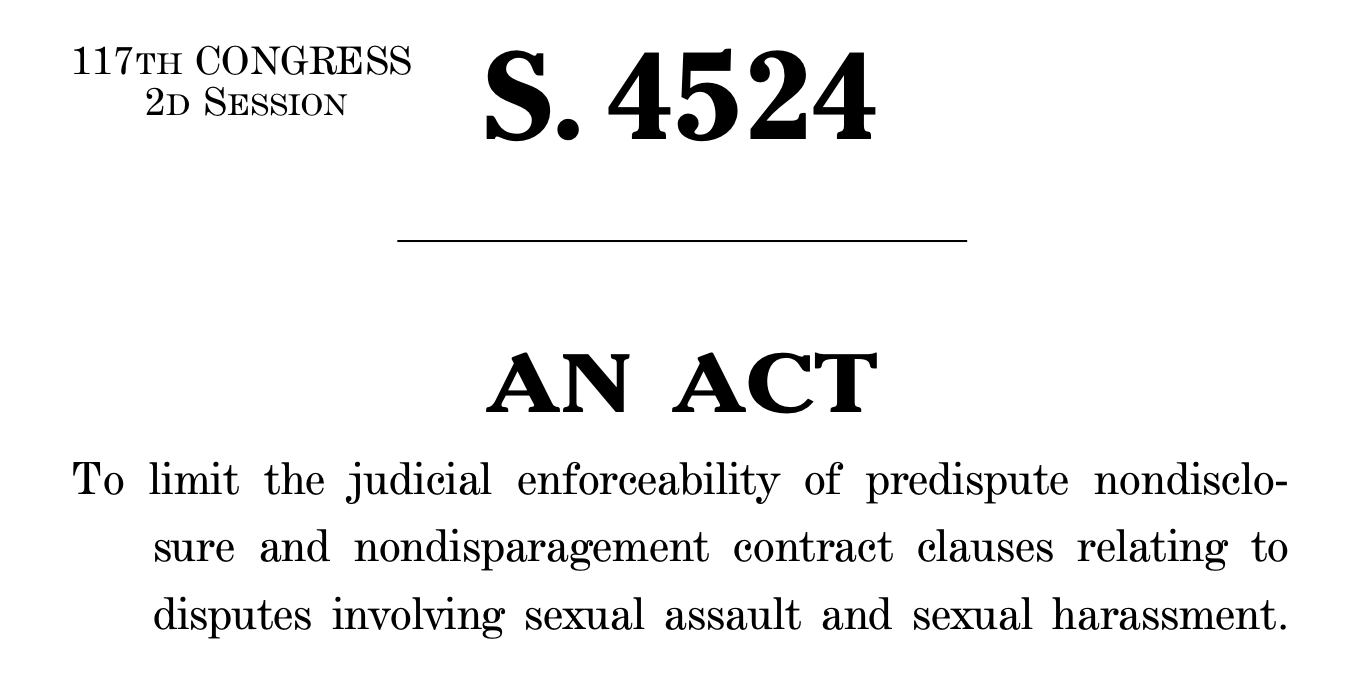
Despite the furious backlash, there have continued to be victories. The feminist surge of circa 2013-19 brought about a new era of public awareness and accountability around sexual abuse, harassment, and violence. One remarkable outcome was the prosecution of many abusers for crimes committed years and decades earlier, a reminder of the impunity they'd previously had, and powerful men from Harvey Weinstein to Sean Combs to the gymnastics doctor went to prison. This surge prompted the passage of a number of laws, including some ending the use of NDAs (non-disclosure agreements) to silence victims, and reform of other laws around abuse and statutes of limitations.
Good journalism was central to all this. Ronan Farrow at the New Yorker and Megan Twohey and Jodi Kantor at the New York Times exposed Harvey Weinstein's abuses. Julie K. Brown at the Miami Herald reopened the Jeffrey Epstein case in 2019, leading to his arrest and death in jail, Ghislaine Maxwell's long prison sentence, and the ongoing exposure of complicit men. Most recently Heidi Blake's scathing overview of Andrew and Tristan Tate's empire of abuse at the New Yorker this June seems to have prompted the British government to seek their extradition from the US to face renewed charges of abusing women and girls there.
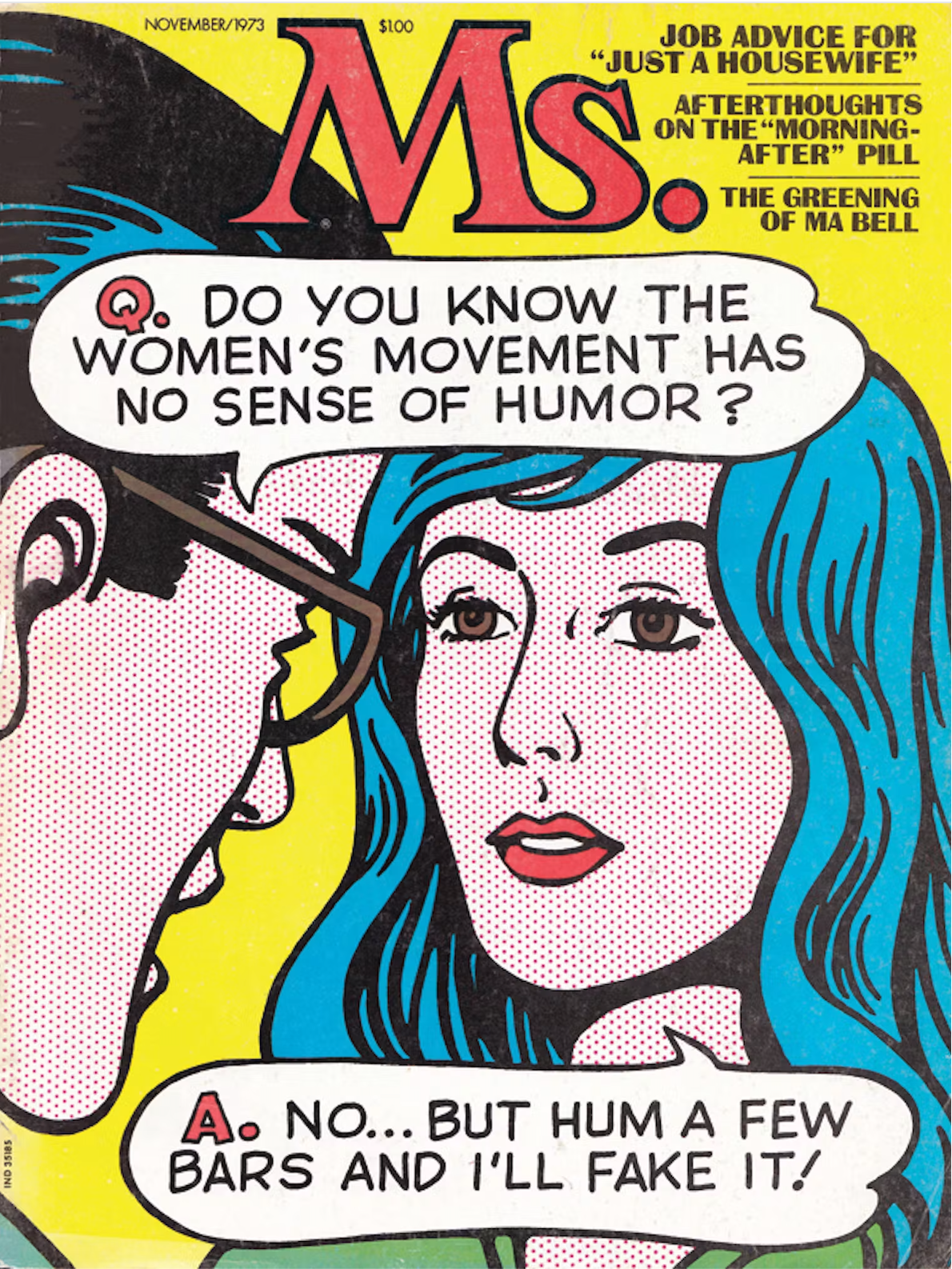
My mother subscribed to Ms. Magazine when it was still a new thing, and I believe Ms. did a lot to take feminist nationwide. Of course I read it (and everything else within miles) voraciously. I think Ms. gave her encouragement to leave her abusive marriage as feminism (and no fault divorce) did countless women in the 1970s. Ms. was scathing, smart, funny, wide-ranging. Steinem wrote a piece in 1978 about how if it was men who menstruated, not women, "menstruation would become an enviable, boast-worthy, masculine event: Men would brag about how long and how much. Boys would mark the onset of menses, that longed-for proof of manhood, with religious ritual and stag parties.Congress would fund a National Institute of Dysmenorrhea to help stamp out monthly discomforts." There was a no-comment section that ran sexist ads and other images, fiction, news analysis, and a lot of defiance, ambition, and hope that things could be radically different. In 1975, Angela Davis wrote for Ms. about Joan Little, a Black woman who had killed the prison guard who tried to rape her (Little was acquitted; there's a new documentary film about her). In September of 1973, the New York Times reported, "The buyers of Ms, have driven the circulation up from a start of 250,000 to more than 350,000 a month. Ms. surveys indicate that 1.4 million women read each copy." That was impact.
Steinem was more radical than figures such as Bette Friedan, whose 1963 book The Feminine Mystique helped articulate the erasure many materially secure women felt. She was less radical than a lot of younger feminists, and the 1970s movement was full of momentum and hope – and infighting. Though she was disparaged for ignoring class and economics, reproductive rights, divorce rights, and rights against spousal abuse are economic rights. NOW, the National Organization for Women, and Ms. Magazine, often focused on economic inequality around wages, promotions, working conditions (and sexual harassment is a working condition), and access to childcare.
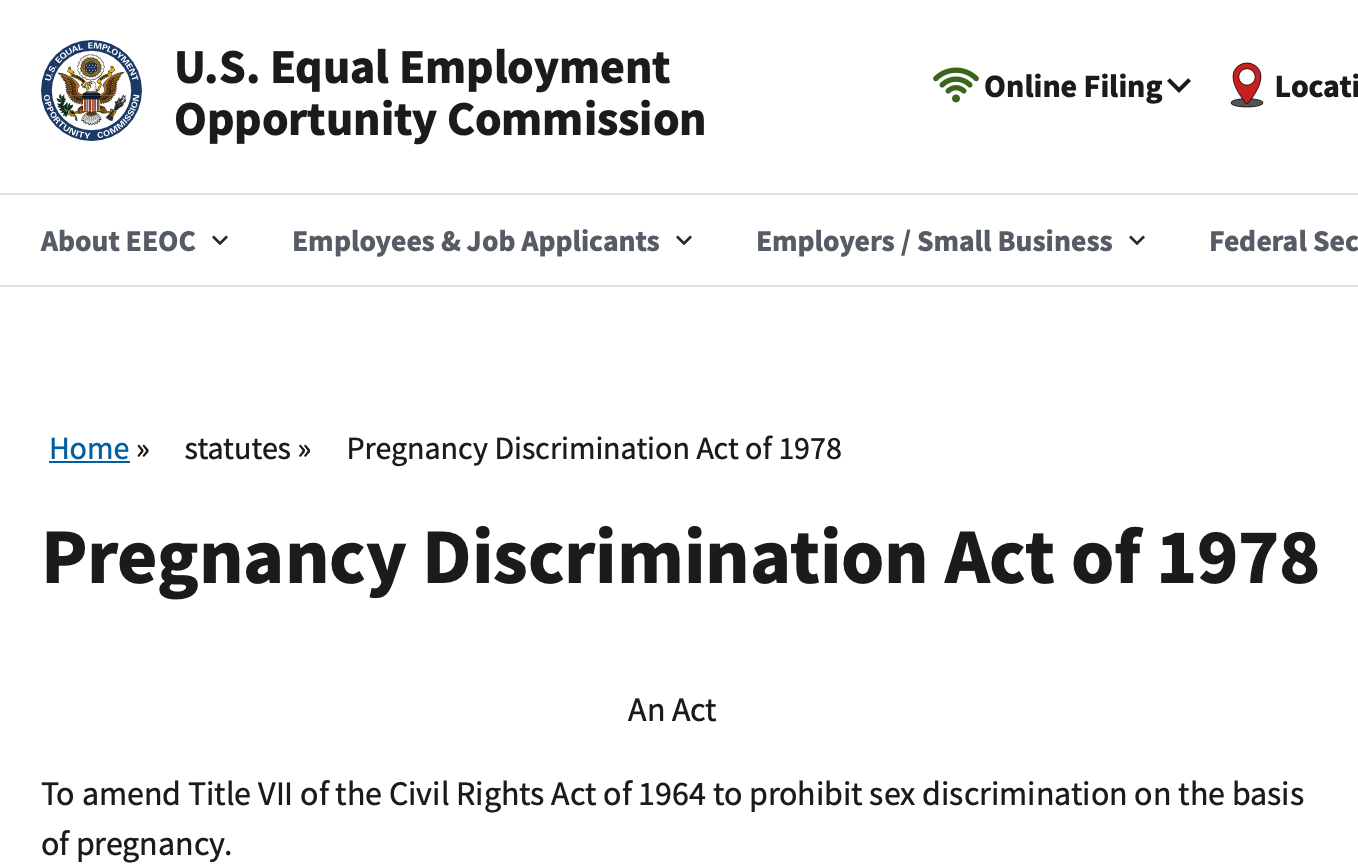
Women could be fired for pregnancy – Elizabeth Warren was fired from her first teaching job because she was pregnant– and that was another form of workplace discrimination, that, thanks to feminists, was addressed with a 1978 law. A number of laws limited when and where women could work, supposedly for their own protection, and feminism went after them too. NOW was the more staid, establishment version of feminism, and younger more radical feminists reacted against it, but it was itself radical compared to the bleakly misogynist status quo it took on.
Steinem was an ardent supporter of Shirley Chisolm, the first Black woman elected to Congress, when Chisolm ran for president in 1972, often campaigned for women's rights in the early years with Florynce Kennedy, an outspoken Black leader, and was the treasurer of the legal defense fund for Angela Davis when Davis was on trial for her work with the Black Panthers. I only met her once in passing, and she wasn't the focus of my feminist researches. But I know something of the work she did, and I know that I and every other woman and girl in this country is a beneficiary of the transformations the feminist movement wrought in those days. So thank you feminism. Thank you Gloria Steinem. The work continues.

p.s. In the department of hot takes there was lots of claiming Steinem was a spy or worked for the CIA by people who are possibly unaware of the CIA's extensive backing of US culture, including jazz and abstract expressionist painting, as well as magazines such as the Paris Review, in the 1950s. Here's the New York Times's unpacking of what she did and didn't do: "After returning to the United States [from a few years abroad in India at the end of the fifties], she spent a year in Cambridge, Mass., as a director of the Independent Research Service, a nonprofit educational foundation that recruited and provided government support for American students to attend Communist-run youth festivals in Europe. The magazine Ramparts subsequently reported that the foundation had been partly funded by the Central Intelligence Agency, and Ms. Steinem came under criticism from the left. She dismissed the entire venture as harmless, telling The Times in 2016 that no one in the C.I.A. had ever told her what to do or say and that she had never reported to the agency."
The word communist here doesn't mean the economic ideology in its pure form; it means Soviet-run at a time when the USSR was a lot more the dictatorship of the dictators than of the proletariat. An informed thread about all this on BlueSky notes, "Now, notably, a lot of people wanted to do this [disruption] voluntarily. They thought that challenging Soviet domination was an important part of their liberal or even left-wing political identity. Michael Harrington, socialist founder of DSA, for example, went to Vienna for that reason." That is, there was an anti-Soviet left. And, unfortunately, a pro-Soviet left.