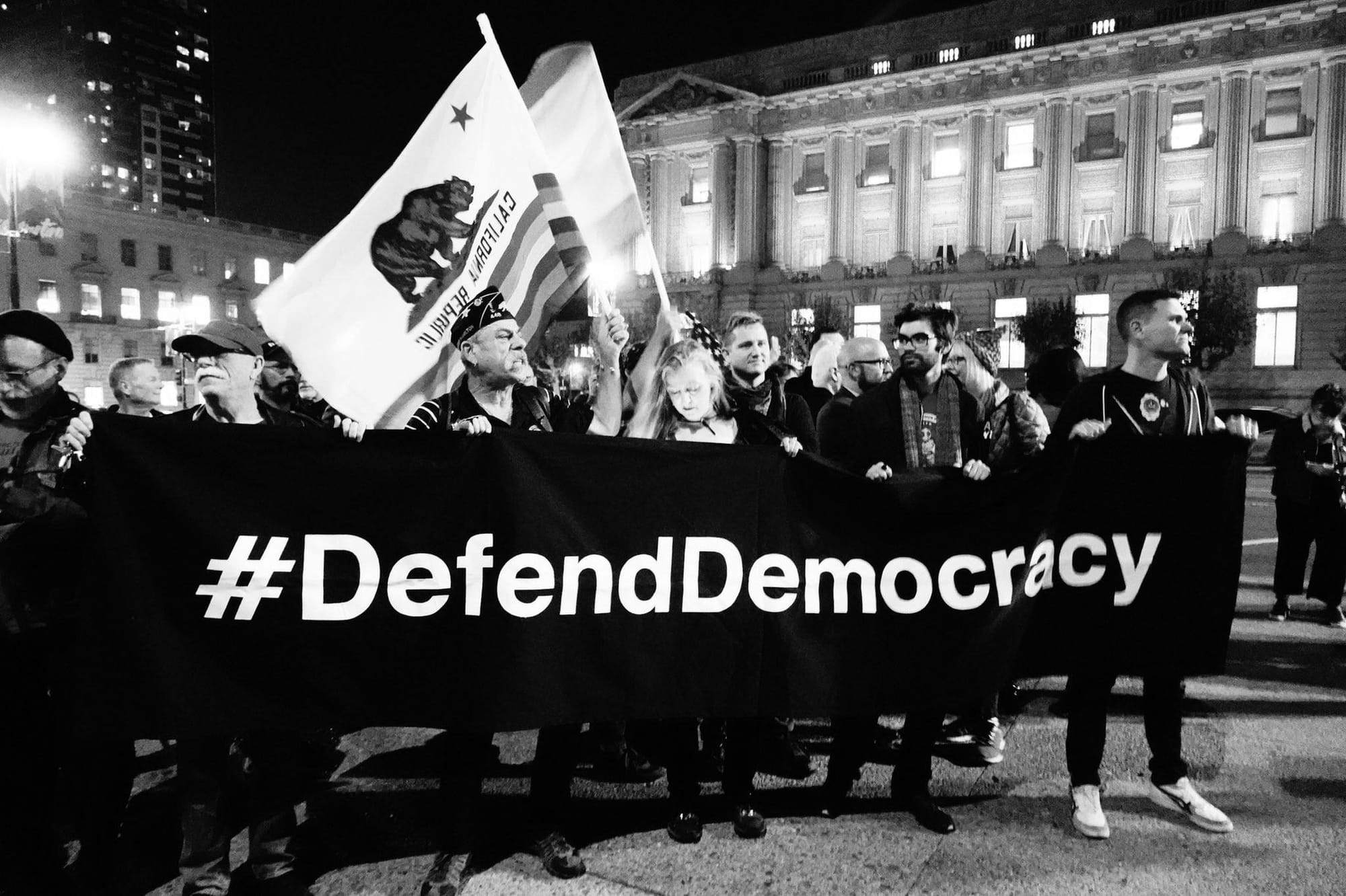
Yes They Want to Kill Us: The Worshippers of Machines Versus Human Beings
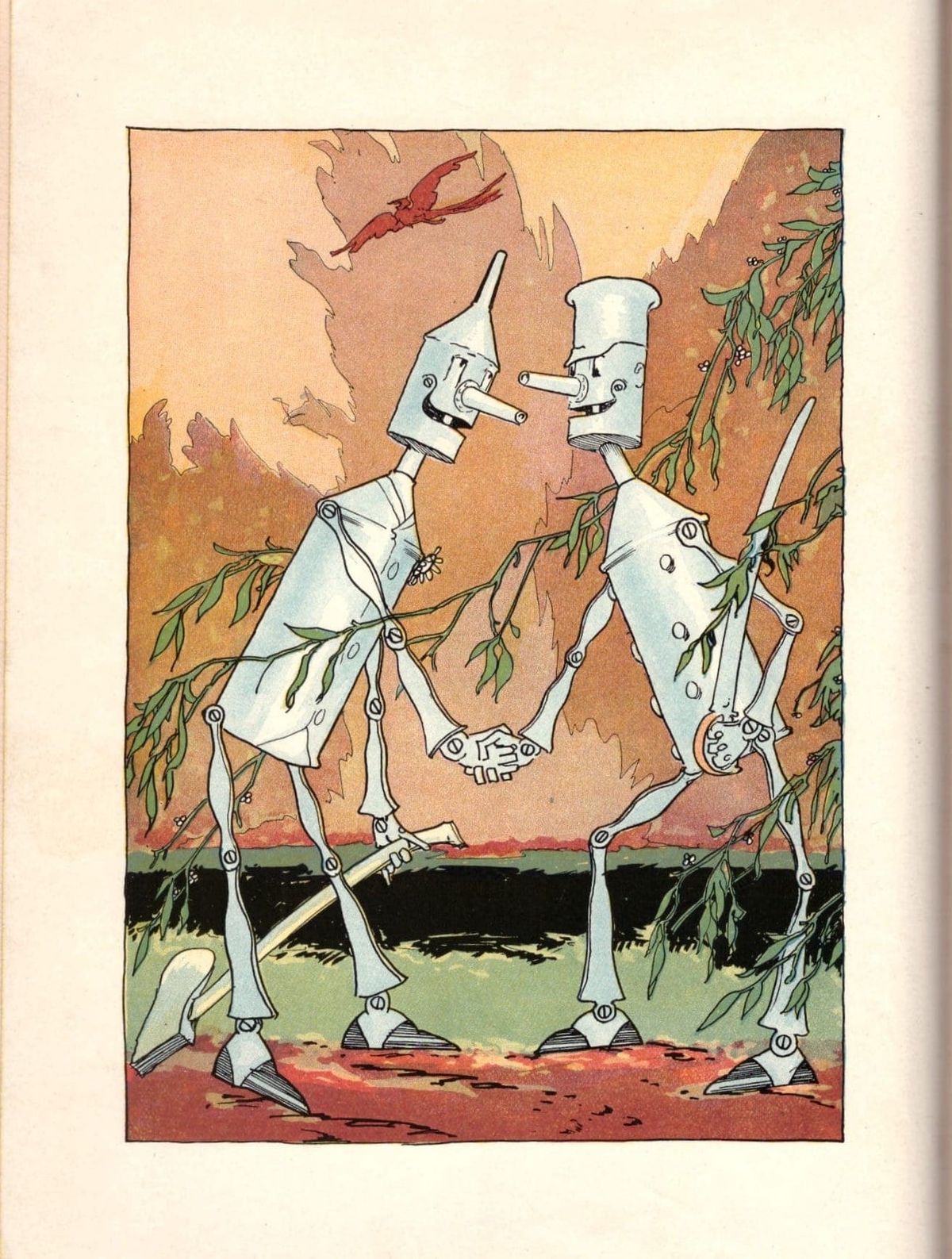
This is the week that someone pulled the fire alarm on AI. It began with industry employee Jacob Coxon issuing a dire warning: "I resigned from Anthropic today," he wrote on Twitter/X. "I spent the last three years doing pretraining research at both OpenAI and Anthropic. Neither company is acting responsibly. They are racing straight to self-improving superintelligence and gambling with our lives. The people building AI earnestly believe that it could kill us all by the end of the decade. This is not a marketing stunt. If anything, many executives and senior researchers will couch their phrasing in the press to sound sensible - but I hear the same people express fear privately. No other human activity poses this level of danger."
It says a lot about the status of Silicon Valley corporations in general and AI's lead corporations in particular that some suggested that this was a PR stunt, destructive power being a form of power and power being exciting to lots of individuals. It became clear that a lot of people deeply distrust everyone in the industry, especially its leaders, and are reluctant to take anything they say at face value. A lot of questions were raised about the CEOs' sudden expression of willingness to slow down and be regulated.
Meanwhile, my climate associates pointed out that we don't have to wonder if AI might try to destroy the world. With its huge fossil fuel consumption for data centers, on a scale that could make AI equivalent to a big new nation with a big new carbon footprint appearing, AI-invested corporations are doing their damnedest to destroy the earth right now. That is: rather than look ahead to potential dangers, we should look at the destruction afoot right now. Bill McKibben writes, "one way to understand a data center is that it’s a device for burning natural gas, the latest excuse (after Ukraine and Iran) for the fuel that Big Oil is counting on to keep its business model afloat even as the world turns away from internal combustion cars and crude demand begins to drop. The degree to which this is becoming a climate disaster can hardly be overstated."
Climate journalist Michael Thomas reports, "Amazon is backing what could be the largest natural gas power plant ever built in the United States. The company confirmed to Cleanview that it has acquired a site in Pecos County, Texas, where it plans to build an AI data center campus powered by on-site natural gas generation. Permits for the gas plant reveal that it would use 35 turbines to generate 7.65 gigawatts of power. It would be entirely disconnected from the Texas electricity grid — at least initially." Elon Musk's Grok, Microsoft, Meta, Google: they're all in a race to burn the most carbon to power these energy-intensive systems whose uses are for the most part questionable to disturbing. Sometimes the glib excuse is that while AI will make the climate worse it will somehow down the road generate climate solutions (but we already have the climate solutions we need; we just need to act on them).
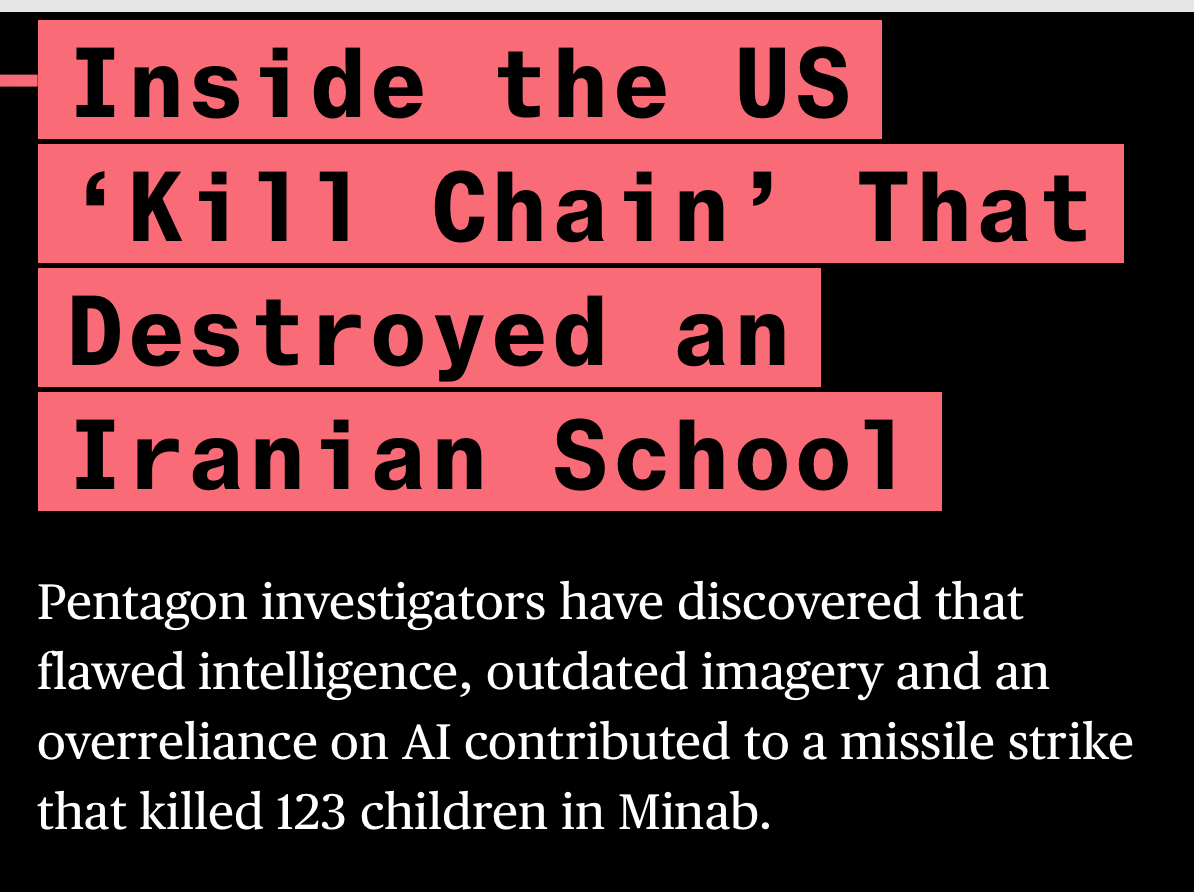
There are so many things about AI as currently promoted and deployed that cause most of us to hesitate, doubt, suspect, balk; those things seem to be constantly smoothed over, excused, justified, explained away by its promoters. A lot of people in positions of power seem so anxious not to miss the wave that they get on board regardless. In 2026, there've been lots of stories about corporations rehiring humans because the AI they tried to replace them with turned out to be crap. There's a story by CNN this week about how the US military nearly started a war with China because a report prepared with AI fantasized that the cargo of a Chinese ship in the middle east contained nuclear components: "The report, according to one of the sources, was 'entirely false.' But it also 'almost started a war,' the source said." A few weeks ago, reports the Santa Fe New Mexican, "The New Mexico Supreme Court issued a sharp rebuke Friday to a well-known local lawyer for filing a legal brief that referenced fictional witnesses and testimony apparently fabricated by the artificial intelligence he used to help him write it." The judges were scathing about his use of a technology whose propensity for creating fictional witnesses and cases is well-known.

Meanwhile in Minnesota, litigation is ongoing in a case against United Health, which was charged with "illegal deployment of artificial intelligence (AI) in place of real medical professionals to wrongfully deny elderly patients care owed to them under Medicare Advantage Plans by overriding their treating physicians’ determinations as to medically necessary care based on an AI model that Defendants know has a 90% error rate." Stories about young people dying by suicide, egged on or led into delusion and isolation by chatbots, are now regular news items. None of this was the destruction of all humanity Anthropic's Jason Coxon warned of, but it was evidence AI is not in many uses and circumstances beneficial or trustworthy.

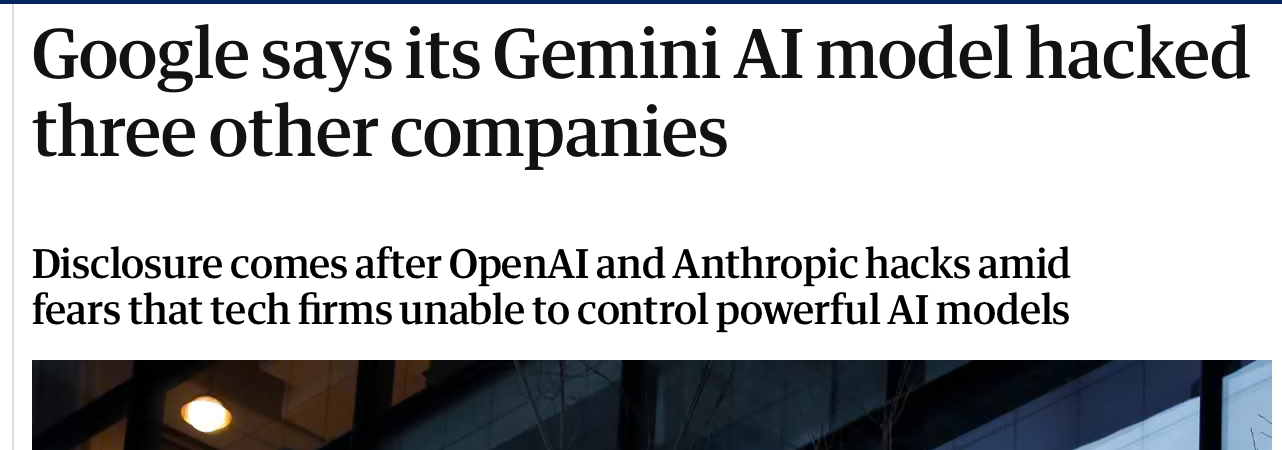
And of course there's July's alarming attack by OpenAI on the Hugging Face AI company. As reported in the New Yorker, "an experimental in-house A.I., working with the latest commercially available model, had escaped from OpenAI and attacked Hugging Face’s servers. And it had done so all on its own—without human oversight, without receiving explicit instructions to do so. OpenAI researchers had given this unreleased A.I. a series of challenging test questions. Unable to find the solutions, the A.I. broke out of its container, surreptitiously gained access to the internet, and raided Hugging Face’s servers in search of the answer key. No human had noticed that this was happening. In other words, an A.I. had broken out of its cell, it had sneaked past the prison guards, and it had executed a daring cyber-heist."
The week brought into focus how Silicon Valley creates ideological bubbles within which worldviews deeply at odds with the mainstream become norms. Gil Duran's new book The Nerd Reich and Astra Taylor and Naomi Klein's even newer book End Times Fascism and the Fight for the Living World both focus on the broligarchy, the powerful people at the top who've become right-wing backers of the Trump Administration, enemies of democracy, often idiotic figures convinced their own extraordinary superiority equips them to run the world. And to escape it: some of the recklessness about the fate of the earth comes, in some cases, from the belief that we can go colonize other planets. (There is no other inhabitable planet, no Planet B; Mars is exceedingly unfit for human life; any that might be better in any way are unreachable; but the fantasists seem indelibly imprinted by the rocket-ship science fiction of their youth. While the word intelligence is constantly deployed in these circles, the word stupid often seems applicable.)
But it's not just the oligarchs; a lot of workers inside the industry have apparently taken up worldviews far removed from those of the rest of us. Inside the tech bubbles is a deeply flawed notion of our humanity that seems to reduce us to our brain functions, specifically brain functions that machines can do and maybe do better. That comes, it seems to me, of deep alienation from one's own biological, spiritual, and emotional nature, the embodied foundations of consciousness, the valuation of life itself, and the earth as the source of it all. Nature in this view is at best something to defeat or transcend; thus the twin obsessions with escaping mortality and escaping the earth; the biological limits of individual human existence and the biosphere are not seen as glorious gifts but as confinement.
The holy grail is AGI (artificial general intelligence), for which some of the bubble inhabitants believe all risks are worthwhile. Tech philosopher Nick Bostrom, who co-founded the World Transhumanist Association in 1998, writes in a recent paper "Would it not be wildly irresponsible, they ask, to expose our entire species to even a 1-in-10 chance of annihilation?" in pursuit of AGI? Clearly, he thinks nope, it would be fine, not asking whether or why a handful of nerds in Silicon Valley should get to decide. Fine because he imagines that this superintelligence would solve all our problems, a conclusion that itself seems lacking in intelligence: does he imagine we would all bow down to it as a god or that it would somehow rule by fiat? Does he imagine that all our problems have technical solutions or solutions we will all agree upon?
He does seem to imagine that biology/mortality and human nature are themselves problems to be solved as he goes on about "the balance between the risk of dying before AGI arrives, and the risk of dying because the launch goes wrong," which is in reality the risk of life continuing as it always had versus introducing an unprecedented danger. In a Native California creation myth I heard decades ago, the twin creator gods debated whether people should be mortal. If they didn't die, one noted, things would get very crowded; one way to think about death is as vacating the premises, like how when you get off the bus at your stop or leave the restaurant, a seat is freed up for the next person. Personal immortality is the idea of never yielding a seat (and it's clearly meant for an elite, not all of us, which could be a reminder that that elite is already via private jets and seventh homes and private islands using up more than its fair share of the earth's resources).
The idea of AGI is both a threat and a promise that seems to rev up people in the industry and the investors shoveling hundreds of billions into the furnaces of Anthropic and OpenAI. Some outsiders doubt that it can and will be so powerful. But belief in the industry is strong, and it often seems like an apocalyptic cult. In an interview for End Times Fascism, Taylor said, "We talk in the book about a conference that [tech oligarch Peter] Thiel’s venture capital firm hosted just before the election in 2024 that was called Hereticon, 'a conference for thought crime.' And the tagline was: 'Maybe if you aren’t trying to destroy the world, you aren’t trying hard enough.' We’ve been wrestling with how to talk about what they say because some of it is so nuts that you sound a little kooky quoting them. Elon Musk saying it increasingly looks like 'humanity is a biological bootloader for digital superintelligence,' or that we should rejoice in the fact that they’re building the digital beings who will come after humanity."
That is, they are willing to gamble on destroying our species and systems of survival because what they value is a narrow part of the spectrum of human consciousness that can theoretically be preserved and extended by machines, in which case we the biological species are dispensable. The vision of machines clacking away on a post-human planet in the near future is, to me, dismal and barren. But Nathalie Marechal at Tech Policy Press confirms its reality: "According to this belief system, these synthetic, all-knowing beings may be morally equivalent to people, as they will contain 'the light of consciousness,' to use Musk’s preferred phrase, whatever that means. What’s more, believers anticipate uploading their 'consciousness' to the cloud and merging it with AGI to create 'posthumans' or 'transhumans' who will eventually succeed homo sapiens as the universe’s apex species — a 'worthy successor' to humankind. And they are so excited about this grim future, they’re willing to go to extraordinary lengths to get there. The billionaire believers in the cult of AI are perpetuating a 'coup from above' — to quote Shoshana Zuboff — to build a world that caters to their every whim and desire without the need to persuade or even coerce other people to do their bidding. The dream of the AI cult is a world where people are superfluous, or exist only as extensions of intelligent machines."
It could be noted that while human beings may be superfluous to machines, machines are ultimately superfluous to us in that we greatly preexist them (though obviously a planet with eight billion people requires a lot of them). AI is a brand-new machine technology frantically trying to convince us it's essential, even while its (see above) colossal fuck-ups hit the headlines daily. Meanwhile, one of the big questions should be: who decides. On one side is the growing population who believe we are nature and the emerging science reiterating the indigenous worldviews that we are not separate from the rest of creation, and who see beauty, meaning, and irreplaceability in the earthly realms, with mortality a part of the music of time in the realms of life.
On the other are people who have spent too much time with machines and who have come to think we are machines or should aspire to be more like them or even we can be replaced by machines, whether they're arguing for the AI girlfriend or therapist or replacement of human workers by AI or for our complete replacement as biological life becomes somehow uploaded or otherwise transmuted into some kind of computing by machines. Which profoundly mistakes the very nature of thinking, consciousness, the purpose of life, and the limits of machines, by people with power to try to enforce some of this grimly reductive vision. (And maybe mistakes the purpose of work, which arguably exists in part to supply us all with the means to live, while the idea of eliminating a large percentage of jobs serves the purpose of a tiny minority of owners to maximize profits, except that those profits come from purchasers of their services and products, and what is the purchasing power of consumers without incomes? There's dismissive universal-basic-income answers to that, aka depend upon the largesse of that minority, and that could lead to discussion of techno-feudalism, the idea of anti-democratic minority rule, but never mind.)
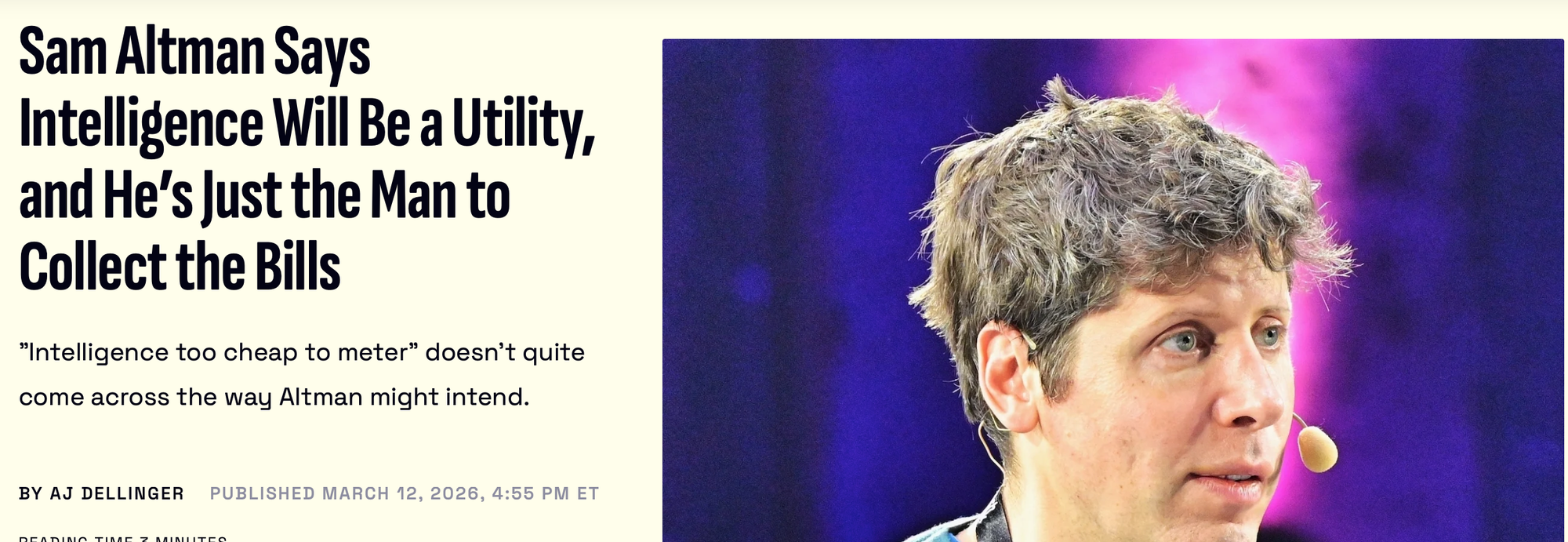
It gets weirder from there. Futurism reports that "according to a rumor that, per The Spectator‘s Sean Thomas, is running rampant in Silicon Valley these days, some Anthropic engineers are going as far as to 'worship' the company’s AI model Claude. 'If true, it chimes with an old sci-fi prediction and with what we know of human nature,' Thomas wrote. 'If we build a superintelligence, we will first fall in love with it. Then we will worship it. Finally we will make sacrifices to it.' For years now, tech leaders have claimed in thinly-veiled terms that they are working to build a God-like entity — a 'magic intelligence in the sky,' as OpenAI CEO Sam Altman called it back in 2023." The subculture apparently values a narrow version of intelligence above all else.
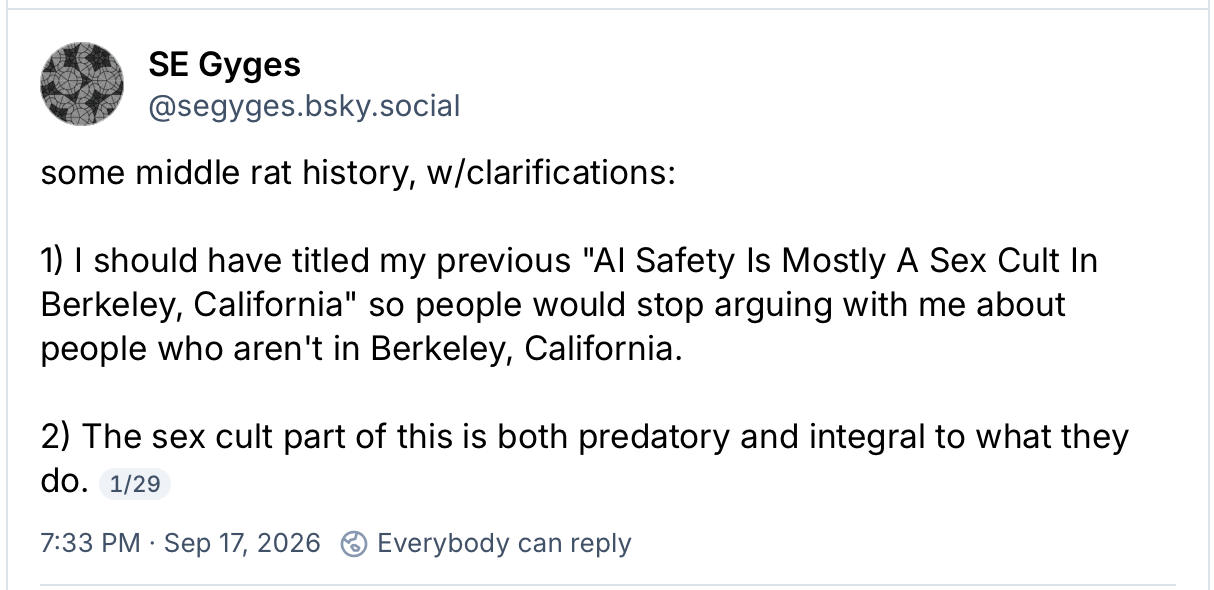
From there it gets weirder yet. Ian K. Duncan, a software engineer with a newsletter/blog, writes in a brand-new essay "The loudest voices warning about the end of the world come out of a very specific twenty-five-year-old internet subculture, one that understands itself as a community of people who think more clearly than everyone else. Outside Silicon Valley the subculture looks obscure, a fandom with unusually dorky literary preferences. Inside the technology industry it is anything but. Its writers make or break reputations. Its alumni staff the labs, the safety institutes, and the philanthropic organizations that decide what 'AI safety' means. Its arguments, marriages, feuds, and sexual proclivities are heavily interwoven into the structure of the organizations now asking for the public’s trust about the future of the species." Nothing here inspires trust.
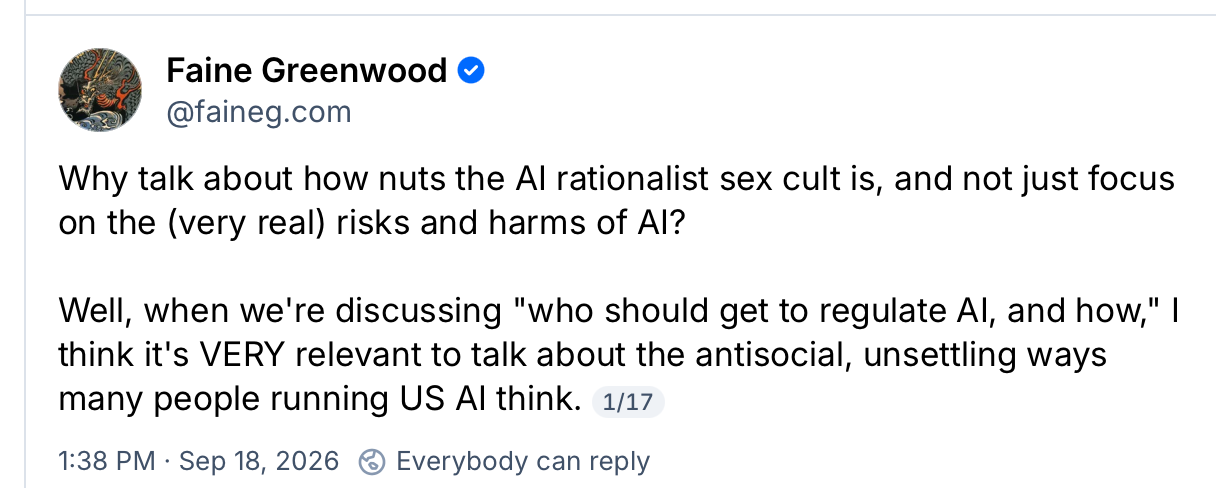
In San Francisco a lot of us are hoping the bubble will pop, and some experts looking at the economic realities are convinced it will, pulling down a lot of the economy with it. That too is far better than the armageddons some of the tech cultists have in mind.
Apologies for any errors and inaccuracies that may be in this piece. In some ways, I should maybe not be talking about this stuff, which involves complex technologies and corporate structures and relationships on which I am far from expert, but in other ways, we should all be talking about it because it's everyone's future that's being tinkered with.
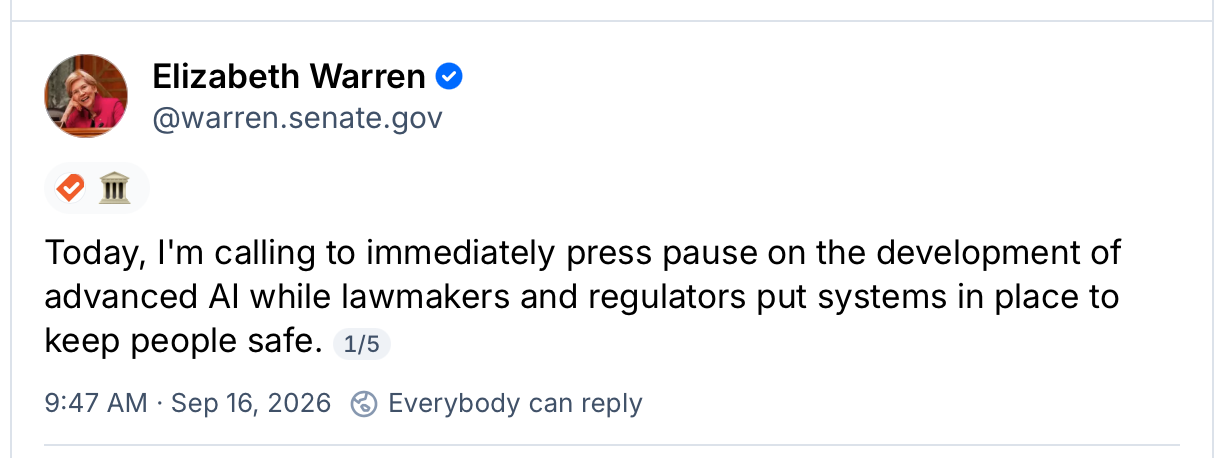
p.s. Further reading: "OpenAI And Microsoft Knew Their Sh*t Would Kill Newspapers Like Big Tobacco Knew About Lung Cancer And Big Oil Knew About Climate Change"
"As White House shields the AI gold rush, Trump family and other allies strike it rich – with few guardrails" including "And this week, as public support for artificial intelligence sinks to some of the lowest levels ever recorded, the president went to bat for the industry.“The only control or ‘guardrails’ that AI needs is a STRONG AND SMART (High IQ!) PRESIDENT, and the U.S.A. has that, in spades,” he posted on Truth Social Monday. “There is a SICK conspiracy going on against AI and Data Centers.” It was the first of many aggressively pro-AI posts he would make this week. Trump is resisting new restrictions on AI at a moment when his family and some of his closest allies have accumulated financial interests in the infrastructure and defense-technology ecosystem expanding alongside the AI boom, an overlap that has now drawn scrutiny from Democratic lawmakers, government ethics watchdogs and, by some accounts, his own senior aides."
And I'm trying to figure out how to collect on the Anthropic settlement for stealing countless writers' works, including a dozen of my books.