
Truth, Consequences, Climate, and Demand Destruction

"This is how the attack by one petro-state (ours) on another (Iran's) may be turning out to be very bad for petroleum, because the only thing history loves more than a surprise party is irony."
The Crisis
The biggest news is always the climate news, and sometimes it's so big it seems to be incomprehensible, or so terrible it makes people want to shut their eyes to it, and that's part of how it gets shoved to the side. A couple of weeks ago, a story appeared in many newspapers, once, but with no follow-up about what it means, what our response should be. (That's something I'm interested in: how does a story catch fire, and how does something that is dutifully reported nevertheless slip by?)
Anyway, here's how the Guardian framed it, "The critical Atlantic current system appears significantly more likely to collapse than previously thought after new research found that climate models predicting the biggest slowdown are the most realistic. Scientists called the new finding 'very concerning' as a collapse would have catastrophic consequences for Europe, Africa and the Americas. The Atlantic meridional overturning circulation (AMOC) is a major part of the global climate system and was already known to be at its weakest for 1,600 years as a result of the climate crisis."
That is, the world could change suddenly, dramatically, for the worse, and by world I mean the planet and life on it, not merely the political world or the human world. The report continues, "The AMOC is a major part of the global climate system and brings sun-warmed tropical water to Europe and the Arctic, where it cools and sinks to form a deep return current. A collapse would shift the tropical rainfall belt on which many millions of people rely to grow their food, plunge western Europe into extreme cold winters and summer droughts, and add 50-100cm to already rising sea levels around the Atlantic."
The current could change because of the destabilized climate. The climate has been destabilized by more than any other factor, the burning of fossil fuels, which is why transitioning away from fossil fuels is the single biggest thing we must do for the climate, and for ourselves, for we are not separate from it. The biggest drama of our time is being written in fire and heat, among the systems and places we used to assume were stable enough to treat as background. They're not any longer, and the great war of our time is against nature itself. The climate movement is a peace movement. But a war, the idiot war in Iran, may unintentionally contribute to our climate goals. That is....
The Chokepoint
There might be good news about the very bad news. If the most important crisis of our lifetimes is the climate crisis, the most important new inflection point for that catastrophe is the blockade of the Strait of Hormuz for the last several weeks. Its most direct impact is dire: the loss of oil and gas as the fuel on which much of the world runs and as the raw material for fertilizers, plastic, and other stuff made from fossil fuel. But when a resource is no longer available or affordable for too long, people can and do change patterns of usage and turn to other resources. This is how the attack by one petro-state (ours) on another (Iran's) may be turning out to be very bad for petroleum, because the only thing history loves more than a surprise party is irony. As the Nobel-winning economist Paul Krugman put it, "One way or another, the world will have to burn significantly less oil in the near future than it would have if this war had been avoided. In the jargon of energy analysts, there will have to be large “demand destruction.'"
That phrase is everywhere. "Hormuz Loss of a Billion Barrels Is Set to Crash Oil Demand" declares a Bloomberg report republished in industry sites World Oil news Oil and Gas 360. The news Dawn notes "Demand destruction, growing interest in alternative routes to the Straits of Hormuz, and the possible accelerated transition to alternative energy are the contours of the emerging new energy order." Here's the key information in an extraction-industry news publication: "Structural gas demand destruction occurs when a supply disruption or price shock is sustained long enough that buyers permanently alter their energy sourcing strategies, switching fuels, accelerating alternative energy investment, or abandoning infrastructure commitments, rather than returning to prior consumption patterns once conditions normalize."
The energy analysis site Ember notes, "The significance of this shock is compounded by what preceded it. Four years ago, Russia’s invasion of Ukraine shut the world’s largest fossil fuel exporter out of its largest market. Overnight, Europe was forced to replace its main energy supplier, with knock-on effects worldwide. Now, four years later, the world’s largest oil and LNG supply route has followed suit. One shock is an event. Two is a pattern. To the extent history persuades, it is by repetition." And that's what the analysts think will happen. The disrupted supply of fossil fuel in its various forms – gas, oil, raw material for other goods from fertilizer to plastic – and skyrocketing prices will not just cause a temporary crisis, but lead to a longterm shift.
A surge of interest in electric vehicles is one result, on the scale of individuals, and larger entities – cities, regions, nations – are looking to renewable energy with new urgency. Renewables, which are the fastest form of energy to build as well as the most independent as in local, domestic, untethered to geopolitics (and often the cheapest, since the fuel is free and inexhaustible: once you've got your equipment, the sun and wind will never be blockaded).
The Guardian's Raphael Rashid reports that in South Korea President Lee Jae Myung is making an "effort to use the Iran crisis as a catalyst for a faster clean energy transition. South Korea imports more than 90% of its primary energy, including roughly 70% of crude oil through the strait of Hormuz. Lee has repeatedly framed fossil fuel dependency as a dangerous vulnerability, telling his cabinet that the “nation’s fate” depends on energy transition." The European Counsel on Foreign Relations insists "Perhaps the fallout around the Strait of Hormuz will prompt Europeans finally adopt a more robust energy strategy—and they need to focus on four key areas." The first one cited is "deploying renewables...at speed" deploying being a term more often used in military contexts.
It's important to say that this blockade is first of all a bad thing and people are suffering, and when the impact of a spring planting without the necessary fertilizer starts to show up as a reduced harvest, they are likely to suffer more in the form of hunger and even starvation. A Financial Times columnist reports, "Because Gulf oil and gas mostly heads east after it passes the strait, countries such as Malaysia, Indonesia and the Philippines are facing shortages, rationing and demand destruction. Governments are scrambling to develop energy security policies on the fly. If the strait remains closed, this will develop, horribly, into a food crisis; agriculture is massively energy-intensive." There's been talk that it will lead to a "return to coal," but climate-policy experts expect that to be minor if it occurs.
The immediate crises unfold against the larger crisis of climate chaos, and the transition is the good thing I started out with. What if it does? What if in a decade or a century people remember this as the point when the world really turned away from this filthy, corrupting, unreliable, destructive resource? What if two petro-states, by demonstrating the unreliable, manipulable nature of the supply, sped the change (with an preliminary nudge from Russia, a third petro-state)? Earlier oil crises, notably the two in the 1970s, unfolded when there was no real alternative to fossil fuel to run our machines. Now there is. There the news is good, and more than good: kind of amazing.
The Transition
The climate data center Ember, in its annual report on the state of electricity generation, notes that "solar growth meant clean power sources grew fast enough to meet all new electricity demand in 2025, thereby preventing an increase in fossil generation. This was the first year since 2020 without an increase in electricity generation from fossil fuels and only the fifth year without a rise this century. China and India, historically the largest contributors to the global rise in fossil power, both recorded a fall in fossil generation in 2025. In both countries, record clean power additions outpaced demand growth. This brought global net growth in fossil generation to a halt." It's another kind of demand destruction: "Had wind and solar not grown since 2000, fossil generation would have been 30% higher in 2025, and emissions 28% higher."
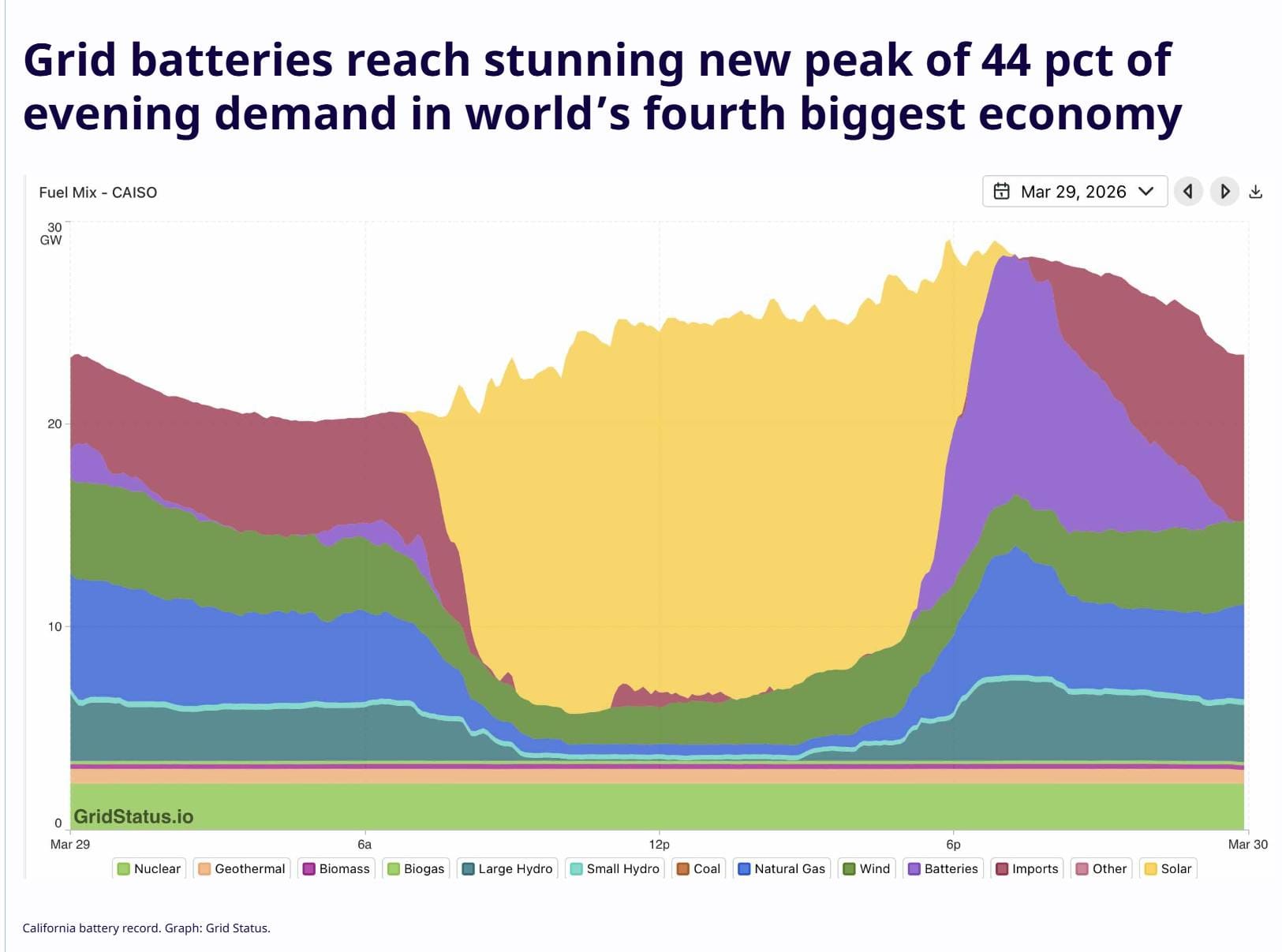
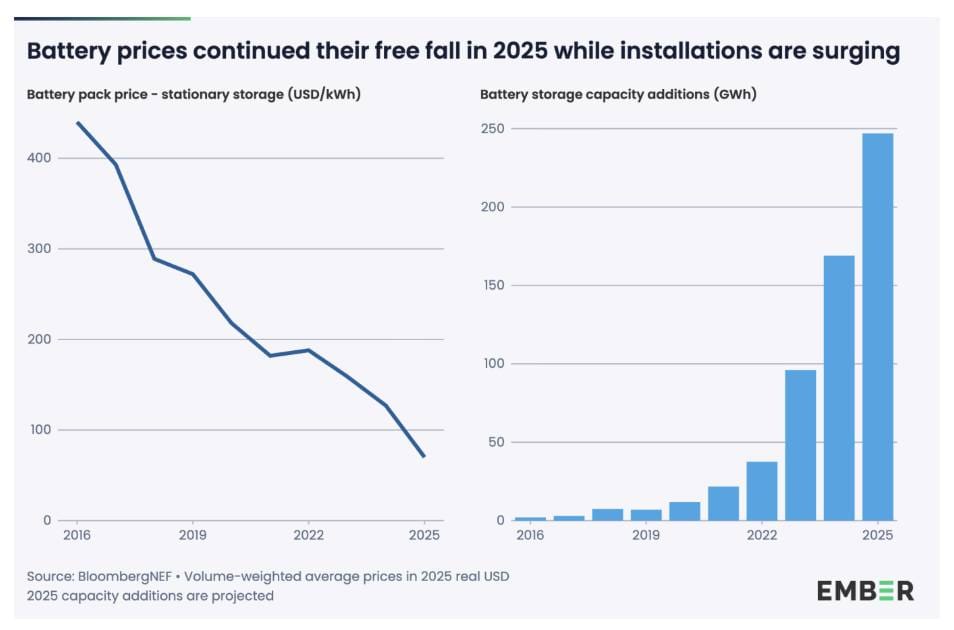
Ember continues, "In another global milestone, renewables overtook coal power in 2025. Solar, wind, hydropower and other renewable sources together contributed more than a third of global electricity generation for the first time in the modern power system. Conversely, the share of coal power fell below a third for the first time in history. The accelerating build-out of solar power is increasingly taking place alongside battery storage deployment, enabling the next paradigm shift – from daytime solar to anytime solar." For those of us who got told too many times that "did you know the sun doesn't always shine and the wind doesn't always blow," the growth of batteries to store and release the electricity generated by these means is the best answer to those assertions. I like to say that in California – which is behind only China in the scale of its battery storage – the sun now shines at night.
The Clowns:
Before the 2024 election, Trump met with fossil fuel executives and told them that for a billion dollars they'd get everything they wanted. He has since headed an administration eager to favor fossil fuel at any cost. Often that cost is high to the public, from forcing communities to keep expensive coal plants open to paying almost another billion to get the builder of offshore wind farms on the East Coast to halt to sabotaging some (but, climate policy expert Leah Stokes tells me, far from all) renewable projects created by Biden's Inflation Reduction Act to opening up public lands, including sacred places such as the area around New Mexico's Chaco Canyon, to fossil fuel extraction. The intent is to favor fossil fuel and strangle the energy transition even as most of the rest of the world moves forward with it. But the feckless attack on Iran may have far more impact than all these measures.
One of the striking things about the Trump Administration that it is utterly and absolutely bereft of strategy, which is the ability to plan for things to arise that may counter your agenda, so you can continue to pursue your agenda. The administration routinely acts without considering that others can and will also act, aka there will be a reaction, and that reaction will matter. One recent example is the attempt to gerrymander Texas and other red states to boost chances of keeping the House Republican in the midterms; that Democrats could also gerrymander seems to have come as a shock to them, especially with the big win in Virginia last week.
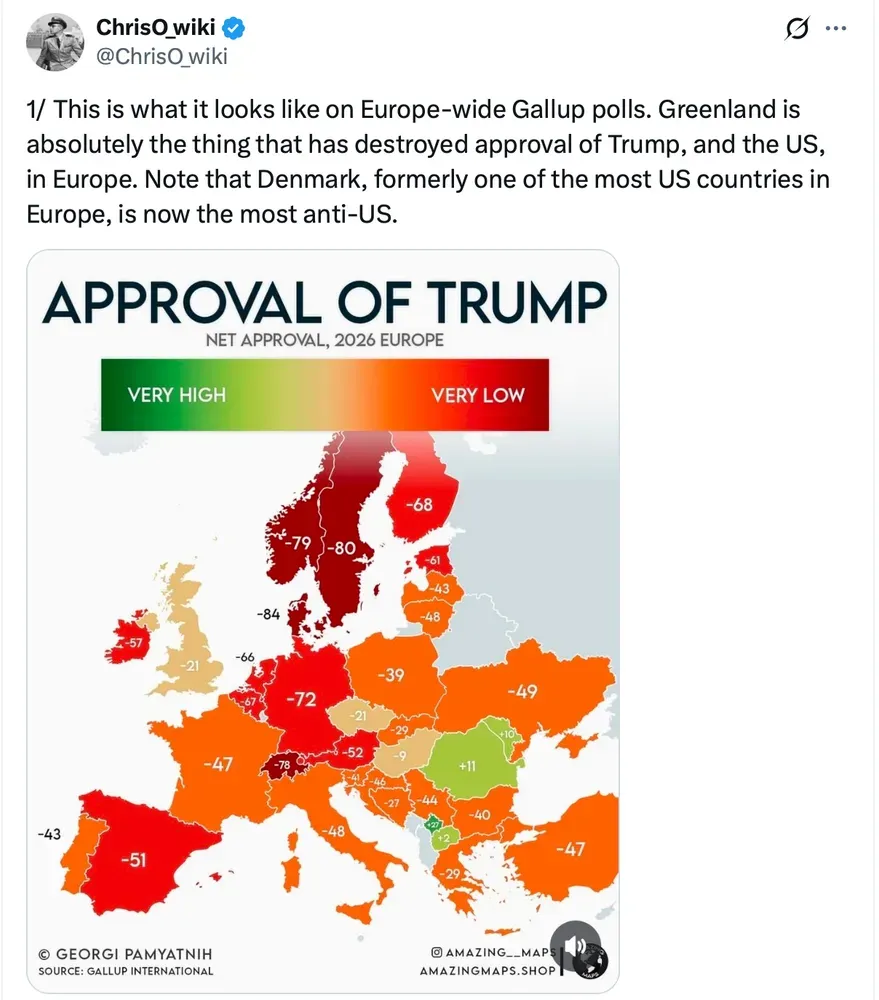
So far as I can tell, this is because the people in charge there have confused having a lot of power with having all the power – with the idea that they will act and that will be the end of it. They seem to have been unprepared for the reactions to the invasions of both Iran and Minneapolis or even that there would be reactions. And because Trump is lost in his own private Idaho/Mar a Lago, he will not or cannot change course, even as he sinks the future of the Republican Party that surrendered to his stupid self-serving agenda. But because of their absolute lack of strategic thinking, they may speed the global energy transition anyway, via the demand destruction brought on by the blockade of the Strait of Hormuz. The current stalemate is because without shocking escalation, the US has lost the war, and lost it badly. Trump cannot admit he lost and therefore cannot resolve the situation.
The Sunrise
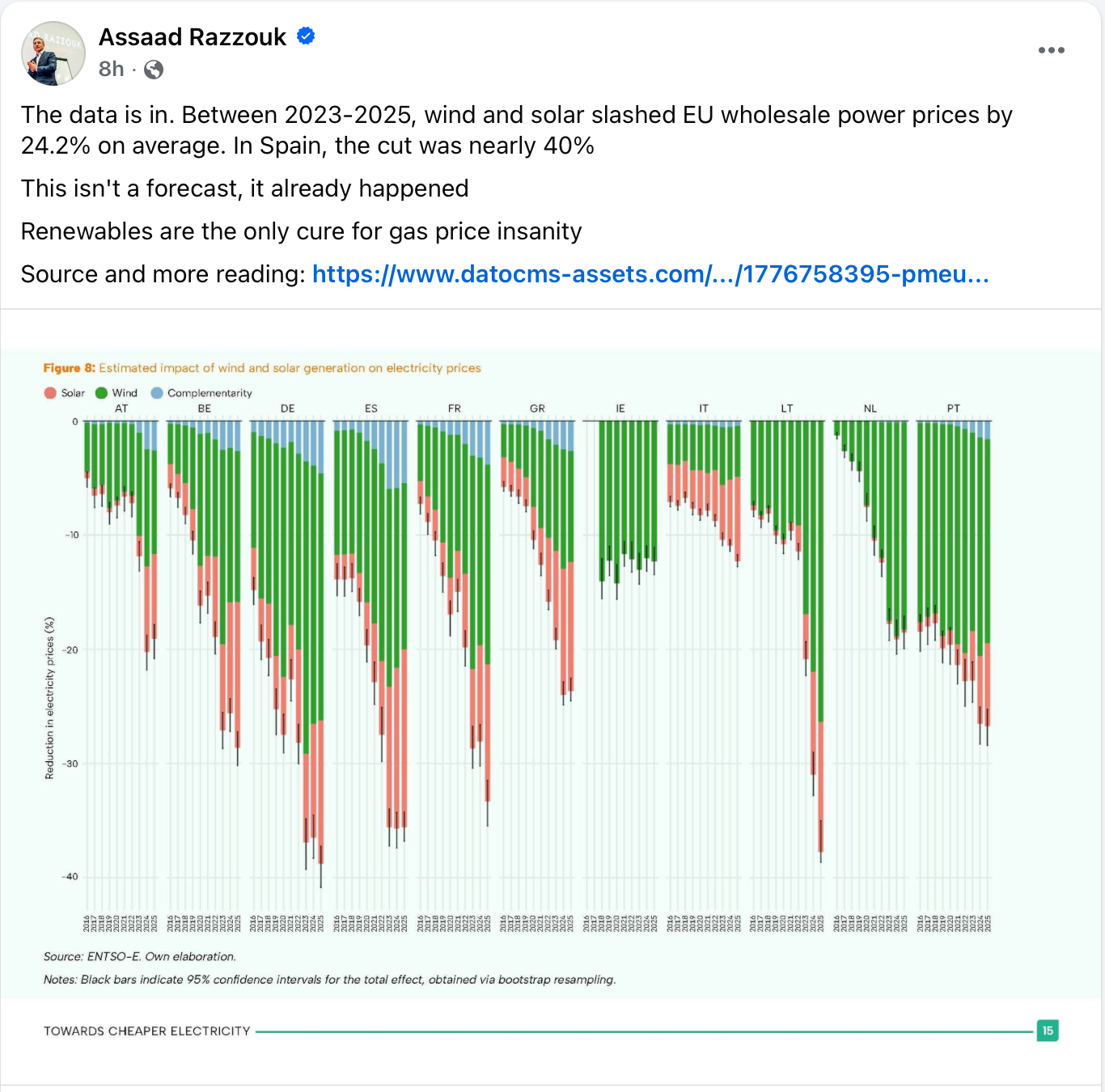
This refusal to admit the inevitable echoes the fossil fuel stalemate. The fossil fuel corporations have lost the war over what the future will be, but they want to wring every last drop of profit out of the earth even if it destroys the earth while denying their impending obsolescence. The energy transition is inevitable. Renewables, especially solar, are the cheapest way to make electricity; batteries solve the intermittency problem; they're the quickest energy infrastructure to build out (nuclear power plants, for example, can take more than a decade). They're the future.
Authoritarians are fueled by fossil fuel interests and also by nostalgia; much of their platform is an attempt to hit rewind, to make time run backward, when it comes to the social order and also when it comes to denying the consequences of destroying the earth and all its systems, such as the Atlantic current. There was a time before the industrialized world understood the consequences of its actions, and they're nostalgic for that too, and have chosen willful ignorance or a pretense of same so the rampages and profits can continue. But we know.
Climate activists have urged people to make the transition for the sake of the earth and the longterm future. A lot of people might be more motivated by a cheap reliable supply of electricity (especially after more of the machines they rely on are electric, not gas-powered) and escape from the volatile geopolitics of fossil fuel, which are an ongoing war against nature and a commodity over which wars are fought, as well as one that can be withheld as a political weapon. The climate movement was always a peace movement in the sense of making peace with nature, but it could also bring on a lot more peace in the human sphere. The faster the better.
But the transition is not just about the stunning (and unforeseen because forever underestimated) growth of renewables. On April 29th, the first Transitioning Away from Fossil Fuels conference attended by representatives of 54 nations and a lot of subnational and nonprofit groups concluded in Colombia. It was an end run around the endless stalemates of the official climate conferences sponsored by the United Nations, which got us the Paris Climate Treaty and many other important steps in the right direction, but which have been dragged down by the the fossil-fuel-producing countries and by the global north's refusal to pay for both the climate devastation that has impacted the global south most and the transition and harm mitigation efforts. Or even mention the words fossil fuels in official documents.
One participant was the Fossil Fuel Nonproliferation Treaty Initiative, whose very name makes a blunt comparison between fossil fuels and weapons of war. It has gotten eighteen nations on board so far, including Colombia, the first continental (as opposed to island) nation and the first with major oil resources. Global north countries did show up, notably France. The Guardian reports, "Some countries have already started working on roadmaps to phase out fossil fuels. Colombia published its draft plan last week and, on Tuesday, France became the first developed country to release a national roadmap to phase out fossil fuels, which included a timetable to remove coal from its national grid by 2027, end oil dependency by 2045 and fossil gas by 2050." Many people and nations are doing the work; joining them is best thing we can do for peace with nature and peace between nations.

p.s. Pretty much every time I talk about renewables, someone pops up to note that the materials from which they're made, especially the ingredients for batteries, involves extraction in ways that suggest it is therefore a bad thing. It does involve mined materials, and all mining should be done with respect for local people, sacred places, and nature, and if you think extraction is bad, fossil-fuel extraction dwarves the scale of all other extraction and devastates all those things along with bringing on climate chaos. I have a huge file of information for the essay I want to write for you on that issue but in the meantime here's a few facts.
First the amount of mined material required for renewables is estimated to be about 1/400th that of fossil fuel while we are still building out the infrastructure. Secondly these materials, unlike fossil fuel, do not get burned up and therefore do not need to be constantly replaced because they're not fuel, they're infrastructure; much of the stuff is durable and recyclable so there will be a point at which much less extraction is needed because we recycle what we've got. Thirdly there's impressive research going on to find less impactful and more available battery materials. Fourthly a lot of the objections are about lithium and cobalt, and it turns out lithium (which is not a rare earth element) is extremely common and widely distributed and Australia is currently the largest supplier and cobalt is not actually used in a lot of car batteries any more. A no-extraction human society is not an option at this juncture in history; a transition away from the monstrous extraction of fossil fuel is our best option for the earth, the sky, and all life on earth.
Further reading: This piece unpacks the way that national debts drive global-south countries into fossil-fuel production and the case that debt relief needs to be part of climate action. https://www.theguardian.com/environment/2026/apr/29/capitalism-colombia-climate-summit-gustavo-petro