The Golden Age of Literature Is Now: Some New Books (and Some Schadenfreude)
There's a golden age of literature – for us, not for them. That is, extraordinary work is being done in all genres of writing and the mashups inbetween them; extraordinary poets and prophets are at large in the land; magnificent books tumble forth at a rate I can't keep up with. But all of the great stuff leans toward care for the earth, universal human rights, equality, inclusion, the voices of indigenous and nonwhite and non-male people, questioning and broadening traditions, and many of the strong voices are not straight or white or male or US born.
That makes the right mad, but their fury does not move them toward great art. They just come up empty again and again – I mean how many times can Kid Rock represent culture for the MAGA audience? For his planned USA 250th anniversary extravaganza, Trump tried to get some better artists but a bunch of musicians ranging from country singer Martina McBride to Morris Day and the Time who initially said yes dropped out when they realized that they'd agreed to be part of a political event to push his agenda. (There are some signs that even the fighters Trump hoped to feature in his own little White House lawn Thunderdome/ gladiator cage don't want to show up.) Trump's attempt to take over the Kennedy Center ended up demonstrating that an arts center isn't its building: it's its audiences, performers, the writers behind them. He couldn't have that either.
A memorable example of the bad blood between art and the right came in 2002, when ex-librarian and then-first lady Laura Bush tried to organize a poetry symposium as her husband was organizing mass death in Iraq. She invited poet and Copper Canyon publisher Sam Hamill and other poets, all of whom dropped out. Hamill organized Poets Against War and thousands of poets got political with him as Laura Bush realized she couldn't access that kind of culture.
It's not that the right in this era doesn't have books; they just don't have great books. The golden age is ours and it really is golden, a burst of new thinking and dreaming in the arts and sciences and social theory. They do have books. There's some macho genre fiction that is maybe not right-wing but is not exactly progressive either, some mainstream fiction in which women continue to be the untrustworthy little vixens we got to know so well in earlier eras, and right-wing nonfiction memoirs, and and some bestselling right-wing politics in the Bill O'Reilly Killing Everyone vein. It will be very interesting to see how JD Vance's forthcoming book about his newfound Catholicism is received in the wake of his single most memorable accomplishment: being told off by two popes in one season (and then, in defense of his administration's crimes against humanity, lecturing one of them on theology).
A while back I read an astute comment that they're trying to achieve through politics what they can't through culture. That is, since they can't get more than a minority of people onboard their version of reality through cultural means, they use political power to try to squelch and punish the other versions, which when it comes to history and science (including the science of sex and gender) happen to be the accurate ones. That goes for what's taught in school, what's on government websites, National Park Service plaques, Trump's day one proclamation that there are only two genders, and are they still going after the Museum of African American history for talking about slavery too much?
Meanwhile, so many good books are coming out, and here's short reviews of five of them. (Full disclosure: I know all these writers and some of them are my friends, though I like to point out they're my friends because I think they're magnificent, not that I think they're magnificent because they're my friends.)
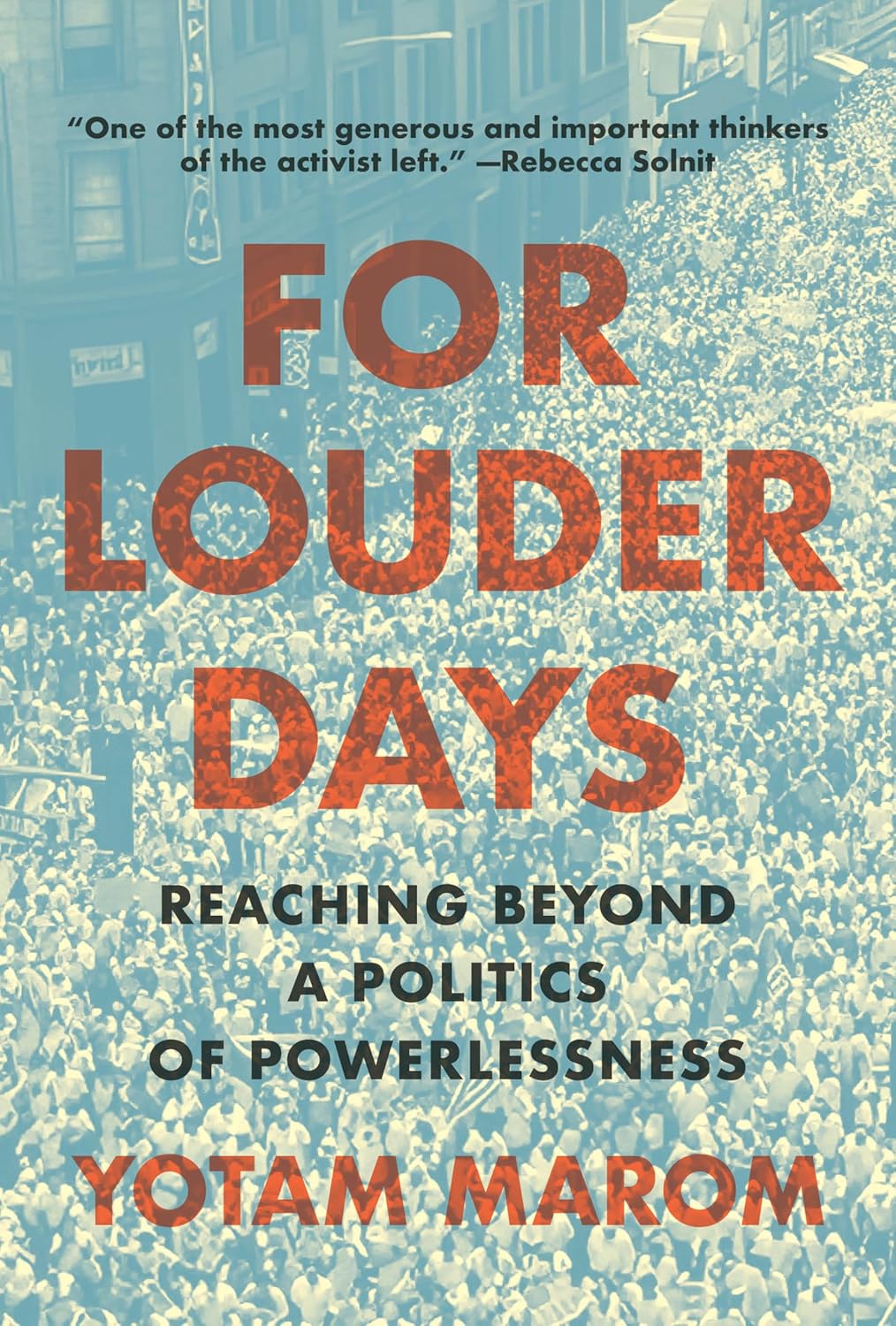
Yotam Marom is an organizer and facilitator who came out of Occupy Wall Street, and his critiques of the left have been some of the best I've ever read. One theme he's focused on at least since an essay I quoted in the updated 2015 Hope in the Dark is the ways progressives are uncomfortable with power. More broadly, in this moment, I'd argue that people are afraid of power; we tend to consider all power to be illegitimate and a lot of us go into remarkable contortions to deny having any. At least our side does; the other side shamelessly gloms onto power, might, money, and maybe the shamelessness, as has often been said before, is part of the appeal.
Once people liked to pretend they were more powerful, elite, privileged than they really were; now not a few of them – that, is us – fish around for some way we might be oppressed and play down the ways life might have handed us a good hand of cards. Here I have to say I hate the word privilege, because it's seems to imply you intentionally took something from someone else, and quite a lot of good things come through no action, good or bad, of your own if you're born healthy, beloved, financially secure, safe, in various combinations of higher status or more mainstream, which is just to say that you didn't take it from someone else, but you probably have a moral obligation to use it for someone and everyone else.
There's a passage in Marom's book in which he writes about being part of a struggle in the wake of the 2008 economic collapse, a struggle to help poor people from losing their homes. He's self-effacing at the meeting and the organizers, who are those working class people the organizing is for, tell him they're disappointed. Yotam writes:
I can’t remember the last time anyone told me they wanted me to be powerful. I’m a straight, white male with class privilege in a movement bent on destroying the very systems that gave me those privileges in the first place. I don’t know how to reconcile this challenge to be bigger with the rest of my training: the little ways I have been shaped and reshaped in the movement to rebel against authority and mistrust leadership of almost any kind; to unlearn, betray, and loathe the systems of white supremacy, capitalism, and patriarchy that invested in me and still do; even, perhaps, to loathe myself as the product of those systems. I have long made war against the part of me that wants to be big - to be seen and heard and maybe even admired and celebrated - because I have long worried that this part of me is the remnant of the oppressor still lingering inside me.
All that fretting probably sounds familiar to you. But what struck me upon reading it is how much it's about who to be rather than how to get stuff done. I mean, you want a good process, but you also want results. What does that look like?
Yotam writes of "the preference for being ideologically radical over being strategic, for being pure and right over winning real gains, for being small and homogenous over being big and popular. The politics of powerlessness was not unique to Occupy. It is a force we must contend with in the movements and organizations around us today as well." And contend with it he does. This is a great book for organizers and activists to rethink how they do what they do, for outing the hidden assumptions and fears, for acting with greater boldness in a time when we need that boldness more than ever.
But for everyone involved in progressive politics, it's a gift in that it does something that seems more and more important as we are surrounded by simpler and simpler versions of reality: insists on complexity, ambiguity, and moral honesty. That is, whether talking about the flaws of the left without turning them into blanket condemnations and dismissals, or refusing the simple binaries with which which the atrocities and suffering of the ongoing war in Israel/Palestine ware often described or just his own emotions of exhaustion, ambivalence, recommitment, Marom is on the side of full understanding and full engagement. And maybe that's the necessary foundation for loving and caring for this beautiful broken world of ours.
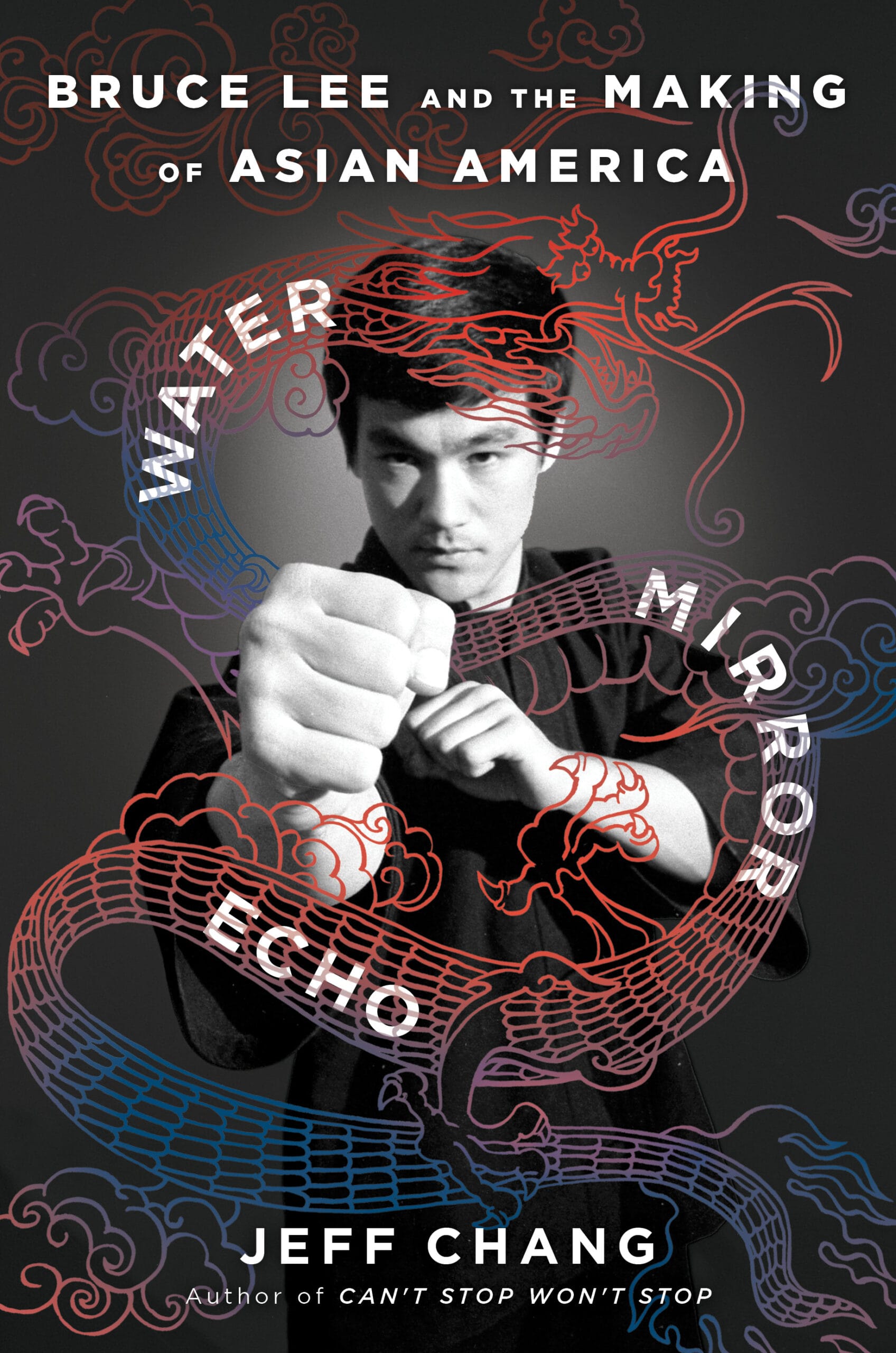
On the other hand, Bruce Lee (1940-1973) had no ambivalence about power, be it the pursuit of success, fame, skill and victory in martial arts, and the pursuit of a new level of cinematic martial arts performance. Jeff Chang tells his story as it's never been told before, with a depth, empathic insight, and sheer phenomenal research all the way back to Lee's early days in Hong Kong, all the way through his untimely death and posthumous legend.
Something I've often thought about is when a given history or historical figure sunsets – when those events, that person are no longer in living memory, only in what has been recorded one way or other. Chang found people still alive who remembered those early days and had stories to tell of young Bruce the champion cha-cha dancer, the student in Seattle, the young man finding his way, the racism and incomprehension he faced in casting and acting in early films and television. Beyond the story of one remarkable figure, Chang's is a story about being Asian and Asian American in America and about how Lee countered then-pervasive stereotypes in American movies of Asian men as unmanly, weak, and subordinate. Throughout it all, Lee himself comes through driven, charismatic, risk-taking, far from perfect but extraordinary.
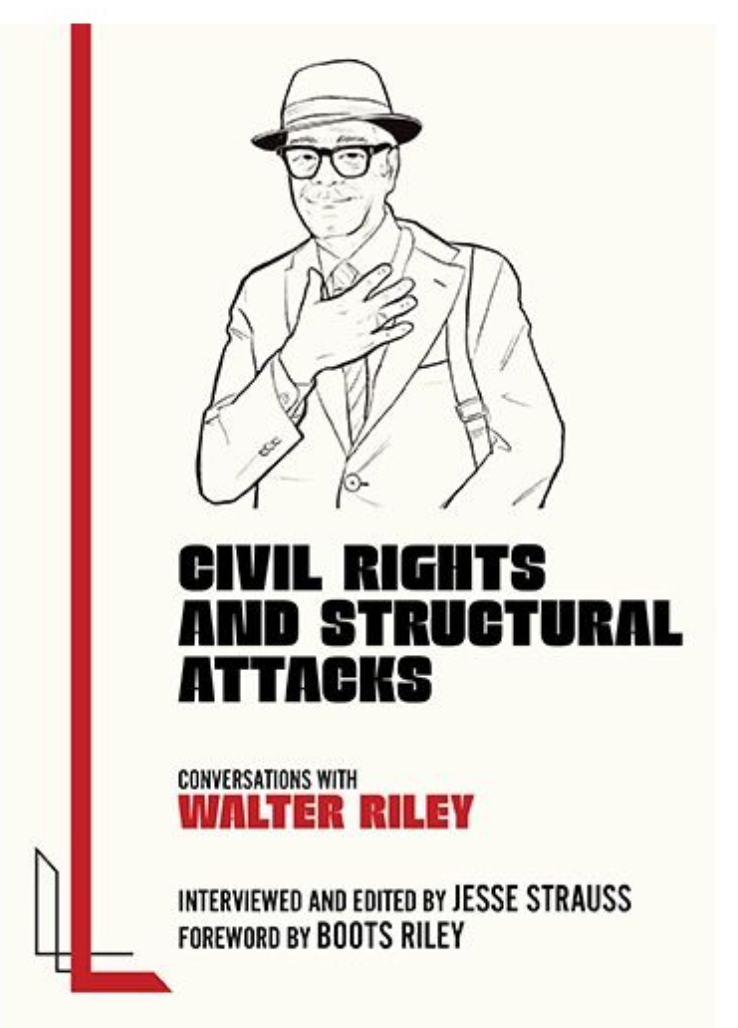
Oakland's own civil rights hero and longtime criminal defense lawyer Walter Riley has a remarkable history captured in this book out with AK Press later in June. It begins with his birth in the segregated south more than eighty years ago, his early involvement in the Civil Rights movement and other forms of anti-racist and social-justice activism. He was still in his teens when he moderated a conversation with Malcolm X. What I said about Chang's work on Bruce Lee applies here: Riley embodies the living memory of a nation and its movements undergoing profound change. This book in the form of an interview traces their evolution, including the intense protests in the late 1960s at San Francisco State University to found the country's first ethnic studies department, and other landmarks in "how we got here."
When he was young, he knew people who had been born into slavery, Riley told me once. I've always been fascinated by how what those who are old remember from their youth forms a living connection to what we think of as history. In a very different book from a few years back, a meditation on climate change titled On Time and Water, Andri Snaer Magnusson reflects on the Iceland his grandparents and great-grandparents knew, reaching to the past we can comprehend through such means to help us reach to a future that is no more distant in years and at least equally different in transformations, when and the glaciers some of Magnusson's grandparents explored in the 1950s have melted and the world has become a different place.
As for power, I have the impression that people who were so deprived of it in so many ways and so abused by those who did have it didn't worry much about being powerful (when he was young and a couple of white sheriffs parked across the street from his family home to menace them; Riley's father went out there with a shotgun while Riley carried a .22 as his father told them to get out of there; that would be lack of fear of power). At the same time I know, from my own involvement in activism and from L.A. Kauffman's superb 2017 history Direct Action: Protest and the Reinvention of American Radicalism that my part of the left reinvented itself after the 1960s. The sexism within movements for equality, the experiments in violence, the conflicts and the problems with some of the 1960s/1970s charismatic leaders prompted moves toward internal democracy and inclusion through consensus process and attention to what voices historically get silenced or dismissed.
Riley tells his interviewer, Jesse Strauss, about meeting with Civil Rights martyr Medgar Evers: "I didn’t think of myself as a leader, even though I was. He said, “You have responsibility for keeping the organizations going. You have responsibility for not creating a disturbance that makes it impossible for you to continue the work.” Some of us young folk were prepared to just fight the opposition, but he said, “You learn from your experience and you learn from other people, and sometimes listening is helpful.” He was modeling that. Both those conversations I had with Medgar Evers and Malcolm X, were very impactful. Within months of that conversation, Medgar Evers was dead....."
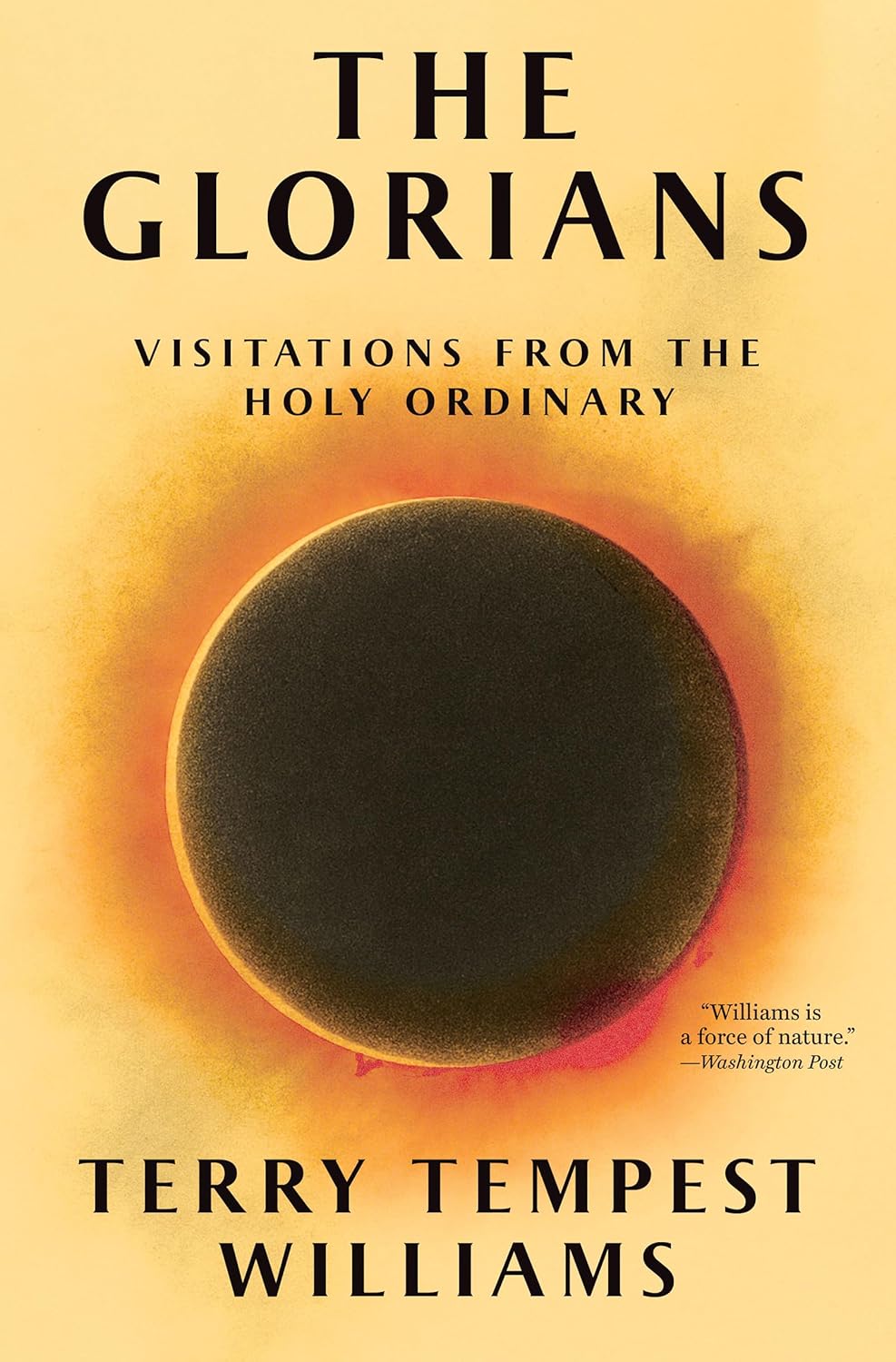
If power is the question, Terry Tempest Williams focuses on a completely different kind of it: the power to choose to pay attention, perceive, imagine, value, interpret, and in a time when distraction and superficiality bedevil and consume us. The book models how to navigate your life by beauty, intuition, and commitment rather than logic and obedience and that is a quiet – as quiet as a desert day in the windless hush before the thunderstorm breaks – rebellion and maybe the revolution we need.
It's also a book about bearing witness and telling the truth and living by principle, whether or not that's convenient or comfortable. About bearing witness to everything from watching an ant carrying a flower petal struggle across a patio to joining the big conversations about the wars against nature and conventional war from Ukraine to the campus conflicts over the Israeli attack on Gaza. It is not always about politics but it doesn't shy away from them, either. Most of all for me the refusal to separate, to say that that global politics and dreams and sensual encounters, the smallest firsthand experience and the largest climate issue belong together. In that the book is an invitation and a manifesto.
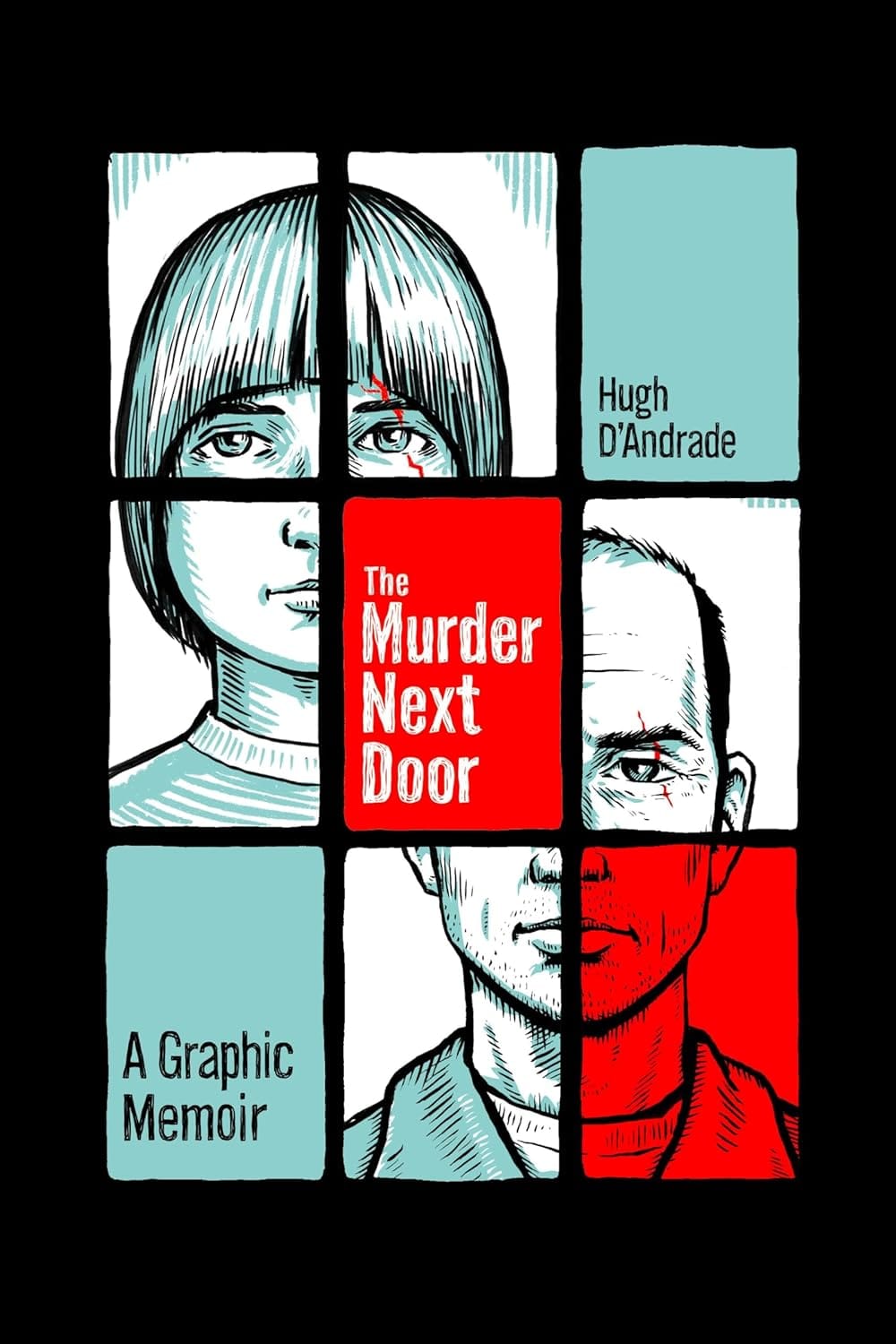
This book came out last year, a beautifully drawn meditation about the repercussions of the murder of his childhood friends' mother. The graphic novel touched me for how it talked about the lasting destructive power of violence. We so often tell the story of a rape, a murder, as though only those who were physically harmed were harmed at all. But violence tears at the whole fabric of society, devastates the families and friends of the victims and sometimes the perpetrators, takes a toll on the officials who investigate, costs us all in policing, the legal system, the prison system, makes even strangers feel less safe.
Beverly Bauer was the mother of two boys, one Hugh's age, ten, and his good friend, one two years younger. She was friends with Hugh's mother and kind to Hugh himself. Until one day – April 21, 1978– he came home to find his friends standing out on the street, disagreeing in disbelief about whether the dead body inside was their mother Hugh lost his sense of safety when Mrs. Bauer was stabbed to death by a stranger in the middle of the day, and never quite recovered it. As a kid he had rages and nightmares; as an adult panic attacks. The event undermined something that never quite got rebuilt.
I found similar mapping of impact in Chanel Miller's 2019 Know My Name, her account of the aftermath of being sexually assaulted on the Stanford campus in 2015 in what became known as known as the Stanford swimmer case. She talks about the impact on her family, including on her younger sister's ability to do her college work, on the man who became her husband, and on herself as she got dragged through the legal system and forced to engage with the life of her rapist and his defenders and family and story.
Both of these books made me think we need to recognize the power of violence goes far beyond physical harm. There are acts of violence that are intended to terrorize a population, acts against an individual or a group because of their race, gender, sexual orientation, religion, meant to impact all members of that group, tell them they have a target on their back, that they should live in fear. But even violence less driven by categorical hates or entitlements ripples beyond the blows or bullets. Perhaps if we talked about violence as against far more than the target we might think and act differently to address it.