A Million Warnings and One Huge Invitation: Climate 2026
It is like a bad dream that keeps recurring: people are drowning while we are prevented from reaching them with our rowboats and life preservers; homes are burning but someone is standing on the firehose or knocking down the ladders; there is a planetary thermostat and countless people are trying to turn it down, but powerful figures backed by militaries and money are turning it up; we grab the firehose but they keep pouring gasoline, literally, on the fire. That's a description of a world in which the majority of us want climate action and a thriving planet; we're overpowered --in some ways– by the minority willing to sacrifice the whole, largely to further enrich the wealthy. Meanwhile, new life rafts and fire retardants are being invented, and the planet itself as well as the news are offering warnings and invitations, over and over and over.
It is good to be on the same side as your planet.
First the warnings:
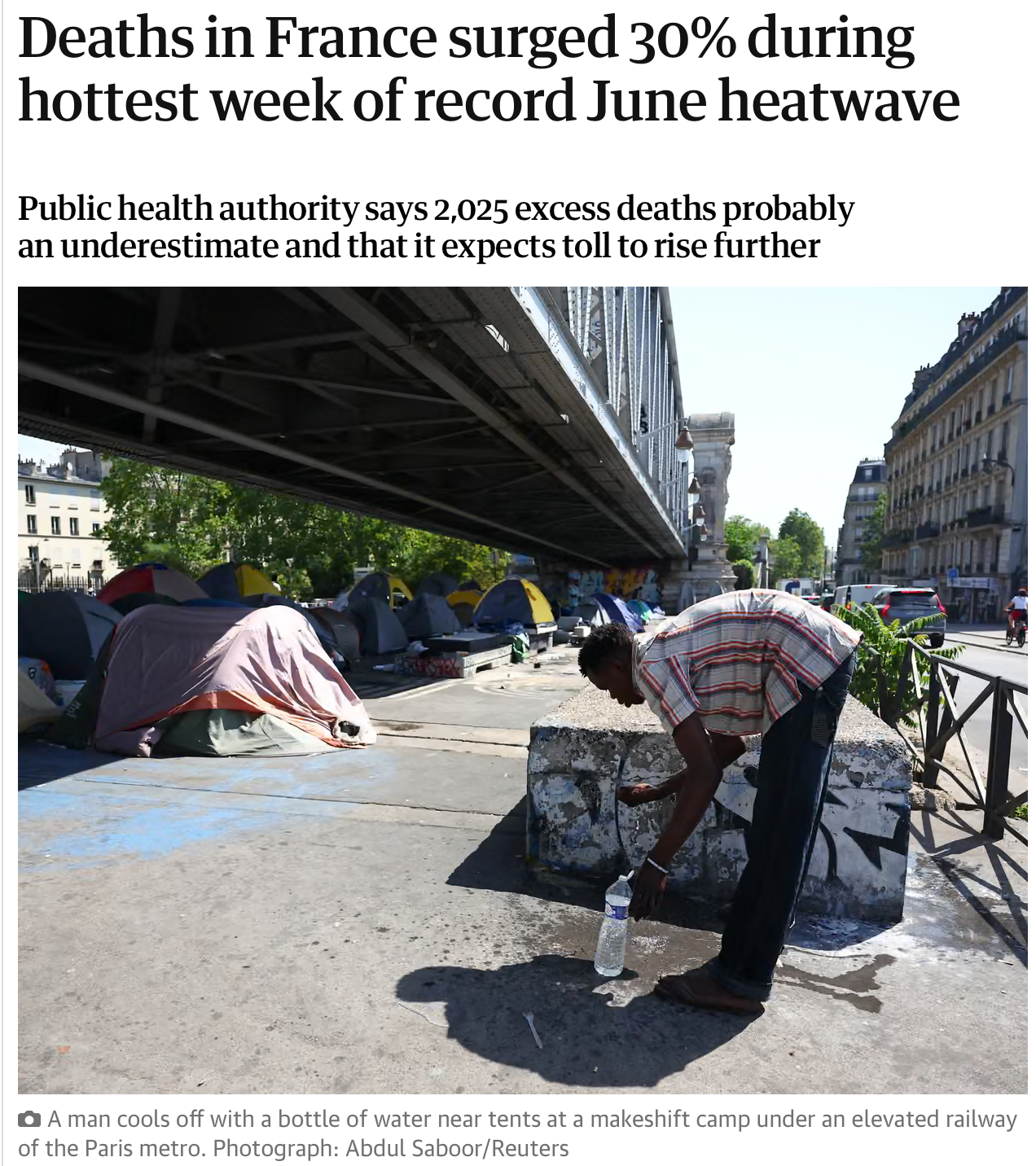
The 2022 Russian invasion of Ukraine was a warning to Europe that it was dependent on fossil fuel from an enemy and it did beget some degree of transition to other sources of fossil fuel and to renewables. The US/Israeli attack on Iran that prompted the latter country to shut down the Strait of Hormuz offered another warning that reliance on a resource from foreign countries was easily upended, and the whole world was impacted by this blockade of the flow of up to a thirdTK of the world's fossil fuel. The late June heat wave in Europe that killed thousands and broke records was another such warning that disaster follows on the heels of fossil fuel. It has been striking that by some accounts the death toll in Europe, especially Paris, from heat was comparable to the death toll from the recent earthquake in Venezuela. But earthquake deaths are dramatic and building collapses lead to calls for rescues of those trapped inside. Heat waves kill quietly in this home and that, and in many cases it's not immediately obvious that a given death was due to heat. While climate brings us many kinds of catastrophe, heat may be the most insidious.
But of course the warnings didn't begin in 2022 (when 20,000 died of heat in Europe) or even the twenty-first century; there have been an endless succession of them at least since James Hansen warned the US Congress in 1988 that the planet was warming. Nearly all of us have experienced climate change for ourselves one way or another, as flood, drought, fire, heat, hurricanes like Helene that did unprecedented damage in new places, the brutal Pacific Coast hot-ocean die-off in the summer of.... , the way Paradise itself burned down in the California firestorms of 2018TK, . The articles this spring about the possibility of the Gulf Stream failing were a warning, and that failure would be most catastrophic of all for Europeans, whose climate is shaped by that warm Atlantic water flowing northward from the Gulf of Mexico. In a world where petroleum itself can run short, or air conditioning, or fertilizer made from fossil fuels, we have had no shortage of warnings. They have been incessant.
We know everything we need to know, but who we is always a question. Survey after survey shows that the great majority of human beings on earth take climate change seriously and want to see action on it. That's important because that version of we is often blamed for it, either directly with climate-footprint-shaming (as if we ourselves are individually capable and responsible for exiting a system we instead need to change collectively) or indirectly with misrepresentation of public opinion as indifferent or in denial.
These days, surveys of public opinion often leave climate out altogether while politicians and mainstream media too often deemphasize it even in the face of these crises. We are right now seeing a lot of politicians back off their earlier stances on climate, and here I'm not talking about far-right politicians who were never on board but the likes of Canadian premier Mark Carney and former UK prime minister Tony Blair. Blair, who has been a jet-setting consultant and fraternizer with oil sheiks since he stepped down, was asked if he was advising the British Labour government "to rip up [UK Secretary of State for Energy Security and Net Zero and longtime climate champion] Ed Miliband's green energy targets, for example?" He replied, "Yes, I am, because I'll tell you exactly why.... to impose costs on our own business and consumers in order to accelerate to net zero when the rest of the world is not doing so, is, I don't understand the logic behind it.”
But making the energy transition is cost-effective in the long run and, arguably, the short run for a country whose wind power (especially in Scotland) is already spectacular. Those who view it as expensive tend to look at the costs of the energy transition as if everything will be fine if we just continue with the fossil-fuel status quo, rather than looking at the costs of worst-case-scenario climate chaos in the future and what climate chaos already costs us in lives as well as money in the present. The Common Health Coalition reports that "the U.S. can expect roughly six heat waves each year across its largest metropolitan areas, findings from the modeling analysis suggest total costs for these heat waves could approach more than $5 billion annually nationwide. Extreme heat, which is becoming increasingly common, is already the deadliest weather event in the United States, responsible for more deaths each year than hurricanes, floods, and tornadoes combined." That's a modest estimate that doesn't take into effect crop and ecological damage, including the intense heat that dries out the land and leads to more wildfire. A University of California report notes that in the western USA, " 42% of all the area burned by fires had occurred during or right after a heat wave." Heat kills. Signing up for more of it is signing up for more killing, of places and species as well as members of our species. And inaction on climate is its own form of action here, an agreement to accept, incur, invite this killing.
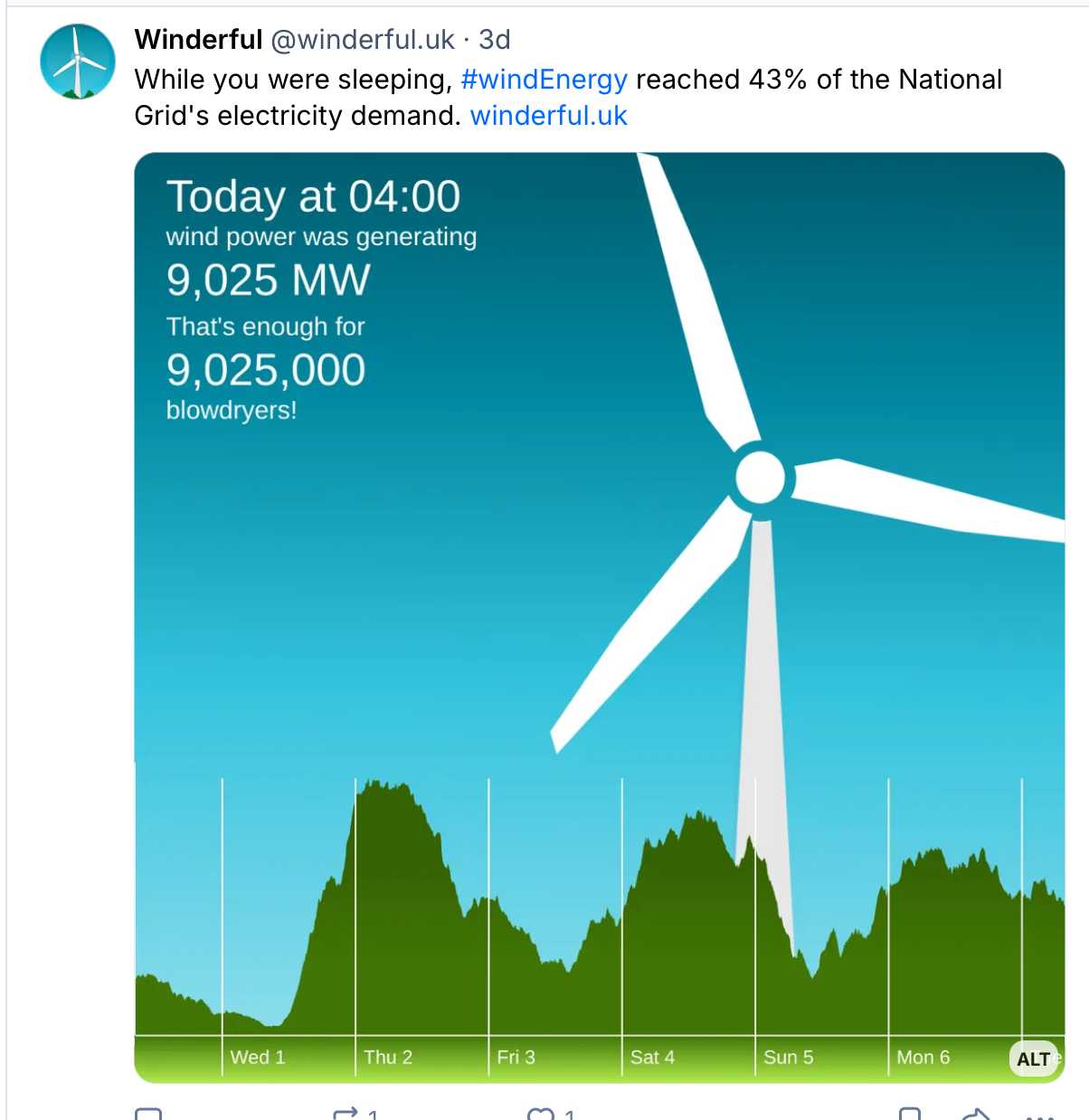
Though Blair calls out China and Russia, those countries along with a lot of the rest of the world are transitioning away from fossil fuel. The debacle in the Strait of Hormuz has prompted both nations and individuals to speed the transition, an unforeseen consequence for both fossil-fuel cheerleader Donald Trump in major fossil-fuel producer the USA and fellow major fossil-fuel-producer Iran. National Public Radio reports, "countries across Asia and Africa are speeding up the adoption of solar, batteries and electric vehicles in a deliberate strategy to decrease their dependence on imported natural gas and oil. Countries are forging a new energy path with renewable and electric vehicle technologies sourced from China. In March, Chinese exports of solar panels were up more than 80% compared to last year, according to energy think tank Ember. China exported more than 2 million electric passenger vehicles between January and May, with nearly half of those exports occurring in April and May, according to a recent analysis note fromSIA Energy, an oil and gas consultancy."
China is speeding ahead while the US is falling behind on the energy transition and the technologies it requires. Climate scientist Dr. Katharine Hayhoe reports, "In 2025, China installed 430 gigawatts of new wind and solar power. That's a 22% increase over the year before, and a new record. This number is greater than what the rest of the world combined installed in 2025 (384 GW).China's total wind and solar capacity now stands at 1.84 billion kilowatts. That adds up to 47% of the country's entire power capacity, and for the first time ever, more than its coal and gas plants combined."
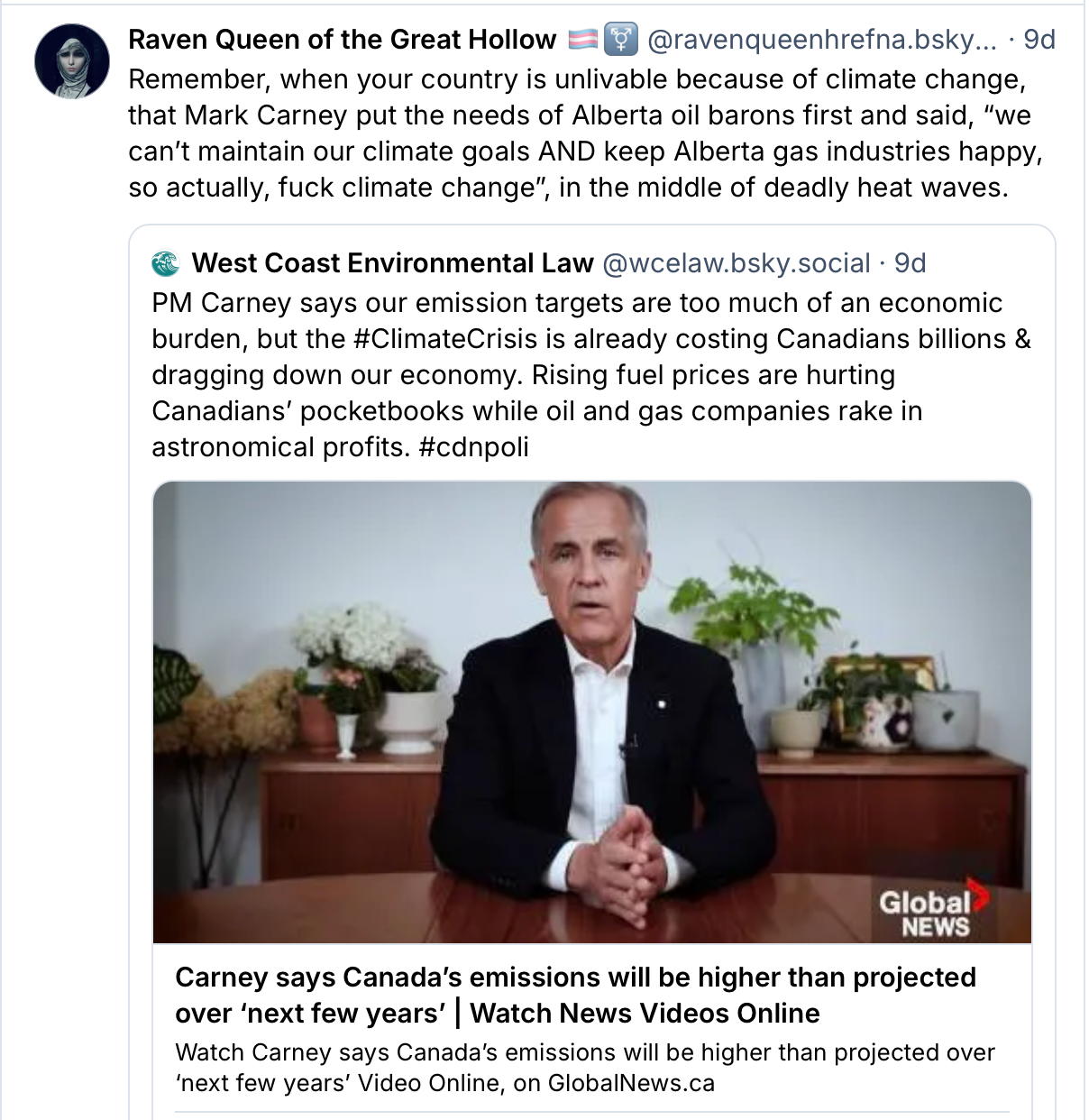
As for Canada's Carney, who was once upon a time very good on climate, this parody account pretty much sums up where he's at now: "After receiving criticism this week for abandoning the Trudeau-era climate plan, Prime Minister Mark Carney has assured Canadians worried about the already deadly effects of global warming that he will start taking the dangers it poses seriously, just as soon as every other problem currently facing Canada, and the rest of the globe, are solved." Canada has been corrupted by the profitability of Alberta oil into selling out its own former climate goals and the fate of the earth again and again (not that, as an American, I'm saying it's as bad as the USA in overall impact). Governor Kathy Hochul of New York has said similar things, pitting economics against climate action. But the transition to renewables, after the initial investment, is so hugely cost-saving that electricity is now free in parts of Australia in the middle of the day. But these politicians seem to calculate cost by denying the huge costs to economies, nature, and human life of climate chaos, now and in the future, and by normalizing the moral, ecological, health, and economic costs of fossil fuel.
I probably don't need to sing the virtues of renewables again but maybe every song about climate should have this refrain: they're the cheapest way to generate electricity ever created; the wind and sun are themselves free and all you have to do is build the devices to capture them and store/transmit the resulting electricity; no country or region has a monopoly on it and virtually every country can become largely energy independent, ending the hideous geopolitics of fossil fuel; and because they are dispersed they are relatively hard to target in war; also they don't pollute and poison like fossil fuel does at every stage from extraction to burning; and finally that's a lot of what we need to do to not utterly wreck the climate and thereby the planet and everything on it. Not my catchiest lyrics but....
Energy security during wartime is a question this decade's conflicts have highlighted. At the beginning of the invasion of Ukraine, Russia first took over the Chernobyl site, where the world's worst nuclear disaster took place when Ukraine was still part of the USSR in 1986, and then the Zaporizhzhia nuclear power plant, the largest nuclear power plant in Europe, where it destabilized its functioning and terrorized and drove away its workers. I thought of that as unconventional nuclear warfare – the decision to bomb or otherwise damage or destabilize a nuclear power plant intentionally. It's a reminder of yet another problem with nuclear power (as is the heatwave in France, which obliged the government to shut down one nuclear reactor and seriously reduce energy production at others – nuclear power relies on cool water and in a heat wave or on a hot planet, that's a problem too).
But the tables have turned in recent months, as Ukraine – which has brilliantly innovated drone warfare during this conflict – has taken out refinery after refinery in Russia, impairing the oil giant so badly that it has gasoline shortages for its own citizens as well as for warfare. As Bill McKibben recently wrote in his (highly recommended) climate newsletter: "But if our attack on Iran has made other nations demonstrably more nervous about relying on the import of hydrocarbons, Ukraine’s attacks on Russia’s petroleum network should make them nervous about depending on the stuff even if they don’t have to bring it in from afar. It turns out that in the drone age it’s a very risky business, because it relies on colossal pieces of infrastructure that can’t be easily defended. One of those is the supertanker—there’s one on fire today in the Gulf, apparently hit by an Iranian missile because it strayed from the Tehran-approved shipping lane. Ukrainian drones attacked another yesterday in the Sea of Azov, crippling the vessel. There’s essentially no defense for these slow-moving giant ships if an adversary with a few drones wants to take one out—they are, after all, a floating pool of flammable liquid. Another vulnerability is the terminal where you load and unload the crude—Ukraine got one of those yesterday too, in occupied Crimea.... And a third—and perhaps most exposed—is the refinery."
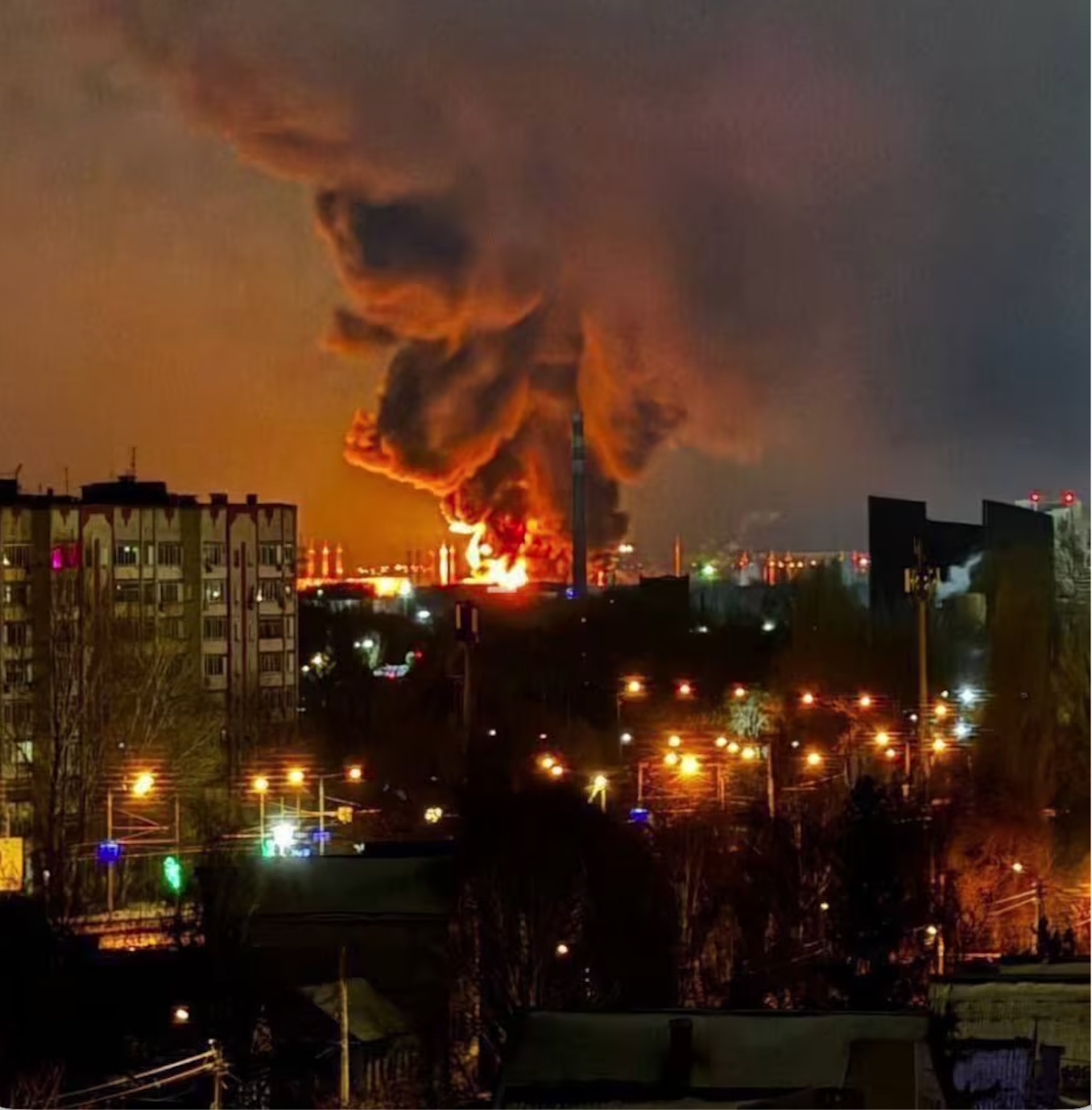
Ukraine has been reaching far into Russia to smash up all those pieces of its fossil fuel industry, and as Bill notes, Russia – speaking of unforeseen consequences – is now urgently trying to import oil (shocking for a major producer) and police are trying to maintain order at long gas lines. It is exciting that this might be how David will beat Goliath at last, disturbing that we've entered a new age of drone warfare, and maybe hopeful that when fossil fuel ceases to be such a powerful commodity Russia will cease to wield a lot of the corrosive power it has over everything from global climate negotiations to US elections.
We really are in trouble. The Guardian reports that members of parliament "are calling on the UK government to host a televised national climate emergency briefing in response to what has been described as the most 'insidious threat to our society.' In November, in the “first-of-its-kind, national emergency briefing”,nine experts gave stark assessments in Westminster Hall of the scale of the changes needed to adapt the country to the rapidly changing climate and ecological landscape." We should do the same here in the US. The Washington Post reported on Friday: "Another heat dome is coming. And it’s about to elevate fire risks and topple temperature records, with heat and/or fire weather alerts in effect for around 33 million people living in stretches of Western and Central states as of early Friday. This heat dome will first sizzle drought-stricken parts of the Intermountain West this weekend before expanding into the northern Plains and Upper Midwest next week." Instead, the Post tells us, "The Trump administration has appointed a noted skeptic of mainstream climate science to lead the government-wide program that compiles the National Climate Assessment, the country’s flagship report on the impact of global warming on the United States."
First the warning, I wrote, now the invitations:
Despite the powerful enemies of climate response, the technologies we need to leave the age of fossil fuel behind just keep getting better and keep getting implemented across the world, even here in the US where the Trump Administration has actively sabotaged wind energy. For a long time, every time I mentioned renewables someone popped up to say renewables were not a good thing because they were (partially) built out of problematic materials (often these people had nothing to say about the purely problematic material that is fossil fuel or how we get away from it without another source of power for all our machinery). They were often wrong about the actual materials deployed – cobalt, for example, which is in our phones and computers is not in a lot of car batteries any more, and the innovations in all kinds of renewable-related batteries are pretty spectacular.
There's the CO2 battery: "The technology works by using grid power to compress and store carbon dioxide until power is needed. When the power is needed, the system expands the carbon dioxide through a turbine to generate energy that is sent back to the grid. Crucially, the technology doesn’t rely on lithium or other minerals that are difficult to source due to supply chain constraints. It is also capable of long duration storage, providing more flexibility to the grid." (Just to be clear, the CO2 remains contained throughout, so it's not becoming a greenhouse gas.)
There's the iron-sodium battery, of which Eletrek writes: "The energy storage market is growing fast, and utilities are looking beyond lithium‑ion. Iron-sodium battery storage systems are emerging as a compelling alternative to lithium-ion batteries for grid-scale use, as they rely on abundant, low-cost materials and offer strong safety and long-duration performance. While lithium-ion batteries excel at fast response and short-to-medium-duration storage, iron-sodium systems are better suited for multi-hour to multi-day grid applications where cost, thermal stability, and long service life matter more than energy density." Iron and sodium are among the most common elements on earth.
Here's a list of eleven more battery technologies emerging and another list of nine. I realized a while back that I should not assume that we would move forward with existing renewable technologies as if we were at the end of the innovation that gave us cheap, effective wind and solar. The technologies, including battery storage, are metamorphosing, fast and among the unsung heroes of this crisis are the designers and engineers doing that work. This means that we must move forward on the energy transition knowing that some problems and issues will be resolved while we move forward, rather than assuming we cannot move forward until they are resolved (and so many of them already have been – battery storage, for example, has solved the intermittency problem with sun and wind renewables deniers liked to throw in our faces; as I like to say "from now on the sun shines at night," because California's massive battery array stores solar-generated electricity during the day and releases it at night).
The climate data site Ember reports, "Record solar growth meant clean power sources grew fast enough to meet all new electricity demand in 2025, thereby preventing an increase in fossil generation. This was the first year since 2020 without an increase in electricity generation from fossil fuels and only the fifth year without a rise this century. China and India, historically the largest contributors to the global rise in fossil power, both recorded a fall in fossil generation in 2025. In both countries, record clean power additions outpaced demand growth. This brought global net growth in fossil generation to a halt.... For the first time in 100 years, renewables overtook coal power in the global electricity mix as continued rapid growth in solar and wind pushed the share of renewables above a third of global generation."
And there's the fact that (again Bill McKibben points this out) while adoption of EVs or electric cars (and buses) is happening internationally, so are e-bikes, which give you varying degrees of assist in getting around and for more and more people here in the USA are replacing short trips done by automobile. I have one with moderate assist and I love it – that bit of juice makes San Francisco hills easier, extends my range, eliminates the quest for parking in this crowded city, and means that I always have lights on for night travel. Of course if it's a good thing, there's a Trump attack on it: "Transportation Secretary Sean Duffy announced Tuesday that his department would redirect $1.73 billion in Biden-era grants away from establishing “DEI bike lanes” to build roads and bridges instead" reports the New Republic. I suppose you really can think of bike use as diversity of transportation options, equity, and inclusion of people who can afford bikes but not cars or are too young to drive, but then spelling out DEI means you have to recognize what a good thing it is in so many ways. Part of why I'm now an avid cyclist is that my city (thank you San Francisco Bike Coalition) has a lot of bike lanes, drivers are used to sharing the road with us, car exhaust is not quite as foul as it used to be, reminders that systemic change is often what enables individual change.
Meanwhile, here's a feature of EVs that's useful in the climate disasters that are multiplying: "China’s Guangxi region is suffering from severe flooding after historic rainfall from Typhoon Mesak. State media reports that amid power outages, Chinese new-energy vehicle (NEV) owners are turning to their cars for electricity and using vehicle-to-load (V2L) tech to power their communities." US electric school buses, with their large batteries and their long periods of inactivity, are likewise being harnessed for electricity generation in emergencies. Stuff like this says to me that we can enter a better era when it comes to how we power and use our machines.
It's important to reiterate that while we now have clean sources of energy and should speed the energy transition, protecting the climate also means protecting nature – the oceans, forests, grasslands, and wetlands that sequester a lot of our carbon, the soil on which our food is grown – and doing so by making positive changes in how we live. That includes what we eat and how it's produced, how we get around, how we live at home, and more existentially how we measure well-being and abundance (less frantic consumption, more quality of life, including the qualities of more hope, health, confidence, safety, social connection, and time).
We have, to return to the metaphor with which I opened, the lifejackets and lifeboats, the firehoses and ladders, to do what we need to do. We have everything we need except enough organized political will of the great majority to rise up with a force adequate to overpower the elite minority invested in short-term profit and longterm destruction. That begins by making climate central to our political (and economic and health and environmental and moral and spiritual) conversations.
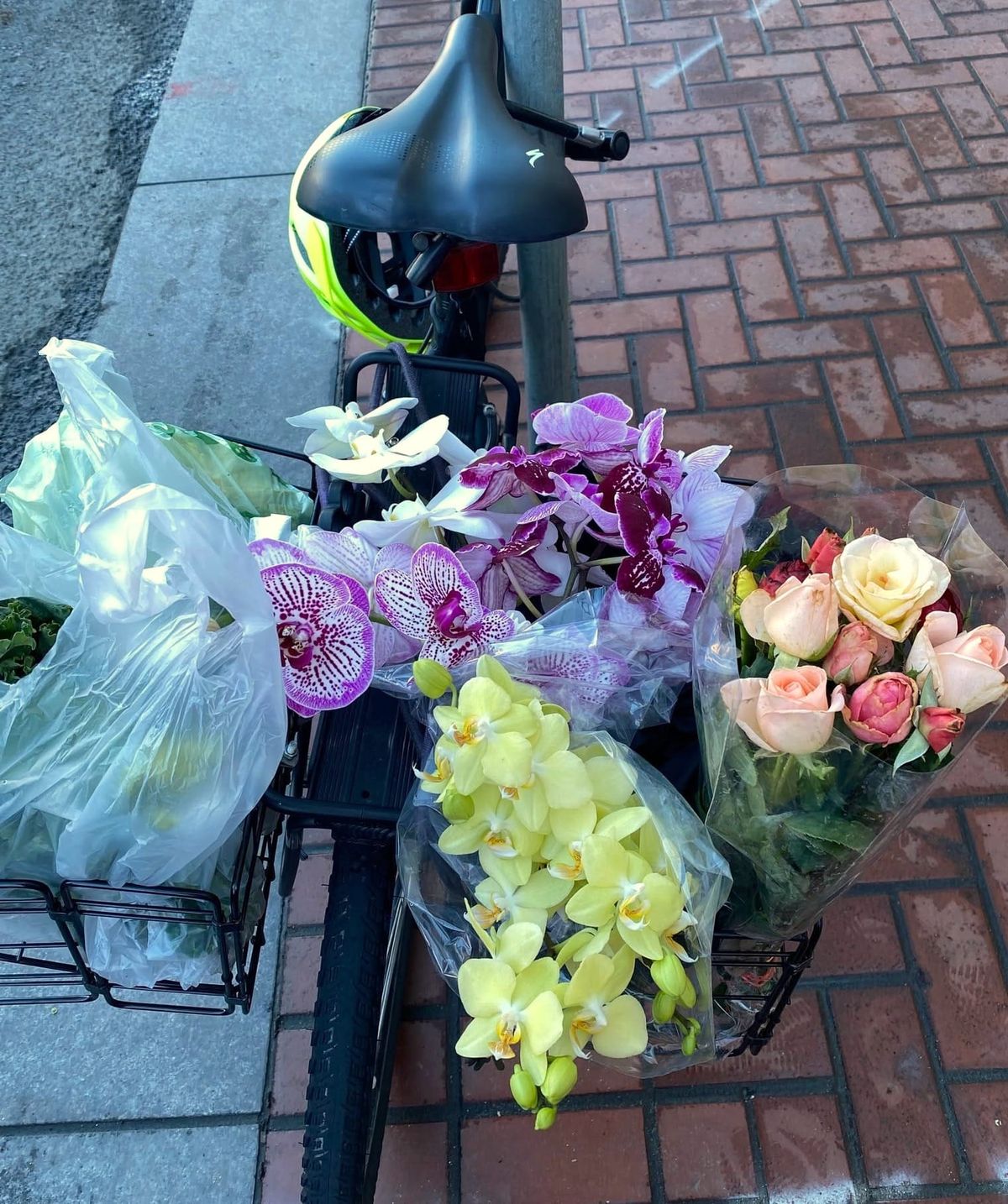
p.s. I debated which cover picture to use: the threat as in an image of Russian oil facilities on fire or the invitation and decided to go with the latter. That's my old bike that was stolen, loaded with strictly local produce, including cut orchids from one of the local orchid-growers; once it was gone I got the e-bike mentioned here. The new bike has the same wire panniers, which can fold up out of the way or open out to haul quite a lot of stuff, mostly groceries.